



Tell me the truth. What comes to mind when you hear the word “science”? A white coat? Wild hair? Bubbling in a beaker? Television producers want people to think their work is interesting. But having fun is subjective. Real science geeks might enjoy intense technical programming. The general audience? They want a “Wow!” element. They want to have fun. They want engagement.
“Interesting” science often means looking at it from outrageous angles. Tell a story. Connect complex topics to everyday life. Or just follow the current news stream. But there is a catch. Entertainment doesn’t always equal accuracy. Some shows prioritize spectacle over science. Take the British series “The Experiment” as an example. He claims that ordinary people can be hypnotized into assassins. This is not just bad science. It’s a distraction from the shows that get it right.
Here are some science series that balance education with real entertainment value.
NOVA
If you think an hour of science is a chore, you haven’t watched NOVA. This PBS classic proves that serious topics don’t have to be boring. Obviously, accuracy is key here. But so does pacing. Editing is solid. The script is very interesting. The result? It works. NOVA is often the highest rated science program on television. In the United States, the program is watched by about 6 million viewers every week. They come to learn. They stay to be amazed.
The scope is massive. During the week, we will follow the development from biplanes to World War I fighters. The next, you’re looking at medieval sword forging. Ancient Greek computers? Egyptian chariots? Everything is there. Biology enthusiasts can watch scientists bring predators back into their wild habitat. Physical science enthusiasts can delve into the periodic table of elements. Which elements are the deadliest? What are the most common? The rarest? Some only exist for a few milliseconds. That’s a substance worth watching.
Cosmos: A Personal Voyage
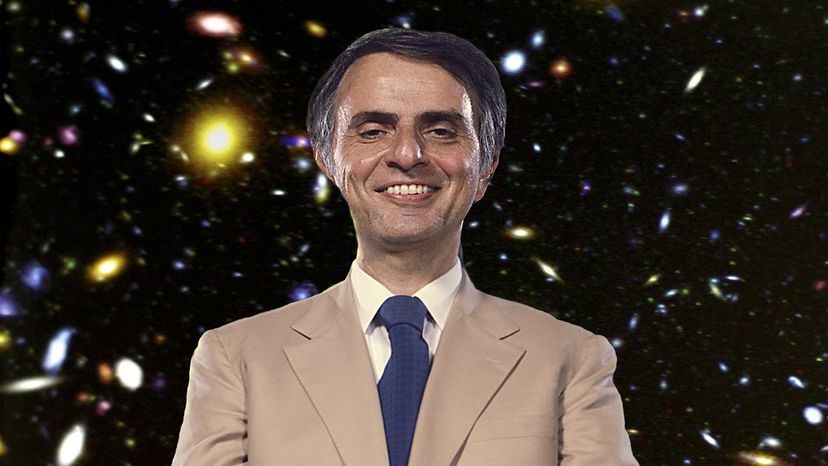
Do you want to love science? Listen to someone who does. That’s the magic of Cosmos: A Personal Voyage. The 1980 PBS series featured Cornell University professor Carl Sagan. He brought an infectious enthusiasm for the universe. Thirteen episodes. That’s all it took. He has covered everything from whale songs to messages from the Voyager spacecraft. nuclear weapons? Black holes? Spacetime travel? Patterns in nature? Hieroglyphics and the Rosetta Stone? He tackled it all.
The show got a 21st-century revival. Ann Druyan, Sagan’s widow and co-writer of the original, helped produce the new version. She was in a relationship with Seth MacFarlane. Yes, he is the writer of Family Guy. Neil deGrasse Tyson is the host of the latest series Cosmos: A Journey Through Time. The show premiered in 2014. Although Sagan does not appear on screen, his voice remains. Audio recordings from the original show were included in the new episodes. This is honoring heritage.
Brainiac: The Misuse of Science
Look at the sign. Skull and crossbones in experimental goggles. Just hearing the title gives me a sense of danger. *Brainiac: The Abuse of Science is a popular program on Sky 1 in the UK. It was shown for 6 seasons. The show ended in 2008. But even before that, they delighted viewers with strange experiments. Some might say it’s dangerous.
Will a ringing cell phone cause an explosion at a gas station? Will the pool ball light the fuse and blow up the trailer? Nice, clean and fun. At least that’s how it feels. The presentation has no testing time or space limitations. It tests the body’s pain and senselessness.
Even after the main story ended, “Brainiac” remained. Spin-offs include Brainiac: A History of Abuse and Brainiac’s IVF. They also toured live in the UK. Science and Chaos. Personally.
My damn cat
Judging by the title, it sounds like a horror movie. it is not. This is a behavioral science show. Animal Planet’s “My Hellcat” explores pets in the wild. target? Get to the heart of the problem. Then fix it. Behavior modification techniques have been developed for aggressive felines. In some cases, disturbances can be investigated in subsequent periods.
Since 2011, the show has covered an incredible number of topics. Cats eat shoes, towels and bedspreads. Another had fried chicken, chips and donuts. Opera music soothes the moody tabby cat. Another cat may react aggressively if its owner laughs or cries. This is very interesting. The main reason is that it’s not your cat.


Let’s be honest, if something weird happens and you don’t know why, who do you call? Most of us just shrug and move on. But if you’re someone who needs to know “why” the sky is blue or “how” a microwave oven works, you need these shows.
we have been waiting for this. Part two of our guide to the best science entertainment.
If you missed the first installment, you missed out.
But let’s dive right into the deep end.
These are not textbooks.
They’re fast, funny, and often dangerously entertaining.
5: “Punkin Chunkin”
Autumn is coming. The air becomes fresher. Leaves crunch underfoot. Somewhere, the pumpkins are turning into ammunition.
“Punkin’ Chunkin'” asks a simple question: How far can you throw a pumpkin? Since 2011, the Science Channel has made this an annual spectacle. It’s not just about strength. It’s about engineering. Teams build crazy machines like air cannons, trebuchets, catapults and centrifuges. They use physics to send vegetables into orbit.
The race is usually held at Dover International Raceway in Delaware. But not always. In 2014, it was moved to a cornfield. They don’t just throw pumpkins. They throw cars. Televisions. Pianos. Everything flies.
Why? Because records matter. The current Guinness World Record is 5,545.43 feet (1,690.25 meters). Set in Moab, Utah in 2010. It’s a long way to throw a vegetable. Can you beat it? Probably not. But their challenge is worth watching.
4: “What is it?”
Have you ever looked at a close-up and not known what you were looking at?
It’s a “what is it?” hook. This half-hour series, which aired on the Science Channel in 2013, is a visual puzzle. Each episode has nine clips. You guess. Then clues drop.
Is this a cave? A Martian valley? A water slide? No, this is the digestive system.
This show forces you to confront gross and beauty. You can see the belly of the whale. You get a tour of a human heart. You even get a cozy shot of the pizza being baked in the oven. But clues are hard. If you see “butterflies” and “hydrochloric acid,” you might guess it’s a stomach. But you might be wrong.
It’s very intimate. This is very strange. This is biology without textbooks. How close do you want to get to your own gut? This show will answer that question before you even ask it.
3: “Extreme Scientific Act”
Science is not always serious. Sometimes people just do stupid things.
“Shameless Science Act” first aired on the Science Channel in the summer of 2014. It features Internet clips and videos of people doing amazing, dangerous and ridiculous things. Then, it explains the science behind the trick.
You can see a ping pong ball floating in zero gravity. You can watch an octopus camouflage itself in real time. You might wonder why you ride your bike on a treadmill. You wonder why goats faint when they get scared.
No one gets hurt. Really. But you might laugh until it hurts. This is educational entertainment. Why do people do this? Maybe it’s because of the video, but the science is real.
2: “Stupid Science”
“Stupid science” needs no introduction. This is from National Geographic. It started in 2014.
This program covers real physics. Torque. Gravity. Newton’s laws. But the hosts aren’t the ones failing. Internet users do.
The show shows clips of people doing scientifically stupid things. Bungee jumping blindfolded. Jet packs failing. Brainiacs jumping off roofs. Slip-and-slide tracks turning into disasters. Tree cutting that almost kills someone.
Then, the experts explain why it failed. Or why it surprisingly succeeded.
Why do people do this? ignorance? Thrill-seeking? According to Time Magazine, 25% of Americans do not know that the universe is heliocentric. In the EU, it is 36%. This is very stupid. There is a lot of material on television.
1: “Duck Quacks Don’t Echo”
Researchers at the University of Salford have shown that duck calls create echoes. But that didn’t stop National Geographic from naming its 2014 series after the myths.
“The Duck Doesn’t Cry” is a comedy. Investigate strange, unbelievable and strange claims. There were 3 performers. One experiment per episode. The researchers confirmed the method as reliable.
Wondering if redheads can tolerate pain better? They put it to the test. Wondering if you can climb walls with a vacuum cleaner? They try. Curious, does talking to attractive women lower a man’s IQ? They measure it.
Yes, test if you can play music with a banana. Is it the wind? percussion? who knows? This is stupid. This is science. It’s both.
Detailed information
That’s it for the list. 5 performances. 5 ways to learn without feeling like you’re in a classroom.
Science is more than just data. It’s a miracle. This is a failure. This is a pumpkin that flies 5,000 feet. This is the fainting of the goat. This is the sound a banana makes.
No degree required. You just have to be curious. There is also a remote control.
What is your favorite weird fact? Is it relevant? See the program. Find it.


