



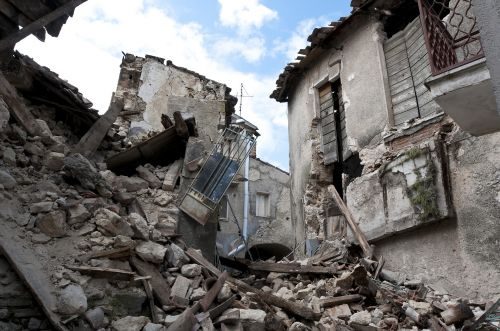
We usually reserve the term “natural disaster” for events where harsh nature causes serious, often irreparable damage. It is not only a question of the characteristics of the environment. They are catastrophic forces that cause enormous damage, disrupt daily life and destroy ecosystems.
In one situation, an earthquake may be a minor inconvenience, but in another, it can level entire neighborhoods. A storm can be a refreshing rain in one area and a devastating flood in another. The line between a natural phenomenon and a natural disaster is drawn by intensity. When the force of nature exceeds our endurance, the name changes.
When experts discuss types of natural disasters, they usually categorize threats into different groups. These range from the ground shaking beneath our feet to storms raging in the sky. Understanding these categories helps us prepare for the specific ways nature can go wrong.
Earthquakes and seismic activity
The first and perhaps most immediate threat comes from Earth itself. Earthquakes occur when tectonic plates shift and release energy that propagates through the crust. The result is ground movement that can be subtle or violent.
Strong earthquakes can collapse buildings, destroy infrastructure, and cause secondary hazards such as fires or landslides. The damage is physical and immediate. Unlike a slow-onset drought, an earthquake occurs without warning. Its impact is measured in structural damage and loss of life.
Volcanic eruptions
Next, let’s look at the internal heat of the planet. Volcanic eruptions release magma, ash and gases into the atmosphere. Although volcanoes are part of the Earth’s natural recycling system, they are a major natural disaster due to their explosive potential.
Ash clouds can derail flights, block sunlight and poison water supplies. Lava flows destroy everything in their path. The extent of the damage depends on the location of the volcano and the explosiveness of the eruption.
Tsunamis and megatsunamis
Water is another great force. Tsunamis are typically caused by underwater earthquakes, landslides or volcanic activity. A single wave can travel across the ocean at the speed of a jet plane and gain height as it approaches shallow water.
These waves don’t just wash the beach. With enormous pressure, they push inland and sweep away buildings and cars. The destruction is coastal and widespread. Recovery can take decades.
Mass movements and landslides
The floor can also move by itself. Landslides or mass movements include avalanches and earth flows. Triggers are often earthquakes, heavy rains or soil saturation.
When the slope gives way, it buries homes and blocks roads. In mountainous regions, these events are common and fatal. They can appear suddenly, leaving little time for evacuation.
Floods
Water covering normally dry land is the definition of a flood. This can be due to heavy rains, river flooding or storm surges. Floods are one of the most common natural disasters.
They damage property, pollute water sources and spread disease. Although floods are not as dramatic as an earthquake, they affect larger populations over a longer period of time. The financial damage is enormous.
Atmospheric phenomena
The sky offers its own threats. ** Atmosphere

Volcanic eruptions: the explosive release of earth’s pressure
While earthquakes shake the ground from within, volcanic eruptions bring the planet’s interior to the surface in a far more visible and violent way. It starts deep underground, where intense heat melts rock into magma. Unlike the sudden slip of tectonic plates seen in seismic activity, volcanic events are driven by pressure buildup. As magma rises, gases expand, creating a volatile mix that can remain trapped until the force becomes too great to contain.
The result is an eruption. This is not just a leak of lava. It involves the expulsion of ash, gas, and rock fragments into the atmosphere. The scale varies wildly. Some eruptions are gentle oozes, like those in Hawaii, while others are catastrophic blasts that reshape landscapes and alter global weather patterns. The key difference lies in the viscosity of the magma and the amount of dissolved gas. Thick, sticky magma traps gas, leading to explosive eruptions. Thin, runny magma allows gas to escape, resulting in calmer flows.
Why eruptions matter beyond the local danger
People often focus on the immediate destruction: destroyed homes, ash-covered cities, and the loss of life. But the impact extends far beyond the volcano’s immediate vicinity. Ash clouds can disrupt air travel for thousands of miles. Fine particulate matter can affect respiratory health across continents.
There is also a long-term climatic effect. Major eruptions inject sulfur dioxide into the stratosphere, forming aerosols that reflect sunlight. This can lead to a temporary cooling of the global average temperature. The 1991 eruption of Mount Pinatubo, for example, lowered global temperatures by about 0.5 degrees Celsius for over a year. It was a stark reminder that geological events are not isolated; they are part of a planetary system.
Types of volcanic activity
Not all volcanoes behave the same way. Geologists classify them based on their eruption style and frequency.
- Explosive eruptions: Characterized by high gas content and viscous magma. These produce pyroclastic flows—fast-moving currents of hot gas and volcanic matter—that are extremely deadly. The 79 AD eruption of Mount Vesuvius is a classic example.
- Effusive eruptions: Magma flows steadily onto the surface. Lava rivers advance slowly, giving people time to evacuate. While destructive to property, they are less likely to cause immediate mass casualties compared to explosive events.
- Phreatic eruptions: Steam-driven explosions caused when groundwater comes into contact with hot magma or rock. These can happen without new magma reaching the surface, making them unpredictable.
Monitoring and prediction
Scientists use a network of tools to monitor volcanic activity. Seismometers detect the tremors caused by rising magma. Gas sensors measure changes in sulfur dioxide and carbon dioxide emissions. GPS stations track ground deformation, as the volcano’s surface swells before an eruption. No single method is foolproof. Prediction remains an inexact science. Some volcanies give clear warnings weeks in advance. Others erupt without significant precursors. The uncertainty is a major challenge for risk management in populated areas.
The dual nature of volcanoes
It is easy to view volcanoes solely as destructive forces. They are also creators. Volcanic ash enriches soil with minerals, supporting agriculture for centuries. Geothermal energy, harnessed from volcanic heat, provides clean
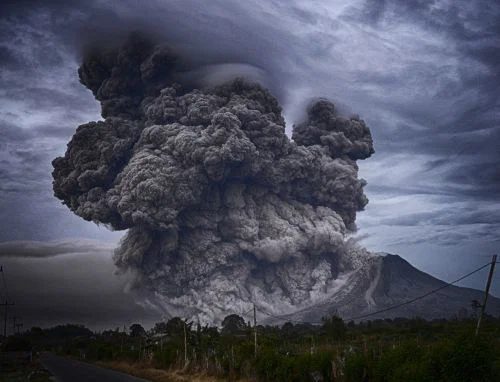

Volcanic eruptions are geological events in which violent material rises up from within the earth. As magma heats up, it expels lava and gases.
On one side, the lava burns everything in its path and can start forest fires. On the other side, the emitted gases pollute the environment, reduce air quality and block sunlight. This can cause health problems for people, especially respiratory issues.
See also Vulcanism.
3. Tsunamis and seismic waves
Volcanic eruptions can trigger tsunamis. This happens in different ways.
- Underwater Explosions : When a volcano erupts beneath the ocean, the displacement of water creates waves.
- Pyroclastic flows : Rapid flows of hot gas and rock can enter the water and displace water.
- Landslides : The collapse of the volcanic flank into the sea can cause massive waves.
These tsunamis can travel across oceans. They arrive with little warning. Coastal areas face destruction.
Volcanic eruptions also release large amounts of sulfur dioxide. This gas forms aerosols in the stratosphere. These aerosols reflect sunlight. This can lead to global cooling.
The eruption of Mount Tambora in 1815 triggered the “Year Without a Summer” in 1816. Crops failed worldwide. Food shortages followed.
Volcanic activity can also trigger earthquakes. The movement of magma creates pressure. This pressure stresses the surrounding rock. When the rock breaks, an earthquake occurs.
The link between volcanoes and tsunamis is clear. Understanding this link helps in disaster preparedness. Early warning systems are critical.
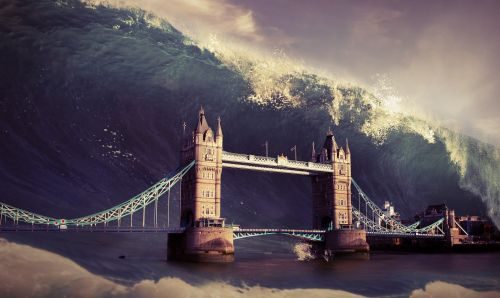

A tsunami is an underwater seismic event. The epicenter is at the bottom of the sea. This triggers a sudden, powerful change in the water column. The energy comes from the collision of tectonic plates or a volcanic eruption.
Tsunami is Japanese for harbor wave. In particular, it depicts massive waves pushing towards the coast. It’s a disaster. It is always the result of an earthquake.
This is where the difference comes into play. All tsunamis are caused by earthquakes. Not all earthquakes produce tsunamis. Earthquakes are geological phenomena. If tsunamis are powerful enough, they can inundate entire cities. They destroy property. They kill people.
Mechanics of mass movement
Landslides or mass movements work on different principles, but they have the same destructive potential. Gravity is the most important factor here. Rocks, earth and rubble move down the slope. The trigger could be water saturation, shaking from an earthquake, or simple erosion.
Unlike tsunamis that spread out to sea, landslides are localized. However, they are no less destructive. One slide can bury communities. It can clog rivers. Temporary lakes may form, which later erupt.
Speed varies. Some slides creep slowly. Others accelerate to hundreds of kilometers per hour. Debris flows behave like liquid concrete. They crush everything that comes their way. The mudslides of Washington’s Oso or the stone falls of Kashmir show how quickly the land can turn against the people who live on it.
Why the difference is important
Understanding the difference between a seismic event and a mass movement is not just an academic matter. It determines the reaction.
If the danger is a tsunami, the warning refers to water. The evacuation takes place inland and upwards. If the threat is a landslide, the warning is about instability. The soil itself is the danger.
Both require respect for the forces of nature. Both remind us that the planet is dynamic. We build on slopes. We build near faults. We assume stability. The earth rarely agrees.
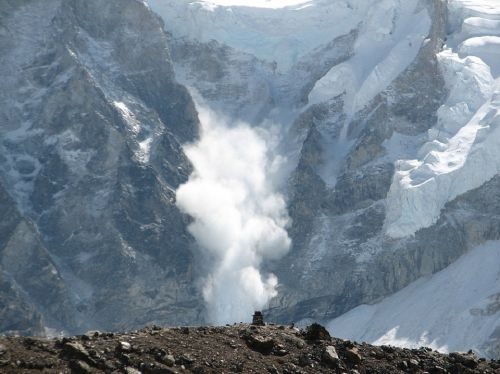

Mass wasting sounds clinical, but the reality is violent. It is the uncontrolled descent of earth down a slope. Snow. Ice. Rock. Soil. Vegetation. When gravity takes over, nothing holds it back. The debris picks up speed, gathering mass and momentum until it obliterates everything in its path.
The types vary by material, but the physics remain the same. Avalanches are perhaps the most dramatic. They are not just snow; they are avalanches of ice, rock, and air hurtling down a mountain. Landslides often trigger when the ground itself gives way. Tremors shake the foundation. Volcanic eruptions destabilize slopes. Heavy rain saturates the earth. The soil loses cohesion and slides. Then there are mudflows or debris flows. Water infiltrates the ground, turning solid earth into a fluid slurry. It behaves like concrete, only wetter. Heavier. Faster.
If these events occur in wilderness, they are just geological events. In populated areas, they are catastrophes. The scale matters. The proximity to housing matters. The result is often the same: structural collapse, severe injury, and death. The speed gives little time for escape.
5. Floods
How flooding turns dry land into a hazard
If landslides are about gravity pulling things down, flooding is about water rising up and spreading out. It is the overflow of water that submerges land that is usually dry. It is one of the most common natural disasters globally, affecting more people than any other hazard.
The causes are varied. Heavy rainfall saturates the soil until it can no longer absorb water. Rivers swell beyond their banks. Storm surges push ocean water inland during hurricanes. Urban areas face a different problem: concrete prevents absorption. Rain has nowhere to go but up and over.
Flash floods are particularly deadly. They happen with little warning, often within minutes or hours of intense rain. Water moves with the force of a wall. It can sweep away cars, destroy foundations, and trap people in their homes.
Why flooding matters in everyday life
Floods are not just about wet basements. They contaminate water supplies. They spread disease. They destroy crops, leading to food insecurity. The economic toll is staggering, but the human toll is harder to measure. Trauma. Displacement. Loss of livelihoods.
In many coastal cities, rising sea levels are turning occasional floods into regular events. The line between storm and disaster blurs. Infrastructure designed for the past fails against the future.
Mitigation and adaptation
Engineers build levees. They design drainage systems. They create floodplains where water can spread safely. But nature is unpredictable. A levee can be overtopped. A storm can exceed historical records.
Communities are learning to adapt. Living with water, rather than just fighting it. Raised foundations. Permeable pavements. Early warning systems. These are not perfect solutions. They are stops along the way.
The next time you see a river, remember its power. It is not static. It is waiting.
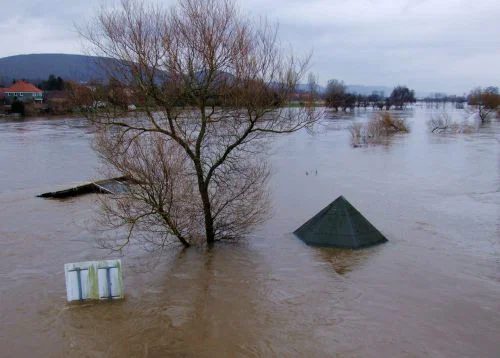

The water just doesn’t stay on track. When it accumulates disproportionately, it overflows and turns dry land into a temporary lake. This is the mechanical reality of the flood. It’s not just “wet”. It’s a transition. The space is occupied by water that has been forcibly diverted from its natural channel.
Triggers are different. Sometimes it rains so heavily that the ground cannot absorb it. In other cases, a sudden thaw dumps months of frozen storage into rivers at once. Hurricanes and typhoons bring their own volume. Tidal waves push seawater inland. In extreme cases, seismic activity such as earthquakes or tsunamis pushes water upward and inward at enormous speeds.
The real cost of standing water
You can talk about fluid dynamics all day, but the result is usually the same: things get messed up.
Significant flooding rarely happens without cost. Material assets – houses, infrastructure, vehicles – are often at risk. Transport networks snap or sink. Getting into or out of the affected area becomes a logistical nightmare. Streets become rivers. Bridges are irrelevant. Isolation is immediate.
This is why the effects of flash floods and storm surges are studied so closely. It’s not just about the water level. It’s all about speed. It’s about how quickly the neighborhood becomes unreachable.
Atmospheric forces at play
This is phenomenon number 6 on the list of disasters: atmospheric events.
These are not isolated cases. They are often the tip of the spear in larger climate patterns. When moisture is released from the atmosphere faster than the earth can handle, the system collapses.
“The danger comes not only from the water, but also from the speed of change in the landscape.”
The line between a severe storm and a disaster is often only time. Minutes matter. The hours determine who loses the harvest month and who loses the home.
Why do some areas flood while others remain dry? It depends on altitude, soil saturation and urban planning. Concrete does not breathe. It repels. So water can only flow upwards.
It’s a cycle. It’s raining. The water rises. People rebuild. The water returns.
It’s not a question of whether it will happen again. It’s about how long we can keep moving water away before the system collapses under its own weight.
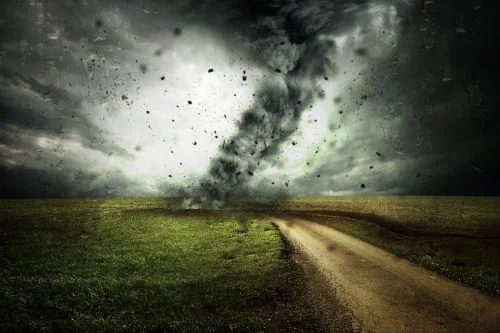

Not every extreme weather event is considered a “natural disaster”. The difference often depends on the extent of the destruction. A hurricane could pass through an uninhabited sea without much fanfare, while the same storm system could devastate a coastal city. The interaction between climate change and human vulnerability defines a disaster.
When we look at climate-related disasters, we see a wide spectrum of atmospheric chaos. These are not just bad days; They are systemic failures of weather patterns that disrupt life on a large scale.
Spectrum of Atmospheric Chaos
A list of phenomena falls under this umbrella, but each phenomenon occurs differently depending on geography and preparation.
- Hurricanes and tornadoes are still the most visible and destructive, leveling structures with wind speeds that defy logic.
- Thunderstorms are more common, but no less dangerous. They can trigger widespread power outages or ignite wildfires that burn for weeks.
- Trombas marinas or waterspouts roll over the ocean. Although often less lethal than their land-based counterparts, they can capsize ships and disrupt shipping.
- Hailstorms cause immediate, noticeable damage to agriculture. One storm can destroy a season’s crops and cause economic shock waves.
- Droughts are slow moving disasters. They deprive landscapes of water and lead to famine in areas that depend on rain-fed agriculture.
- Extreme temperatures – both heat and cold waves – stress infrastructure and healthcare systems. Heat kills silently; The cold kills visibly.
- Snowstorms and sandstorms reduce visibility to zero, paralyze transport and trap the population.
- Simooms or “poisonous
Winds” from the Sahara bring scorching air and dust that can be deadly to unprotected travelers and livestock.
7. Wildfires
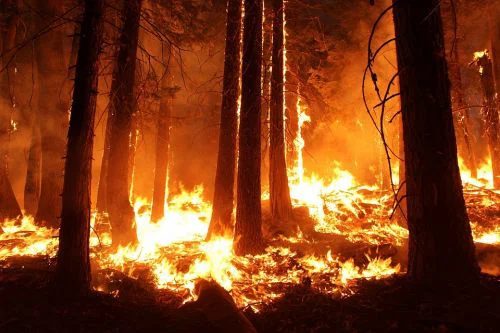
Wildfires have a special place in this category. Although they are often ignited by human error or lightning, atmospheric conditions greatly influence their spread. Dryness, high temperatures and low humidity create an environment where a single spark can become an inferno.
Unlike hurricanes, whose path is predictable, wildfires can change direction with the wind, making them unpredictable and incredibly difficult to contain. They don’t just burn wood; They destroy ecosystems, air quality and communities. Smoke from a forest fire in one area can affect health in another area hundreds of kilometers away.
The line between a “natural” event and a “disaster” is drawn by human influence. If the atmosphere changes and we are unprepared, nature will become a disaster.
Biological threat
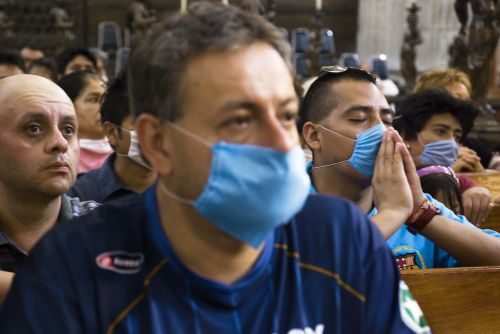
We often think of disasters as things that happen all at once—a wall of fire, a sudden earthquake. But there is another class of disaster that creeps in quietly and microscopically until it is too late. We are talking about biological disasters.
A forest fire is characterized by the fact that it spreads through forest areas and destroys local flora and fauna along its path. It is notoriously difficult to control. Vegetation itself is highly flammable and behaves like dry kindling. Then there’s the wind. The gust doesn’t just push the flames forward; It can change direction unexpectedly, making containment nearly impossible.
But compare that to a biological event. It doesn’t roar. It won’t burn. It replicates.
These disasters involve pathogens – viruses, bacteria, toxins or invasive species – that disrupt ecosystems or human society. Unlike a fire that consumes and leaves behind ashes, a biological threat often changes a system from within. It can wipe out one species of crop, shut down a local fishery, or spread across borders in a jetliner. The damage is less visible in the short term, but can be permanent.
Think chestnut blight. The fungus invaded the forests of North America, spreading with wind and insects and destroying an entire tree species that had dominated the landscape for centuries. Or look at West Nile virus, which jumped continents, adapted to native birds and mosquitoes, and changed the health landscape of entire regions.
The difficulty of managing these disasters is similar to forest fires, but the tools are different. You can’t fight the virus with water. You cannot outrun a toxin. The spread is often driven by movement – trade, travel, migration – and the “wind” is global connectivity.
Why is this important? Because the line between a controlled outbreak and a biological disaster is thin. It is defined by readiness, surveillance, and speed. If we ignore microscopic threats, we leave ourselves vulnerable to events that not only damage property, but also rewrite the rules of survival.
The next time you hear about a new variant or invasive species in the news, don’t just file it away. It’s a reminder that the most dangerous forces are often the ones we can’t see.

Space phenomena
Anything that spreads out of control is not biological. Some of the most volatile forces in our universe are purely physical in nature, but they share a frightening feature with the aforementioned eruptions: their ability to expand beyond confinement. We are talking about space phenomena that can disrupt or completely destroy life on Earth.
Look at the sun. It’s not just a warm light source. It’s a volatile star that can throw coronal mass ejections—huge clouds of plasma and magnetic fields—into space. When these storms hit Earth, they can destroy satellites, knock out power grids and disrupt communications. This is not science fiction. It happened in 1859 during the Carrington incident. The telegraph systems set off sparks. The operators were shocked. Today, our infrastructure is much more fragile. A modern equivalent could cost trillions and set society back decades.
Then there’s the asteroid threat. It’s not a question of if, but when. In 2013, a small meteor exploded over Chelyabinsk, Russia. It didn’t hit the ground. It exploded in the atmosphere, causing a shock wave that broke windows and injured more than 1,500 people. Imagine if it had been ten times bigger. Shock energy could compete with a nuclear weapon. We track thousands of near-Earth objects, but smaller ones? They slip through the cracks. Until we have reliable diversion strategies, we are essentially playing for the survival of the planet.
And let’s not forget the dark side of space. Micrometeorites and space debris move at speeds of up to 17,500 miles per hour. A speck of paint can destroy a spaceship. A bolt can penetrate the frame. As we accumulate thousands of active satellites and debris from decommissioned missions in Earth orbit, the risk of a Kessler syndrome scenario increases. Here, collisions generate more debris, which leads to more collisions. A chain reaction that can make space inaccessible for generations.
We treat these as distant problems. They are not. These are immediate, tangible risks that require the same seriousness as pandemic preparedness. Ignoring the sky doesn’t make it any less dangerous.
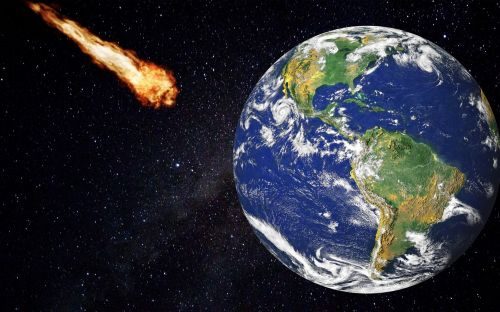

Not all disasters strike from the ground up. Some originate in the vacuum of space, yet their effects ripple down to alter life on our planet, whether through direct physical impact or indirect technological disruption. These events are not just theoretical risks for astronomers; they are tangible threats that require understanding and preparation.
Two primary categories define this intersection of cosmic violence and terrestrial consequence.
The Threat of Cosmic Impacts
First, there are the impacts of cosmic origin, commonly known as meteorite strikes. While often sensationalized in pop culture, the reality is nuanced. When space debris enters Earth’s atmosphere, its potential for damage depends entirely on its size and composition.
Smaller fragments burn up entirely, creating the shooting stars we admire. Larger bodies, however, can survive the descent. If a meteoroid strikes the surface, the energy release can be catastrophic. The kinetic energy involved in these collisions is immense, capable of reshaping landscapes, triggering tsunamis, or causing regional devastation. The risk is not about constant bombardment but about the unpredictable nature of large object trajectories.
Solar Storms and Technological Vulnerability
The second category involves solar storms. These are eruptions of plasma and magnetic fields from the sun’s atmosphere. Unlike meteorites, which are physical objects, solar storms are waves of charged particles and radiation.
Their impact is rarely physical destruction but rather technological interference. When these storms reach Earth, they interact with our magnetic field, creating geomagnetic disturbances. This can:
- Disrupt satellites, affecting GPS navigation, weather forecasting, and telecommunications.
- Interrupt power grids, potentially causing widespread blackouts if the induced currents are strong enough.
- Endanger space missions, posing radiation risks to astronauts and sensitive equipment outside the protective shield of the atmosphere.
The 1859 Carrington Event remains the most famous historical example, causing telegraph systems to fail and catch fire. Today, our reliance on digital infrastructure makes us far more vulnerable to similar events.
Why This Matters Now
Understanding these disaster natural phenomena is no longer just an academic exercise. As we expand our presence in space and deepen our reliance on technology, the need to predict and mitigate these risks has never been greater.
Whether it is tracking near-Earth objects to prevent future impact events or building resilient power grids to withstand space weather, the goal is the same: ensuring that our civilization can withstand forces beyond our control. The sky is not a safe haven; it is also a source of potential hazard. Recognizing that distinction is the first step toward resilience.

