



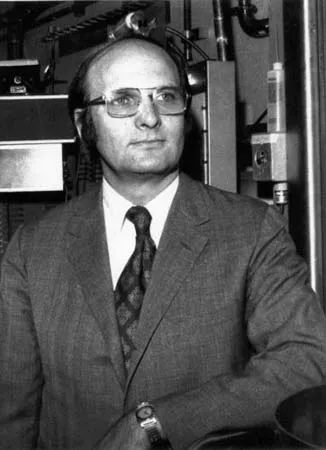
John Robert Schrieffer didn’t just study how objects conduct electricity. He figured out how electricity could flow without losing energy. It sounds like magic, but it’s physics. This earned him a Nobel Prize.
Schrieffer was born in Oak Park, Illinois in 1931 and became one of the most important thinkers in condensed matter physics. He died on July 27, 2019 in Tallahassee, Florida. But his achievements go beyond what is in the textbooks. It is the machine that makes MRI scanning possible. It can be seen on a maglev train gliding across the tracks. This is the future of the web.
BCS theory and the mystery of superconductivity
The breakthrough came when Schrieffer was a young graduate student. He works under the supervision of John Bardeen at the University of Illinois at Urbana-Champaign. They are trying to solve an enigma that has puzzled scientists for decades. Why do some metals lose resistance when cooled to near absolute zero?
It’s not enough that it happened. Scientists need to know “how”.
Schriefer, Bardeen, and Leon N. Cooper proposed what is now called the BCS theory. The name is derived from their initials. This theory, published in 1957, was the first microscopic theory of superconductivity. It is usually explained that mutually repulsive electrons form pairs. These “Cooper pairs” allow atoms to pass through the metal lattice without colliding. There are no irregularities. No friction. There is no resistance.
This is not just abstract mathematics. This is a complete rewrite of how we understand the behavior of electrons in solids. Schrieffer’s contribution was the mathematical glue that held the theory together. He took Cooper’s ideas on electron pairing and Bardeen’s views on lattice vibrations and wove them into a coherent whole.
Student life
Schrieffer’s career grew as fast as the electrons he studied. After receiving his Ph.D., he graduated from the University of Illinois in 1957 and later taught at the University of Chicago. Then I went back to Illinois. He then attended the University of Pennsylvania in Philadelphia.
In 1964, he was appointed the Mary Amanda Wood Professor of Physics at the University of Pennsylvania. In the same year, he published the “Theory of Supraconductivity”. This book has become a standard source for physicists around the world. This is not just a summary of Nobel Prize winning works. This is a guide for the new generation of researchers.
He continued again. From 1969 to 1975, he was the Andrew D. White Distinguished Professor at Cornell University. He then worked at the University of California, Santa Barbara, where he was a professor of physics from 1980 to 1991. He finally settled on Florida State University in 1992.
Throughout his career, Schrieffer focused on superconductivity. He studies high-temperature superconductors. He looked for ways to make this phenomenon more realistic. He wanted to get out of the lab and into the real world.
The Nobel Prize and the price of fame
In 1972, Schrieffer, Bardeen and Cooper received the Nobel Prize in Physics. This is a historic moment.

