




The Trump administration has issued an executive order compelling the Department of Defense to prioritize purchasing electricity from coal-fired power plants, a move intended to prop up the struggling coal industry. This directive represents a significant intervention in energy markets, shifting federal procurement toward a specific, declining fuel source.
Executive Order and Contractual Shift
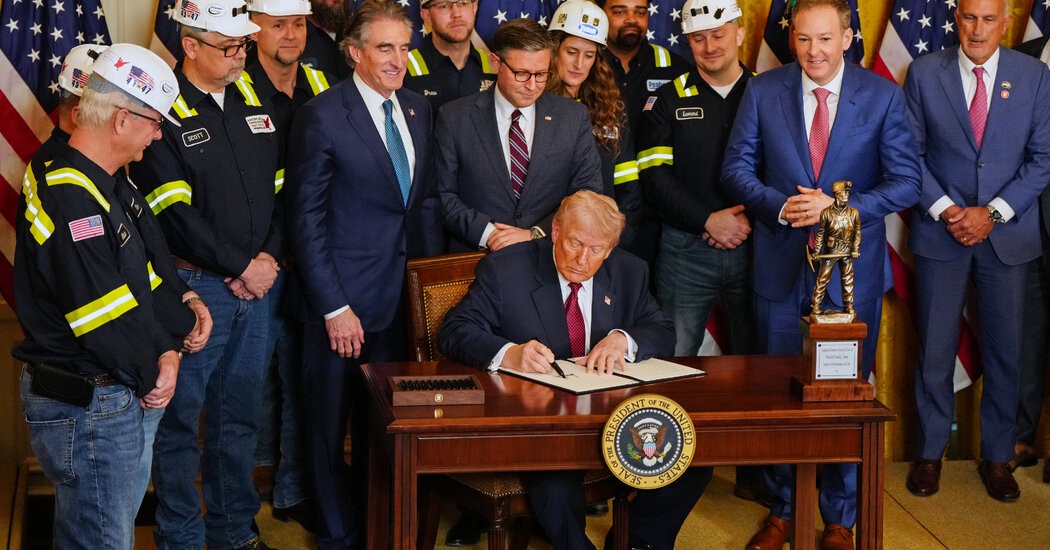
President Trump signed the order Wednesday, instructing Defense Secretary Pete Hegseth to negotiate long-term contracts with coal plants nationwide. This decision aims to provide financial stability to plants facing potential closure, potentially altering market forces in favor of coal-based energy production.
The administration framed the move as support for American miners, with Trump stating at a White House event, “We’re lifting up our hard working American miners like nobody has ever done before.”
Industry Recognition and Financial Incentives
The event included a presentation to Trump from the Washington Coal Club, an industry-linked organization, awarding him a trophy recognizing him as the “Undisputed Champion of Beautiful Clean Coal.” The symbolism underscores the close ties between the administration and the coal sector.
In addition to the executive order, the Energy Department announced $175 million in funding to upgrade six coal plants across Kentucky, North Carolina, Ohio, and West Virginia. These upgrades will extend the operational lifespan of these facilities, delaying their planned retirement.
TVA Postpones Plant Closures
The Tennessee Valley Authority (TVA), the largest federal electric utility, also announced it would postpone the retirement of its two largest coal plants, originally scheduled for 2027 and 2028. This coordinated action suggests a broader effort to reverse the trend of coal plant decommissioning.
The move has drawn criticism from environmental groups, who argue that the administration is prioritizing industry interests over cleaner energy alternatives. It also raises questions about the cost-effectiveness of procuring electricity from aging coal plants compared to renewable sources.
Ultimately, this directive marks a deliberate attempt to bolster the coal industry through federal procurement, signaling a departure from market-driven energy policies.