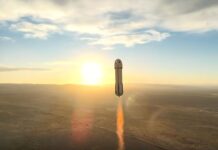




China’s InterstellOr is rapidly developing commercial suborbital space tourism capabilities, aiming for its first crewed missions by 2028. The company recently unveiled a full-scale prototype of its CYZ1 crew capsule and conducted key landing tests, signaling significant progress toward operational flights.
Suborbital Tourism and the Kármán Line
InterstellOr’s CYZ1 vehicle is designed to carry passengers above the Kármán Line (62 miles or 100 kilometers altitude) – the internationally recognized boundary of space. This boundary is not legally defined, but serves as a standard for commercial spaceflight operations. Passengers on these flights will experience several minutes of weightlessness, similar to those offered by companies like Blue Origin in the West.
Early Bookings and Celebrity Endorsements
The company is already accepting reservations, with initial ticket prices at approximately $430,000 (3 million Chinese yuan), requiring a 10% deposit. Notably, Chinese actor Johnny Huang Jingyu has signed on as the first celebrity passenger (designated as passenger 009), aligning with the strategy employed by Blue Origin, which has also flown high-profile individuals like William Shatner and Jeff Bezos.
China’s Growing Space Ambitions
InterstellOr’s emergence highlights China’s expanding presence in the commercial space sector. The startup, founded in January 2023, benefits from a technical team with prior experience in China’s state-run human spaceflight program. The move represents a strategic effort to compete with established Western players in the rapidly growing space tourism industry.
The development of China’s commercial space sector is happening fast. This move shows how quickly China is integrating into the global space economy, and the country’s willingness to compete directly with existing market leaders.
InterstellOr’s progress suggests that space tourism is becoming increasingly accessible, though still reserved for the wealthy. The company’s timeline is subject to development, testing, and regulatory approvals, but the ambition is clear: to establish China as a key player in the emerging commercial space race.