

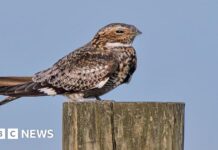


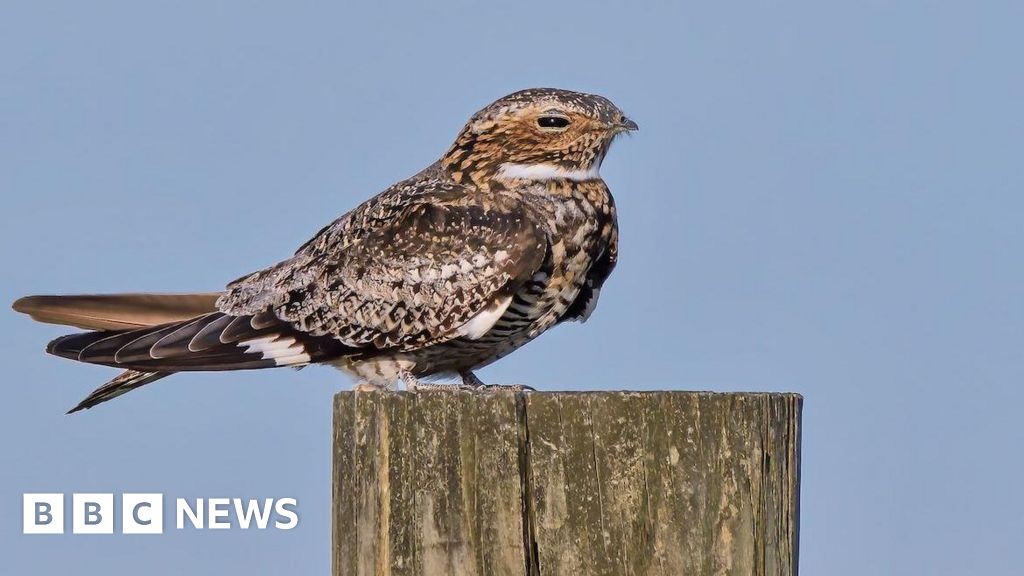
The South Downs National Park has witnessed a significant resurgence in nightjar populations, with numbers doubling in the last five years. Ecological surveys recorded 78 individual birds and 109 active territories in 2023, marking the highest figures ever documented within the park’s lowland heaths. This recovery is attributed to targeted conservation efforts, including habitat management and increased public awareness.
A Remarkable Turnaround for an Elusive Species
Nightjars, known for their distinctive “churring” calls at dusk, were once in steep decline. Between 1972 and 1992, their numbers plummeted by over 50% due to habitat loss from agricultural expansion and development. The birds are classified as an “amber species” under the Red List for Birds, indicating they remain a species of conservation concern.
The nightjar’s comeback is not only a victory for local wildlife but also underscores the effectiveness of proactive conservation strategies. The South Downs National Park Authority (SDNPA) has focused on protecting and expanding lowland heathland, which serves as critical nesting habitat for these ground-dwelling birds.
A Migratory Marvel and Ancient Myths
Nightjars are remarkable long-distance migrants, traveling nearly 4,000 miles from the Democratic Republic of Congo each spring to breed in the UK between April and August. Their crepuscular habits – emerging at twilight to hunt insects – contribute to their elusive nature.
Historically, nightjars were shrouded in superstition. One bizarre legend claimed they would drink milk directly from goats, causing livestock to sicken and go blind. This myth, prevalent across Europe, likely arose from the birds’ habit of foraging near livestock for insects.
Collaborative Conservation Pays Off
The nightjar’s recovery is part of a broader trend of biodiversity resurgence in the South Downs. The SDNPA also reports promising increases in populations of woodlarks and Dartford warblers, demonstrating that concerted conservation efforts can deliver tangible results.
Park rangers have played a crucial role in engaging the public, encouraging responsible behavior such as keeping dogs on leads, removing waste, and staying on designated pathways to minimize disturbance to ground-nesting birds.
This rebound proves that when we work together to protect our natural landscapes, biodiversity can indeed bounce back. The nightjar’s story is a reminder that even species facing significant challenges can recover with dedicated conservation action.