
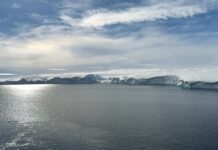




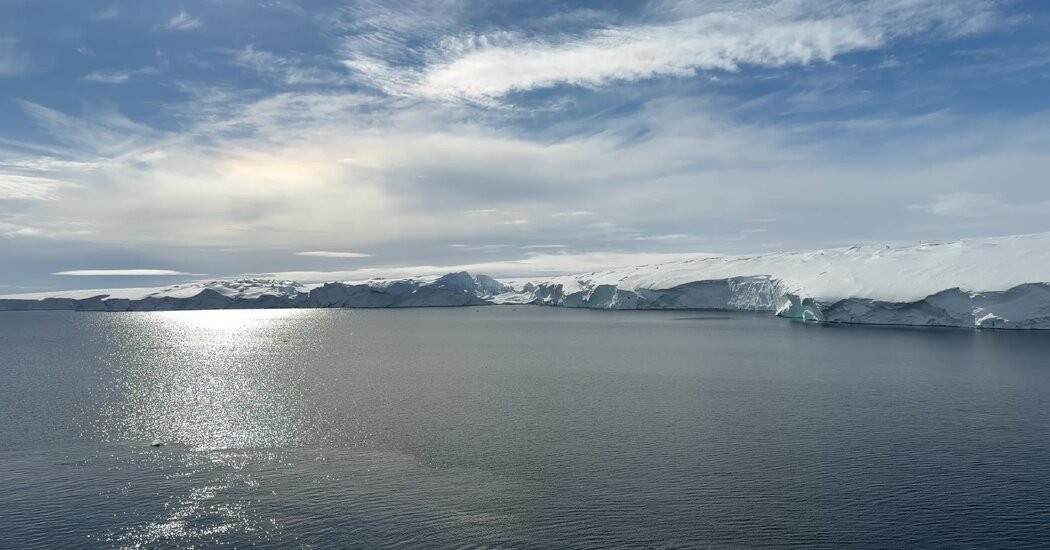
Researchers have arrived at the face of the Thwaites Glacier in West Antarctica, a region critically important to understanding global sea-level rise. The team reached the glacier’s terminus—a massive wall of ice split into two tongues separated by a narrow channel—after navigating through it overnight.
Positioning for Scientific Drilling
The ship’s current location allows for efficient deployment of equipment needed for a month-long drilling operation, minimizing costly and time-consuming helicopter trips. This positioning, achieved through precise sailing by Captain Kim, brings the team as close as possible to the drilling site on Thwaites.
Uncharted Waters: A First Human Arrival?
According to Dr. Lee, this may be the first time humans have reached these specific waters. Modern sonar data shows the seabed in this area remains unmapped, suggesting no previous vessel has navigated here. The absence of sea ice—which has recently hit record lows around Antarctica—has enabled this access, but also underscores the accelerating pace of climate change in the region.
A Changing Antarctic Landscape
The Thwaites Glacier is under intense study because of its potential to dramatically raise global sea levels if it collapses. The rapid decline in Antarctic sea ice cover is not just a logistical advantage for researchers; it’s a stark indicator of the planet’s warming trend. The relatively calm conditions, even with playful penguins nearby, contrast sharply with the glacier’s long-term threat.
The Thwaites Glacier is often called a “doomsday glacier” because of its size and the speed at which it is melting. Its collapse could trigger a chain reaction, destabilizing other glaciers and raising sea levels by several feet. The current research expedition is critical for understanding the processes driving this melt and improving climate models to predict future impacts.