
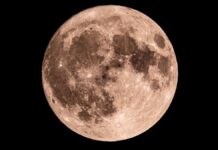

Tonight, under clear skies, you can observe a Waxing Gibbous Moon – more than half illuminated. According to NASA’s data, approximately 67% of the lunar surface will be visible. This means it’s an excellent night for stargazers with or without equipment.
What You Can See
Without optical aids, the prominent dark patches known as mares (seas) will be visible. These include the Fecunditatis, Crisium, and Vaporum seas. With binoculars, the Posidonius Crater, the Alps Mountains, and the Appennine Mountains come into view. For those with a telescope, finer details like the Rima Ariadaeus, Descartes Highlands, and the Caucasus Mountains will also be visible.
Why does this matter? The Moon’s appearance changes every night, offering a dynamic view for casual observers and professional astronomers alike. The visibility of features depends on the phase, but even basic tools like binoculars reveal a wealth of detail.
Next Full Moon
The next Full Moon in North America is predicted to occur on April 1st. This will offer a different viewing experience: the entire visible surface will be brightly lit, though the details seen in the Waxing Gibbous phase, such as the shadows that accentuate craters, will be lost.
Understanding Lunar Phases
The Moon orbits Earth in about 29.5 days, passing through eight distinct phases. Although the same side of the Moon always faces Earth, varying amounts of sunlight illuminate it at different points in its orbit, creating the phases we observe. These phases are:
- New Moon: Invisible from Earth.
- Waxing Crescent: A thin sliver of light appears.
- First Quarter: Half the Moon is lit.
- Waxing Gibbous: More than half is lit.
- Full Moon: The entire face is illuminated.
- Waning Gibbous: Light begins to fade on one side.
- Third Quarter: The opposite half is lit.
- Waning Crescent: A final sliver before disappearing again.
These cycles are not just astronomical events; they have influenced human culture and navigation for millennia. Modern space missions use the Moon’s phases for optimal lighting conditions when studying its surface.
In conclusion, whether you’re a seasoned astronomer or a casual observer, the Moon’s changing phases offer a continuous and accessible spectacle. Tonight’s Waxing Gibbous phase provides an excellent opportunity to explore the lunar landscape with minimal equipment.