





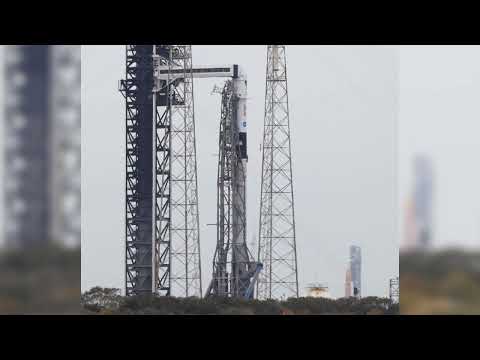
Two major space missions are converging at Kennedy Space Center in Florida: SpaceX’s Crew-12, bound for the International Space Station (ISS), and NASA’s Artemis 2, gearing up for a historic lunar flyby. A recent NASA photograph captures both spacecraft side-by-side, underscoring a pivotal moment in concurrent human spaceflight programs.
SpaceX Crew-12: Replenishing the ISS Crew
On February 13th, SpaceX’s Crew-12 Dragon spacecraft, nicknamed “Freedom,” launched atop a Falcon 9 rocket, carrying four astronauts to the ISS. The crew – NASA’s Jessica Meir and Jack Hathaway, ESA astronaut Sophie Adenot, and Roscosmos cosmonaut Andrey Fedyaev – will spend eight months on the orbital outpost. Their arrival is critical, as the ISS has been operating with a reduced crew since Crew-11 was medically evacuated on January 15th due to an undisclosed health issue.
The ISS has been maintained by just three astronauts in the meantime, highlighting the need for a full team to operate the station effectively. The Crew-12 mission ensures continuity in research, maintenance, and international collaboration aboard the ISS.
Artemis 2: A Delayed but Determined Lunar Mission
Behind the SpaceX rocket looms the massive Artemis 2 Space Launch System (SLS) rocket and Orion spacecraft, ready for a ten-day mission to the far side of the moon. The launch has been postponed until at least early March after a hydrogen fuel leak was detected during a wet dress rehearsal on February 3rd.
This delay, while frustrating, is a standard part of rocket development, allowing engineers to identify and fix critical issues before astronauts are placed in harm’s way. The Artemis 2 rocket, boasting an unprecedented 8.8 million pounds of thrust, will carry NASA astronauts Reid Wiseman, Victor Glover, Christina Koch, and Canadian astronaut Jeremy Hansen on the first crewed mission beyond low Earth orbit since Apollo.
The Significance of Simultaneous Missions
The co-location of these rockets showcases the increasing pace of space exploration. The combination of commercial partnerships like SpaceX and government programs like Artemis demonstrates a shift towards more frequent and diverse human missions. The Artemis 2 mission, once successful, will pave the way for future lunar landings and potentially, crewed missions to Mars.
The successful launch of both Crew-12 and Artemis 2 is essential for maintaining a human presence in space and advancing scientific discovery. The fact that these missions are occurring simultaneously signals a new era of sustained space exploration.