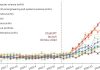






Antarctica, the world’s largest ice desert, presents a climate paradox: its clouds contain surprisingly few ice-forming particles. This unexpected scarcity of ice-nucleating particles (INPs) —the tiny airborne components necessary for ice crystals to form—has significant implications for regional and global climate patterns.
Why Ice Nuclei Matter
Clouds don’t freeze just because it’s cold. They need something to start the freezing process. INPs act as seeds, allowing water droplets to crystallize even in sub-zero conditions. These particles include mineral dust, sea spray, soil, ash, and even biological matter like proteins shed by living organisms.
The Southern Ocean around Antarctica, however, appears to lack these crucial seeds. Recent research analyzing air samples from Antarctic outposts reveals exceptionally low concentrations of INPs. Scientists suggest this scarcity stems from the absence of efficient biological sources that supply these particles in other regions, such as the Arctic.
The Protective Role of Liquid Clouds
The lack of INPs has a counterintuitive effect: it keeps more water in clouds as liquid, even when supercooled (below freezing). Liquid-rich clouds reflect more sunlight back into space than icy clouds, effectively shielding the Southern Hemisphere from some of the planet’s warming. This process helps regulate temperatures in a region already vulnerable to climate change.
However, this natural defense mechanism is not guaranteed. Rising global temperatures could alter the delicate balance. As glaciers retreat, more land will be exposed, allowing vegetation and biological activity to increase. This could introduce more INPs into the atmosphere, reducing the reflectivity of Antarctic clouds and accelerating warming.
The Future of Antarctic Clouds
The study highlights the urgency of continued monitoring. Accurately assessing the current state of INPs in Antarctica is crucial for predicting how future changes will impact the climate. Increased concentrations of ice nuclei could trigger a feedback loop, where warmer temperatures lead to more particles, further reducing cloud reflectivity, and accelerating warming.
Determining the current state of Antarctica’s INPs can be helpful in assessing the potential impacts of future changes.
The ongoing research underscores that even in the most remote and icy regions, climate change can produce unexpected effects. Understanding these dynamics is essential for projecting future warming trends and mitigating their consequences.