

For years, I wrote about the Milky Way, constellations, and deep-sky objects… without truly seeing them. The difference between reading about dark skies and experiencing them is staggering, and the Canary Islands—specifically La Palma and Tenerife—delivered that revelation. This isn’t just about better stargazing; it’s about understanding how much of the universe we lose to light pollution, and how profoundly a truly dark sky can change our perception of space.
A Revelation in Starlight
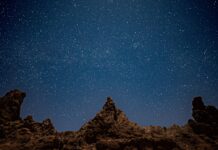
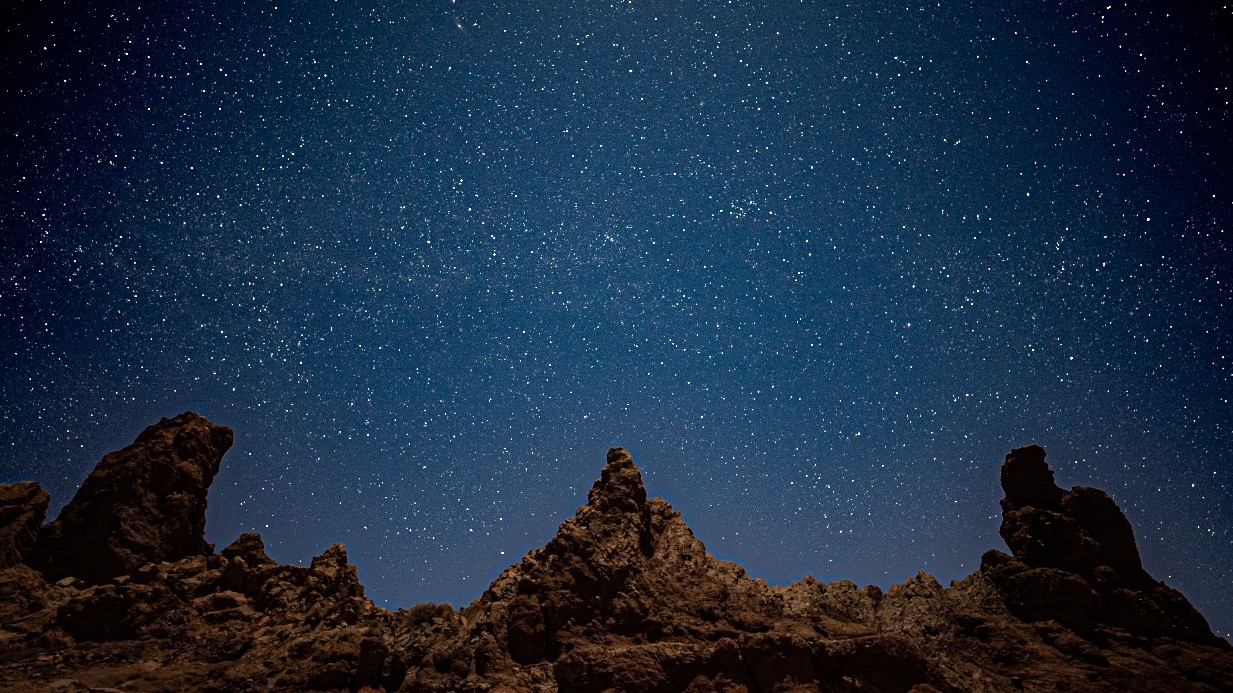
Central England’s light-polluted skies offered only faint glimpses of the cosmos. Even trips to rural areas felt like compromises. But in the Canaries, the sheer density of stars was overwhelming. Familiar constellations became disorienting; the Pleiades, usually a faint hunt, blazed with effortless clarity. Our neighboring galaxy, Andromeda, appeared not as a theoretical smudge, but as a pale, distinct haze visible to the naked eye. This wasn’t just seeing more stars; it was recalibrating my understanding of what a night sky could be.
Volcanic Landscapes and Astronomical Powerhouses
The journey, organized by New Scientist Discovery Tours, took us to some of the world’s premier observing sites: Roque de los Muchachos Observatory on La Palma and Teide Observatory in Tenerife. La Palma, with its towering volcanic peaks, felt like a geological documentary unfolding in real time. The climb to the observatory revealed a landscape shaped by eruptions and collapses, culminating in the colossal Gran Telescopio Canarias, the largest single optical telescope in the world.
Standing beneath this structure, its scale was humbling. Solar observations through a hydrogen alpha telescope revealed the sun as a dynamic, living surface, swirling with filaments and prominences. At night, the caldera viewpoint offered a scene of unbridled beauty: rugged volcano walls glowing gold, the sky melting into pink and orange hues, and then… the Milky Way arching overhead in breathtaking clarity.
From Moonscapes to Martian Terrain
The geological drama continued in Tenerife, where the landscape shifted from volcanic black to rust-colored Martian terrain around Teide National Park. The drive to the summit of Mount Teide, shrouded in mist, felt like ascending an alien world. Once inside, wide volcanic plains and ancient lava flows stretched as far as the eye could see.
At night, the bright moon cast long shadows across the stark landscape, while the caldera turned eerily quiet. Inside Teide Observatory, we explored instruments and learned about the unique conditions that make the islands ideal for astronomy. Looking out from the summit, the scale of the caldera became apparent; ancient lava flows tracing dark paths across centuries-old formations.
Protecting the Darkness
The Canary Islands don’t just have dark skies; they defend them. Designated Starlight Reserves, both La Palma and Teide National Park enforce strict lighting regulations: shielded streetlights, restricted blue LEDs, and carefully managed illumination levels. The results are immediate. No glowing horizons, no artificial haze—just a dark, rich sky teeming with stars. This is a powerful reminder of how much of the universe we obscure with artificial light.
A Shared Experience
The trip wasn’t just about telescopes and landscapes; it was about the people who shared it. Led by astronomer Martin Griffiths and tour leader Christopher Monckton, our group combined astronomy enthusiasts with curious beginners, creating a space for shared observations, stories, and late-night discussions. The Canary Islands offer not just extraordinary stargazing, but a transformative experience for anyone with even a passing interest in the cosmos. If you love the night sky, prepare to see it in a way you never imagined.
The Canaries aren’t just a destination; they’re a reminder of the universe’s hidden beauty, and how much we stand to lose if we don’t protect the darkness. The experience is transformative, challenging assumptions and revealing the cosmos in a way that reading alone can never achieve.