



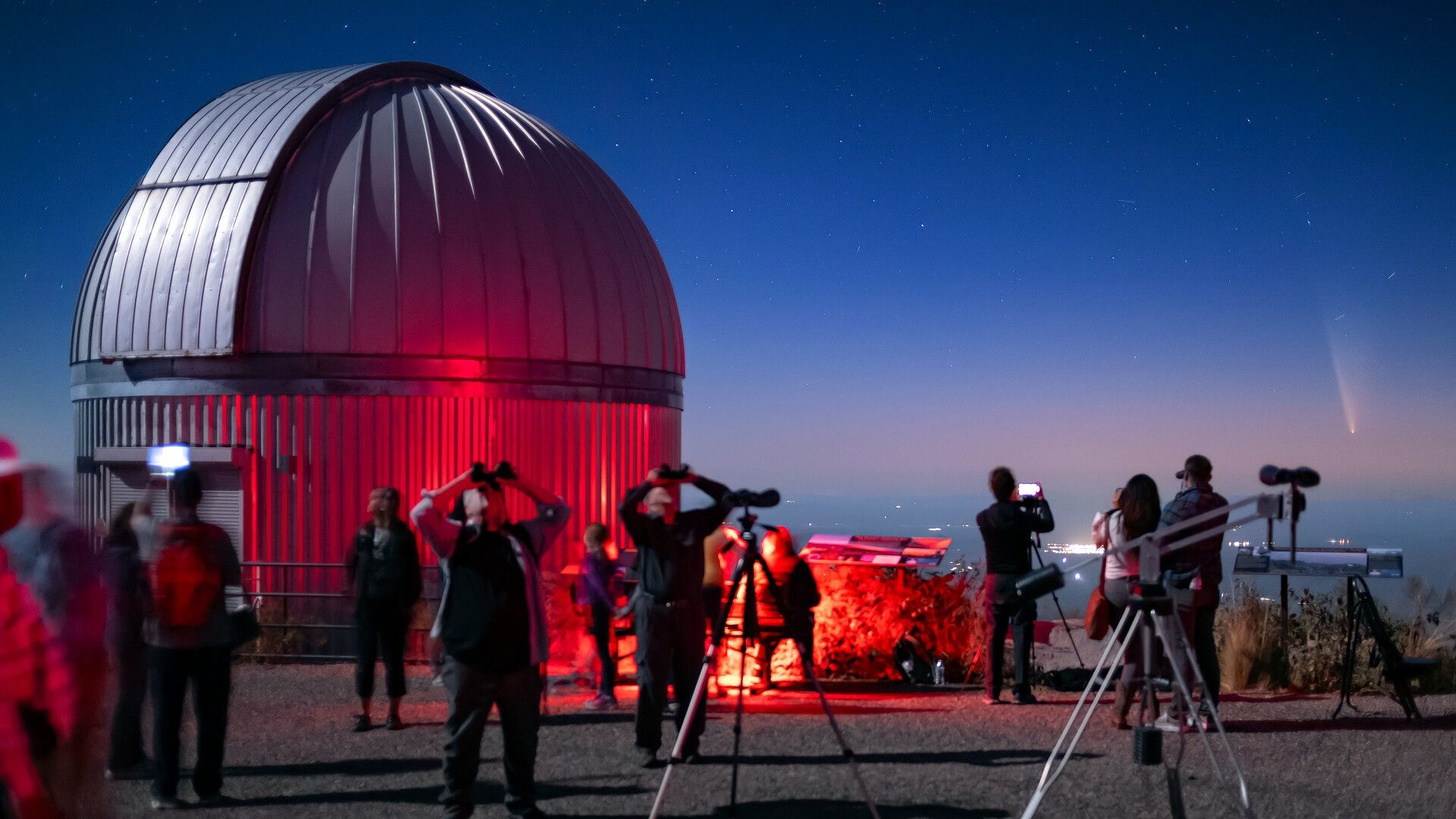
Comet C/2023 A3 (Tsuchinshan-ATLAS) is currently visible in the night sky, offering both professional astronomers and amateur stargazers a rare opportunity to observe a dynamic object from our solar system. Comets are typically icy bodies from the outer reaches of the solar system, becoming visible only when they approach the sun, vaporizing into glowing comas and tails.
What Makes This Comet Special?
Discovered in 2023, this comet originated from the distant Oort Cloud — a region of icy debris at the very edge of our solar system. It made its closest approach to the sun in late September 2024, followed by a relatively close pass to Earth in October 2024. This allowed scientists and enthusiasts alike to track its changes over time, observing its brightness and tail structure.
Comets offer a unique shared laboratory for researchers and the public, with each clear night revealing a slightly different view as the object moves across the heavens.
Observing from Kitt Peak
The Kitt Peak National Observatory (KPNO) in Arizona, part of the National Science Foundation’s NOIRLab, is an ideal location for observing celestial events. Situated on a mountaintop in the Sonoran Desert on the Tohono O’odham Nation, it houses many telescopes and has a history of public and scientific engagement.
Recently, observers gathered at Kitt Peak to view C/2023 A3 (Tsuchinshan-ATLAS) using binoculars and telescopes near the 3-foot (0.9 meter) SARA telescope. The comet’s unpredictability—its brightness and tail structure can change quickly—adds to the excitement, making each viewing unique.
Why This Matters
Cometary observations contribute to our understanding of the early solar system. These icy travelers are remnants from its formation, holding clues about the conditions that led to our planets. Studying comets helps us trace the origins of water and organic molecules on Earth and other celestial bodies.
The fact that this comet attracted wide attention demonstrates the enduring appeal of space exploration and the public’s interest in cosmic phenomena. This suggests that continued outreach and accessibility to astronomical events are essential for fostering scientific curiosity.
Comet C/2023 A3 (Tsuchinshan-ATLAS) serves as a reminder that the universe is dynamic, and even unpredictable, offering constant new opportunities for discovery.


