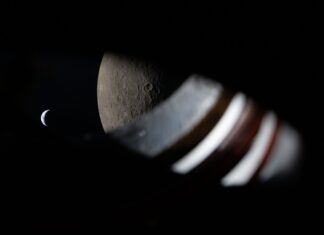






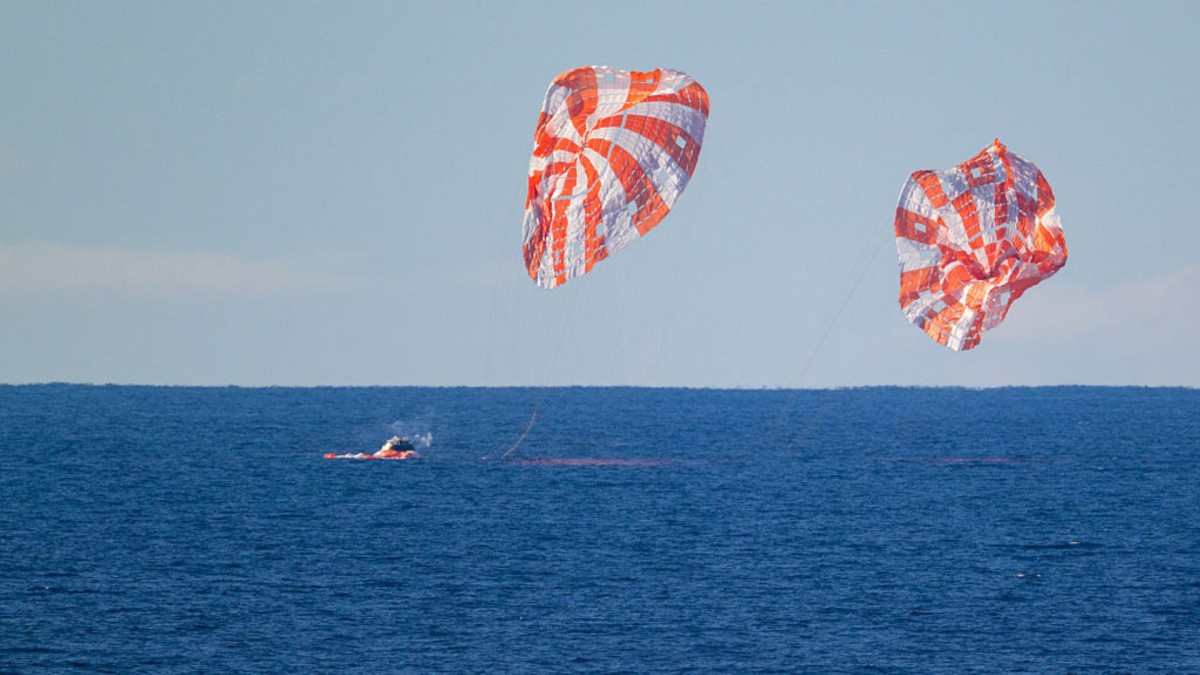
After a historic ten-day journey that pushed the boundaries of human endurance, the four astronauts of NASA’s Artemis II mission have returned safely to Earth. The crew successfully splashed down in the Pacific Ocean, just one mile from their intended target, marking the first time humans have ventured into deep space in over half a century.
The Perilous Return: Surviving Reentry
The most critical phase of the mission—the reentry into Earth’s atmosphere—was a high-stakes display of physics and engineering. As the Orion spacecraft descended at speeds exceeding 24,000 mph (40,000 km/h), it encountered several extreme physical challenges:
- Extreme Heat: The friction of the atmosphere created a plasma fireball around the craft, with temperatures reaching 2,700°C (4,892°F) —roughly half the temperature of the sun’s surface.
- High G-Forces: During deceleration, the crew experienced gravitational forces nearly four times that of Earth, making them feel significantly heavier.
- The “Blackout” Period: For six tense minutes, the intense heat caused a total communications blackout. During this window, which was watched by over 20 million people via livestream, mission control and the world were left in silence.
The tension broke when Commander Reid Wiseman confirmed the crew’s safety, stating: “Houston, Integrity here. We hear you loud and clear.”
A Precision Splashdown
Following the reentry, the Orion capsule utilized a sophisticated sequence of four different parachute designs to slow its descent. This precision allowed the craft to land approximately 2,000 miles southwest of San Diego in a “perfect bull’s eye” landing.
Once in the water, a naval rescue team extracted the astronauts and transported them via helicopter to the USS John P. Murtha for medical evaluation.
Recovery and Scientific Analysis
While the mission is a celebrated success, the astronauts’ work is not yet finished. Before they can begin their recovery, the crew must undergo a series of rigorous physical tests. These “obstacle courses,” conducted both in and out of their specialized suits, are designed to study how the human body adapts to prolonged weightlessness—data that is vital for future long-duration spaceflight.
“The crew are ambassadors for humanity,” noted NASA Administrator Jared Isaacman during the recovery process.
Why This Matters: The Road to the Moon and Mars
The Artemis II mission is far more than a singular feat of exploration; it is a foundational step in a multi-decade roadmap for deep-space habitation. By successfully navigating a crewed mission around the moon, NASA has validated the systems necessary for much more ambitious goals, including:
- Lunar Settlements: Establishing a permanent human presence on the Moon.
- Commercial Partnerships: Testing docking and rendezvous capabilities with lunar landers from SpaceX and Blue Origin by 2027.
- The Mars Frontier: Building the logistical and biological knowledge required to eventually send humans to Mars.
Conclusion: The successful return of Artemis II marks a turning point in space exploration, proving that humanity can safely navigate the rigors of deep space and setting the stage for a permanent presence on the Moon and beyond.