
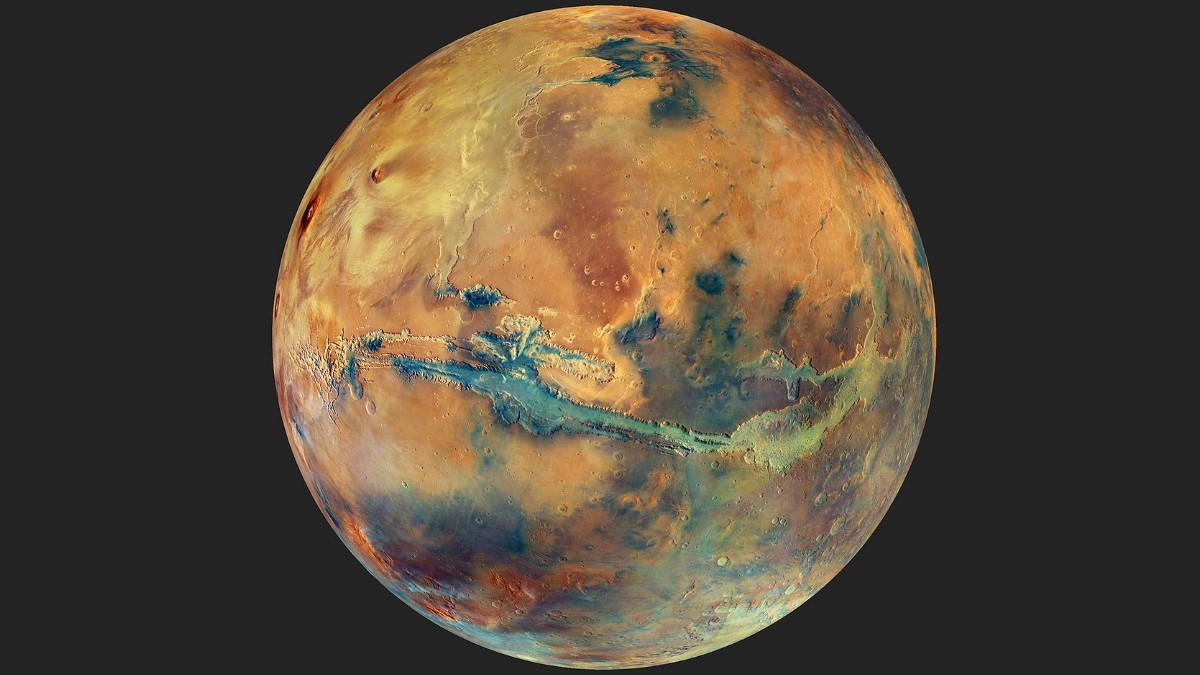
Recent research from physicists at the National Institute of Standards and Technology (NIST) has precisely quantified how time passes differently on Mars compared to Earth. Clocks on the red planet, on average, tick 477 microseconds (477-millionths of a second) faster per day than those on Earth. While seemingly minuscule, this discrepancy is critical for coordinating missions requiring split-second precision across multiple planets.
Relativity and Gravitational Time Dilation
The difference arises from Einstein’s theory of general relativity, which posits that gravity affects time. Stronger gravitational fields slow down time, while weaker fields allow it to pass more quickly. Earth’s higher mass creates a stronger gravitational pull, making time run slower than on Mars, where gravity is weaker due to its smaller size. This effect isn’t just theoretical; it’s already accounted for in systems like GPS satellites, where atomic clocks run faster in orbit due to less gravity and relative velocity.
A Four-Body Problem
Calculating Martian time is more complex than lunar time, which NIST had previously standardized. The Moon’s timekeeping is affected by the gravitational interplay between the Earth, Sun, and Moon. But Mars involves a “four-body problem,” factoring in the Sun, Earth, Moon, and Mars. This is because Mars has a weaker surface gravity (five times less than Earth’s) and a more eccentric orbit, resulting in greater fluctuations in its gravitational potential.
Fluctuations in Martian Time
The average time difference of 477 microseconds per day on Mars isn’t constant. The discrepancy varies by up to 266 microseconds daily throughout a Martian year (which is 687 Earth days long). This is because Mars’s orbit is more elliptical than Earth’s, causing it to experience greater swings in gravitational influence from the Sun. Moreover, Mars’s day is longer than Earth’s, taking an additional 40 minutes for a full rotation.
The Future of Interplanetary Timekeeping
Precise timekeeping is becoming essential for future space exploration. As human missions to Mars become more likely, accurate synchronization between Earth, the Moon, and Mars will be critical for navigation, communication, and mission operations. NIST’s research represents a vital step towards establishing a scalable interplanetary timekeeping infrastructure, ensuring autonomous synchronization across the solar system.
“The time is just right for the Moon and Mars,” explains Patla. “This is the closest we have been to realizing the science fiction vision of expanding across the Solar System.”