

















Astronomers are re-examining a decades-old puzzle: unexplained flashes of light captured on photographic plates from the Palomar Observatory in the 1950s. These fleeting events, observed before the launch of the first satellites, coincided with historical spikes in Unidentified Anomalous Phenomena (UAP) reports and, notably, periods of Cold War nuclear testing.
The new research, published in Scientific Reports, suggests a striking correlation between these transient objects and nuclear detonations. Specifically, the probability of these flashes appearing increased by 45% within 24 hours of a nuclear test by the US, Soviet Union, or Great Britain. Each additional UAP report on a given day corresponded to an 8.5% rise in transients. While the researchers emphasize no proven cause-and-effect relationship, the findings raise the question: were these events natural, instrumental errors, or something else?
The Challenge of Historical Data
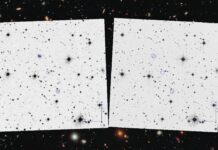
The study analyzed over 2,700 nights of data from the first Palomar Observatory Sky Survey (POSS-I), digitized from original glass plates. These images captured broad stretches of the northern sky with exposures lasting 50 minutes. The team found transients—fleeting points of light—appearing on 310 nights, sometimes with as many as 4,528 flashes in a single day.
The problem is the era’s limitations: pre-Sputnik data is inherently unreliable. Michael Garrett, director of the University of Manchester’s Jodrell Bank Centre for Astrophysics, praised the research for its creativity but cautioned against over-interpreting the results. “My main worry is not the quality of the research team but the quality of the data,” he said.
Competing Explanations
The team has ruled out some common explanations, like variable stars or meteors. Some of the transients displayed sharp, point-like shapes arranged in straight lines, which the researchers say defy known natural or instrumental causes. Study co-author Stephen Bruehl suggests the possibility of artificial objects, asking: “If it turns out that transients are reflective artificial objects in orbit… who put them there, and why do they seem to show interest in nuclear testing?”
However, others propose more conventional explanations. Nuclear astrophysicist Michael Wiescher notes that nuclear explosions eject metallic debris and radioactive dust into the upper atmosphere, which could appear as brief light bursts through a telescope. Villarroel and Bruehl counter that such fallout would create diffuse smudges, not the distinct points observed in the Palomar plates.
The Role of Imperfect Records
A third perspective suggests that the mystery lies in the flaws of the historical records. Robert Lupton of Princeton University points out that astronomy has a history of misinterpreting alignments, while Nigel Hambly of the University of Edinburgh notes that scratches, dust, and other imperfections on the photographic plates can mimic transient objects.
Looking Forward
The debate underscores the challenges of investigating anomalies with limited data. Experts agree that independent analyses, revisiting original plates, and conducting microscopic examinations are necessary. The question remains open: were these flashes evidence of extraterrestrial interest, classified military technology, or simply artifacts of imperfect historical data? Further investigation is crucial to resolve this long-standing mystery.