





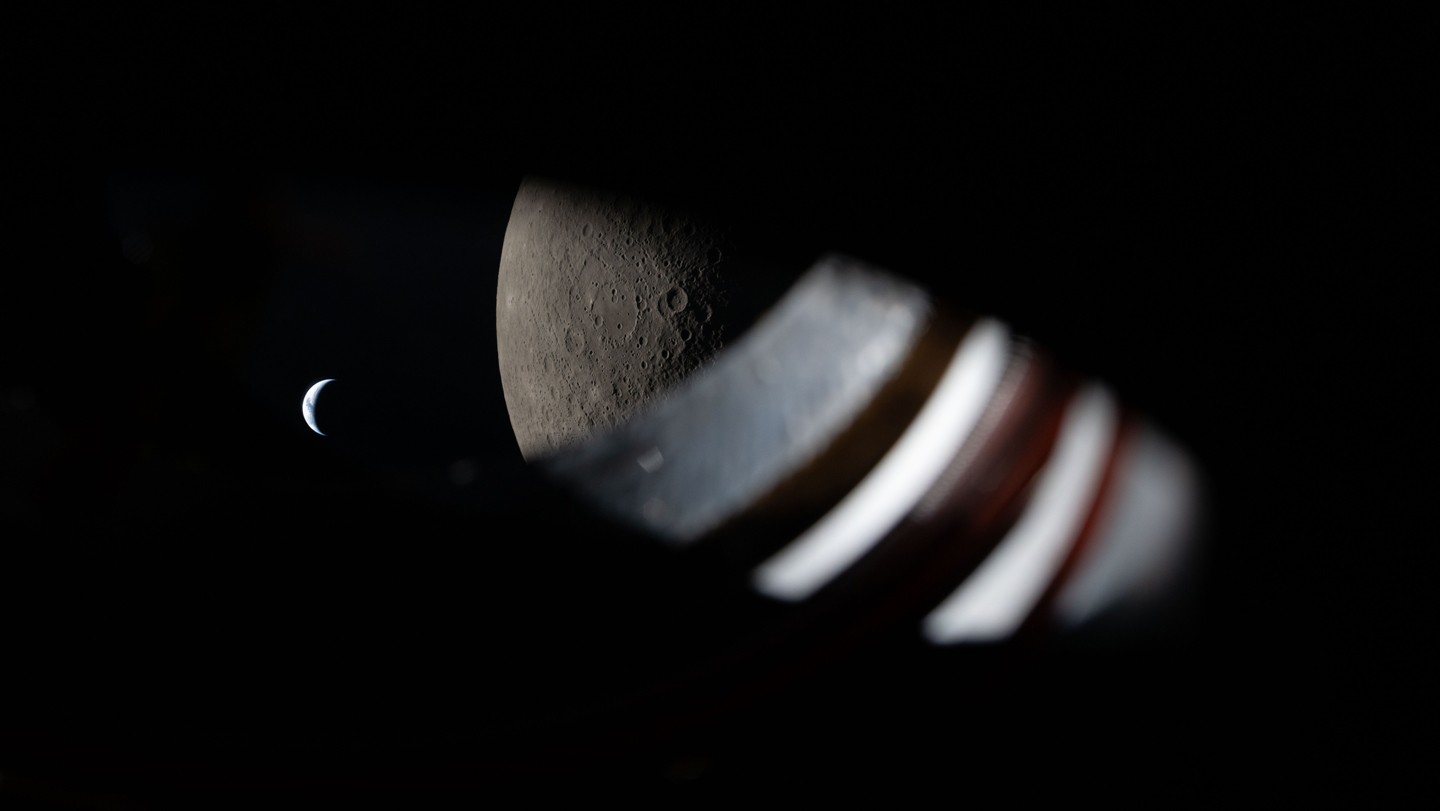
The Artemis II mission is approaching its most critical phase: the journey back to Earth. After a historic flyby of the Moon, the Orion spacecraft and its four astronauts are scheduled to conclude their mission with a splashdown off the coast of San Diego on April 10 at 8:07 p.m. ET.
NASA will provide live coverage of the reentry process starting at 6:30 p.m. ET via its official website and various streaming platforms.
The Perilous Reentry Process
The transition from the vacuum of space to Earth’s atmosphere represents the mission’s most intense technical challenge. At approximately 7:53 p.m., the Orion capsule will hit the atmosphere at an altitude of 122 kilometers, traveling at a staggering speed of over 38,000 kilometers per hour.
This high-velocity reentry presents two primary challenges for the crew and mission control:
- The Communication Blackout: As the capsule hits the atmosphere, friction will heat the heat shield to an incredible 2,760°C. This creates a layer of superheated plasma around the craft, which will sever all communication between the astronauts and mission control for roughly six minutes.
- Thermal Stress: Engineers are closely monitoring the integrity of the heat shield. During the uncrewed Artemis I mission in 2022, the Orion capsule returned with unexpected damage, including cracks and missing material.
Learning from Past Lessons
The scrutiny surrounding the heat shield is not unfounded. Following the Artemis I mission, NASA discovered that trapped gases had built up beneath a layer of Avcoat —the material designed to decompose and dissipate heat.
Rather than replacing the shield entirely, NASA engineers implemented a strategic adjustment: they redesigned the spacecraft’s reentry trajectory. By altering the angle and path of descent, they aim to reduce the extreme heat stress on the material, a move intended to ensure the safety of the Artemis II crew.
From Plasma to Splashdown
Despite the high-tech complexities, the fundamental mechanics of the return mission remain rooted in proven aerospace principles. Artemis II flight director Jeff Radigan noted that the mission’s “big picture” closely parallels the legendary Apollo missions rather than modern low-Earth orbit returns.
Once the intense heat of reentry has passed, the descent will transition into a mechanical deceleration phase:
1. Parachute Deployment: At an altitude of 7.6 kilometers, Orion will deploy 11 parachutes to slow the capsule to a manageable 30 km/h.
2. Stabilization: Upon hitting the water, five orange airbags will inflate with helium to keep the capsule upright.
3. Recovery: The crew will exit the craft onto a specialized raft known as the “front porch” before being transported back to Houston via helicopter, boat, and airplane.
“We have high confidence in the system, the heat shield and parachutes and recovery systems together. The crew is going to put their lives behind that confidence.” — Amit Kshatriya, NASA Associate Administrator
Conclusion
The successful return of Artemis II will validate NASA’s ability to safely transport humans beyond low-Earth orbit. This mission serves as a vital bridge between the historic Apollo era and a future where sustained human presence on the Moon becomes a reality.