



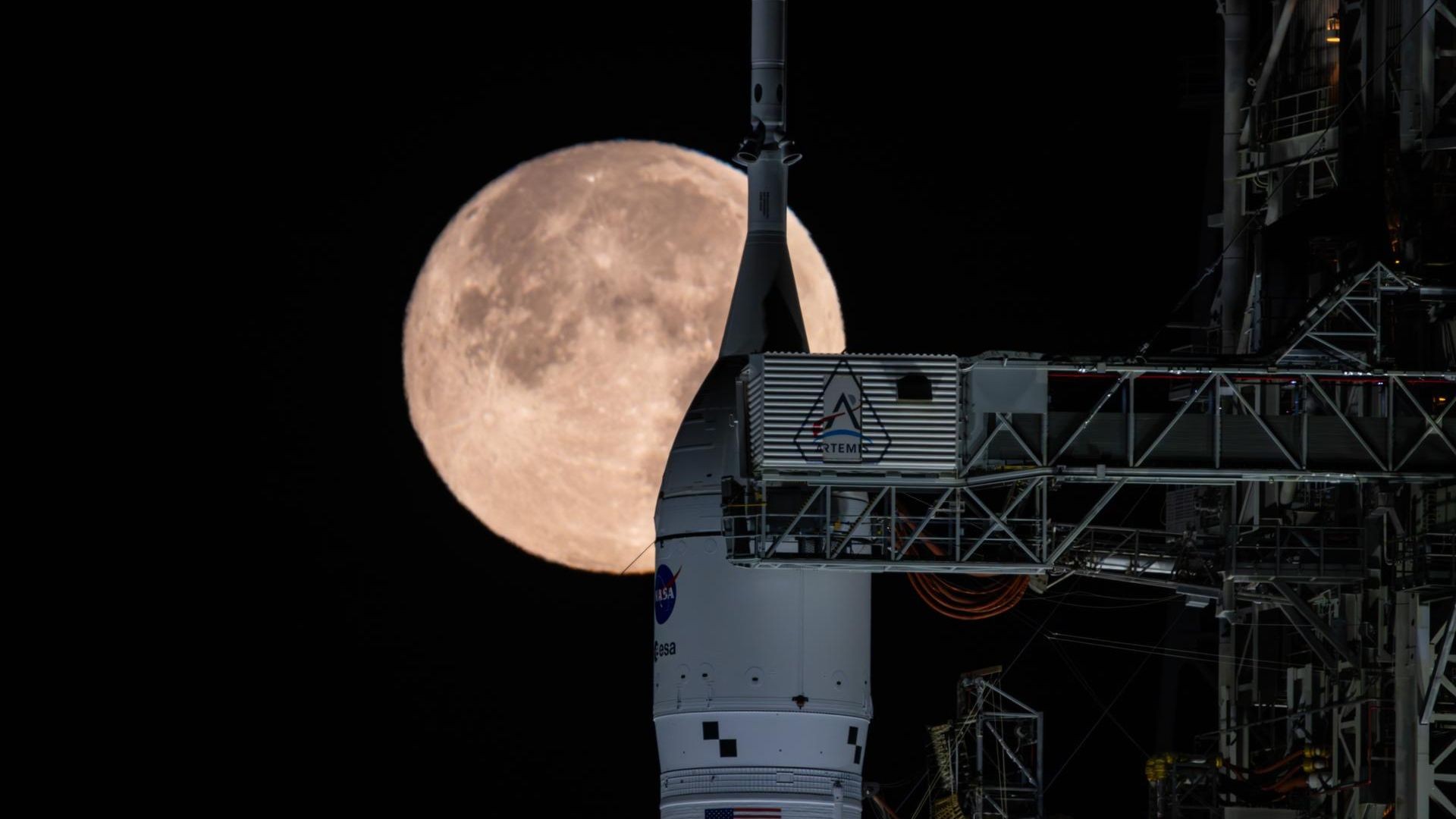
NASA is preparing to move the Artemis 2 Space Launch System (SLS) rocket and Orion spacecraft back to the Vehicle Assembly Building (VAB) on Wednesday, February 25, due to a helium flow interruption detected in the rocket’s upper stage. The four-mile journey, expected to take up to 12 hours, will begin around 9 a.m. EST (1400 GMT), using the massive Crawler-Transporter 2 vehicle.
Background of Artemis 2 Testing
The SLS rocket was initially rolled out to Launch Pad 39B at the Kennedy Space Center (KSC) on January 17, followed by a series of wet dress rehearsals (WDRs) to simulate launch procedures. The first WDR was cut short on February 2 when a liquid hydrogen (LH2) leak was identified and addressed. A second WDR completed successfully on February 19, initially positioning the mission for a March 6 launch attempt.
The Helium Flow Issue and Its Importance
The current setback stems from a disruption in helium flow within the upper stage of the SLS rocket. Helium is crucial for pressurizing the propellant tanks, which hold over 730,000 gallons of LH2 and liquid oxygen. Without proper helium pressure, the rocket cannot safely and efficiently deliver fuel to its engines, making a launch impossible.
This issue highlights the inherent complexities of large-scale rocket systems; even minor technical hiccups can necessitate extensive troubleshooting and delays.
Impact on Launch Schedule
The rollback to the VAB effectively rules out a March launch window, which extended only through March 11. NASA is now assessing opportunities during the next available window opening April 1, with additional options between April 3-6 and on April 30.
Mission Details
The Artemis 2 mission aims to send four astronauts – NASA’s Reid Wiseman, Victor Glover, and Christina Koch, along with the Canadian Space Agency’s Jeremy Hansen – on a ten-day lunar flyby. This mission is a critical step toward establishing a sustained human presence on the Moon, building on the success of the uncrewed Artemis 1 mission.
The rollback to the VAB allows NASA engineers to diagnose and resolve the helium issue before proceeding with further testing and ultimately, launch.