

A recent archaeological excavation near Thetford, Norfolk, has yielded an extraordinary find: a remarkably well-preserved Iron Age war trumpet (carnyx) and the first-ever British example of a boar’s head standard. The discovery, made by Pre-Construct Archaeology during a routine site evaluation, is being hailed as “exceptionally rare” and promises to reshape understanding of Celtic warfare and ritual.
A Unique Hoard
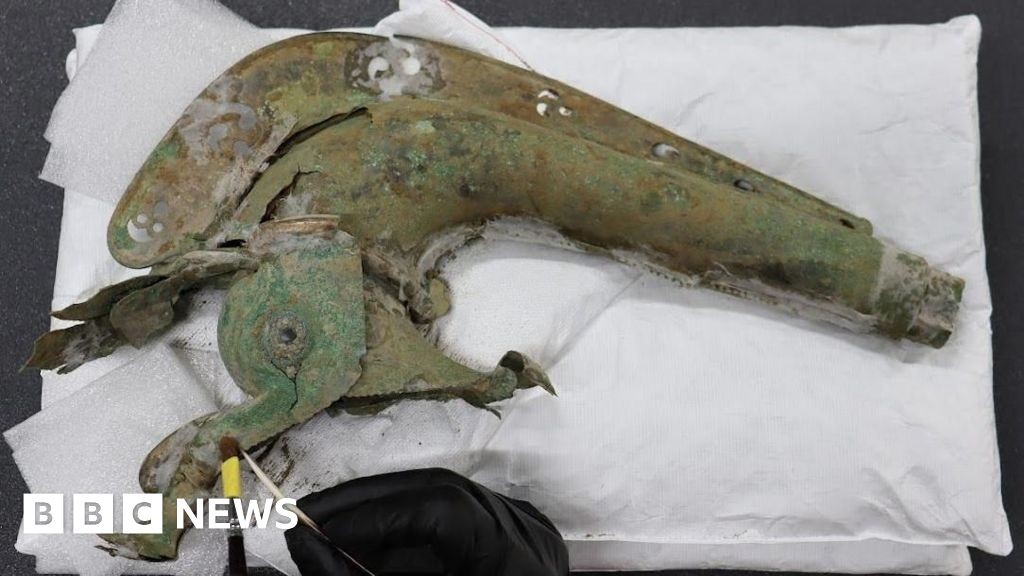
The unearthed hoard, dating from approximately 50 BC to AD 50, includes not only the carnyx and boar standard but also five shield bosses and an unidentified iron object. What sets this find apart is the completeness of the carnyx; unlike other discoveries, this example retains its mouthpiece, pipe, and bell intact – a crucial detail for understanding how these instruments were played and their intended effect on the battlefield.
The carnyx was a central tool in Celtic warfare. These large, bronze instruments were designed to intimidate enemies, galvanize warriors, and direct troops during battle. The Iceni tribe, led by Queen Boudica, were among the Celtic groups that wielded these instruments, and their use fascinated the Romans, who frequently depicted them as spoils of war. The newly discovered carnyx will allow researchers to better understand the auditory impact of these trumpets on ancient battlefields.
Symbolism and Ritual
The boar’s head standard is equally significant. Constructed from sheet bronze, it would have been raised as a rallying point during combat. The boar was seen as a symbol of strength and ferocity; an appropriate emblem for warriors entering battle. The find challenges the existing understanding of how Celtic armies organized and motivated themselves, as only a handful of such standards have ever been discovered.
Conservation and Future Research
The objects were carefully removed from the soil in a block to preserve their original arrangement before undergoing conservation. The fragile metal sheets, corroded after two millennia underground, are being meticulously stabilized by experts at Historic England, Norfolk Museums Service, and the National Museum of Scotland. The long-term fate of the hoard is currently under review, pending a coroner’s inquest to determine if it qualifies as treasure.
The discovery offers a rare window into Norfolk’s Iron Age past, linking it directly to the legacy of Boudica and the Iceni people. As Dr. Tim Pestell of Norfolk Museums Service explained, the hoard will allow archaeologists to “investigate a number of rare objects and ultimately, to tell the story of how these came to be buried in the county 2,000 years ago.”
The story will be featured on BBC Two’s Digging for Britain on January 14th. The find is a powerful reminder that even routine construction projects can reveal extraordinary pieces of history.