
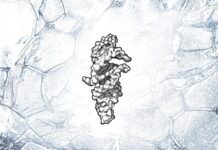


Researchers have discovered an RNA molecule, dubbed QT45, that performs nearly all the steps required for self-replication – a crucial process in the leading theory of how life began. This breakthrough provides strong evidence supporting the “RNA world” hypothesis, which posits that RNA, not DNA, was the primary genetic material in early life. The discovery is significant because it demonstrates that a relatively simple molecule can catalyze the reactions necessary for copying itself, even if not simultaneously in current experiments.
The RNA World Hypothesis and the Challenge of Self-Replication
For decades, scientists have theorized that life originated from RNA molecules capable of self-replication. RNA, unlike DNA, can both store genetic information and act as an enzyme, catalyzing chemical reactions. This dual function makes it a prime candidate for the earliest forms of life. However, finding an RNA molecule that reliably self-replicates has been a major hurdle. Previous attempts required large, complex RNA structures that are unlikely to have formed spontaneously on the early Earth.
QT45: A Breakthrough in Simplicity
The research team, led by Philipp Holliger at the MRC Laboratory of Molecular Biology, bypassed this complexity by searching for smaller, simpler RNA sequences. Starting with a trillion random 20–40 nucleotide sequences, they identified three that could link nucleotides together. Through repeated rounds of mutation and selection, they evolved these into a 45-nucleotide molecule (QT45) that can now catalyze the creation of complementary RNA strands, including sequences mirroring its own.
Key Findings:
- QT45 can assemble short nucleotide chains, effectively copying RNA templates.
- The molecule can make copies of itself from those complementary strands.
- While full self-replication (both reactions happening simultaneously) hasn’t been achieved yet, it’s within reach.
Why This Matters: Conditions on Early Earth
The conditions required for QT45 to function – alkaline water just above freezing – closely resemble environments that existed on the early Earth, such as Iceland-like regions with hydrothermal activity and freeze-thaw cycles. These cycles would have provided the energy needed to drive the reactions, while pockets of meltwater or fatty acid vesicles could have contained the necessary components.
The discovery of QT45 isn’t just about replicating RNA in a lab; it reveals how a self-optimizing system could have evolved naturally. Because the process introduces errors, some variations will inevitably function better, leading to exponential replication of the most successful strands.
“The most exciting thing is, once the system begins to self-replicate, it should become self-optimizing,” says Holliger.
Future Steps and Expert Validation
The team plans to further evolve QT45 and explore conditions that allow simultaneous replication. Experts agree this is a significant advance. Sabine Müller of the University of Greifswald notes the results are “exceptional,” while Zachary Adam of the University of Wisconsin-Madison emphasizes the improbability of finding QT45 among an “unimaginably large” number of possible sequences.
The discovery of QT45 marks a pivotal moment in understanding the origins of life, proving that self-replication via RNA isn’t just theoretical but demonstrably achievable with relatively simple molecular structures.