



Astronomers are grappling with a long-standing puzzle: the ambiguous boundary between massive planets and small stars. New research suggests that the distinction may not be as clear-cut as previously thought, challenging traditional definitions of how these celestial objects form. Instead of a sharp divide, the universe appears to favor a spectrum where some “failed stars” may actually be overgrown planets, and vice versa.
The Traditional View vs. Reality
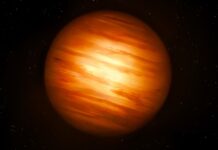
For decades, scientists believed that stars and planets formed in fundamentally different ways. Stars ignite through nuclear fusion, requiring at least 80 times the mass of Jupiter and forming from the collapse of gas clouds. Planets, on the other hand, grow incrementally via core accretion, where dust and gas accumulate around a central rocky core. However, objects between 13 and 80 Jupiter masses—brown dwarfs and sub-brown dwarfs —blur this line.
These intermediate bodies can fuse deuterium (a heavier form of hydrogen) but lack the mass to sustain full hydrogen fusion. Some seem to form like stars, while others appear to coalesce like planets. This ambiguity undermines the simple notion that mass dictates formation.
The Evidence: A Messy Continuum
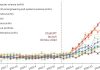
Recent studies examining 70 objects—ranging from Jupiter-sized planets to near-stellar brown dwarfs—have found no clear dividing line between formation mechanisms. Researchers looked at factors like host star composition (metallicity) and orbital characteristics (eccentricity) to see if they could correlate mass with formation pathway.
- Metallicity: Gas giants require metal-rich environments to accrete enough mass quickly enough. Yet, the study found no consistent link between a planet’s size and the metallicity of its star system. This implies that some massive objects may grow via accretion even in metal-poor systems.
- Orbital Eccentricity: Larger, more star-like objects tend to have more eccentric orbits (less circular). However, the observed trend was gradual, not a clean separation between planetary and stellar formation.
Failed Stars or Overgrown Planets?
In 2024, researchers discovered a brown dwarf that formed via core accretion, essentially making it the largest planet ever observed. Conversely, some sub-brown dwarfs seem to have collapsed from gas clouds, failing to become even proper brown dwarfs. This suggests that formation is not always determined by mass alone.
“Exactly how large of an object can be formed by core accretion or how small of an object can be formed by disk instability or cloud fragmentation remains to be determined,” researchers wrote in their paper.
Why This Matters
The ambiguity surrounding brown dwarf and sub-brown dwarf formation highlights the complexities of the universe. It challenges the idea that objects can be neatly categorized, reminding us that nature often defies simplistic classifications. Understanding these intermediate bodies is crucial for refining models of star and planet formation and for accurately identifying exoplanets in distant star systems.
The current study suggests that either we lack sufficient data or that the right combination of parameters hasn’t been found to draw a clear distinction. Until then, the boundary between stars and planets will remain blurry—a testament to the messy, fascinating reality of astrophysics.