


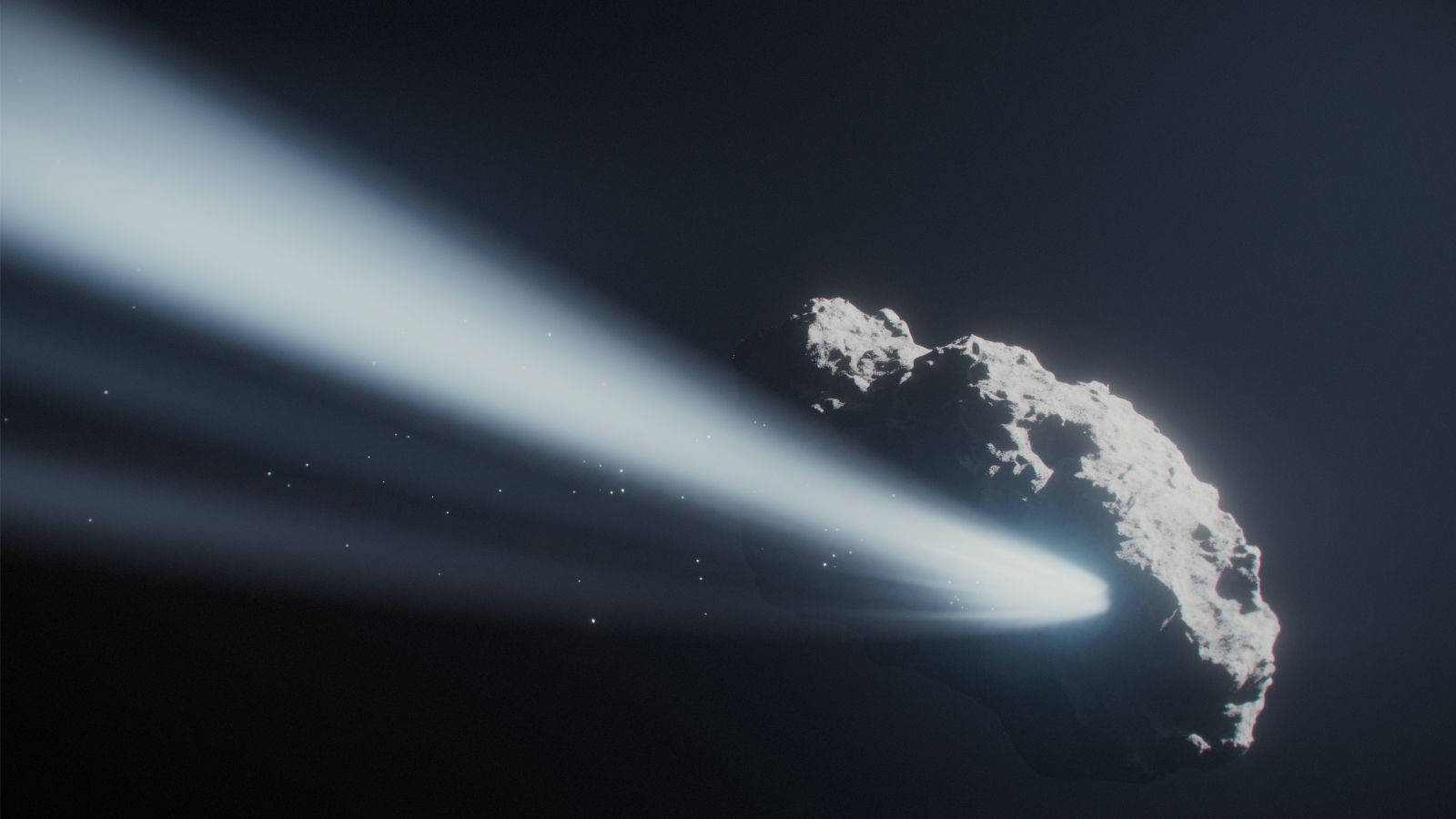
Astronomers have witnessed an unprecedented event: a comet dramatically reversing its spin due to the force of its own escaping gas and dust. New analysis of Hubble Space Telescope images reveals that comet 41P Tuttle-Giacobini-Kresák (41P) not only slowed its rotation but completely flipped it, a phenomenon never before observed in a comet. This unusual behavior raises questions about the long-term stability of smaller comets and suggests 41P may be on a path to self-destruction.
A Comet with a History
41P has a convoluted discovery story, first spotted in 1858 by Horace Parnell Tuttle, then rediscovered decades later by Michel Giacobini in 1907 and L’ubor Kresák in 1951. It’s a relatively small comet, originating from the Kuiper Belt beyond Neptune, now orbiting the Sun every 5.4 years after being gravitationally nudged by Jupiter around 1,500 years ago. This orbit brings it close enough to Earth for easy observation during its perihelion (closest approach to the sun).
Unexpected Spin Reversal
The key finding comes from re-analyzing Hubble images taken in 2017. Astronomers initially noted a slowdown in 41P’s rotation due to “outgassing”—the release of icy material as it nears the Sun. However, further scrutiny revealed that the comet not only slowed but reversed direction by December 2017, spinning nearly three times faster than it had in March of the same year.
This reversal is explained by uneven jets of gas and dust shooting off the comet’s surface, acting like thrusters that can dramatically alter the rotation of smaller objects. As UCLA astronomer David Jewitt explains, it’s “like pushing a merry-go-round” – applying force in one direction can slow and eventually reverse the spin.
What Does This Mean?
Comet 41P is only about 0.6 miles (1 kilometer) across—smaller than many others. This size makes it more susceptible to the effects of outgassing, where jets of escaping material can have a greater impact on its rotation. The discovery suggests that smaller comets are more fragile than previously thought, and repeated outgassing events could lead to their disintegration.
“I expect this nucleus [41P] will very quickly self-destruct,” Jewitt stated, implying the comet may break apart during future passes near the sun.
Similar events have been observed in other comets, like the “devil comet” 12P/Pons-Brooks and interstellar object 3I/ATLAS, but the complete spin reversal in 41P is a first. This raises the question of how common such events are and whether other small comets face similar fates.
Ultimately, the observation of 41P’s spin reversal provides critical insight into the dynamics of comets and underscores the importance of re-examining archived data, which often contains hidden discoveries. The future of this particular comet is likely short-lived, offering a rare chance to witness a celestial body unravel in real-time.