





Large pieces of uncontrolled space debris falling back to Earth create shockwaves that can be detected by seismometers, providing a new method for tracking where these objects impact. A recent study led by planetary seismologist Benjamin Fernando at Johns Hopkins University demonstrates that sonic booms from disintegrating spacecraft can be used to pinpoint the crash site of falling debris, which is crucial for safety.
The Incident: Shenzhou-15 Module’s Unplanned Return
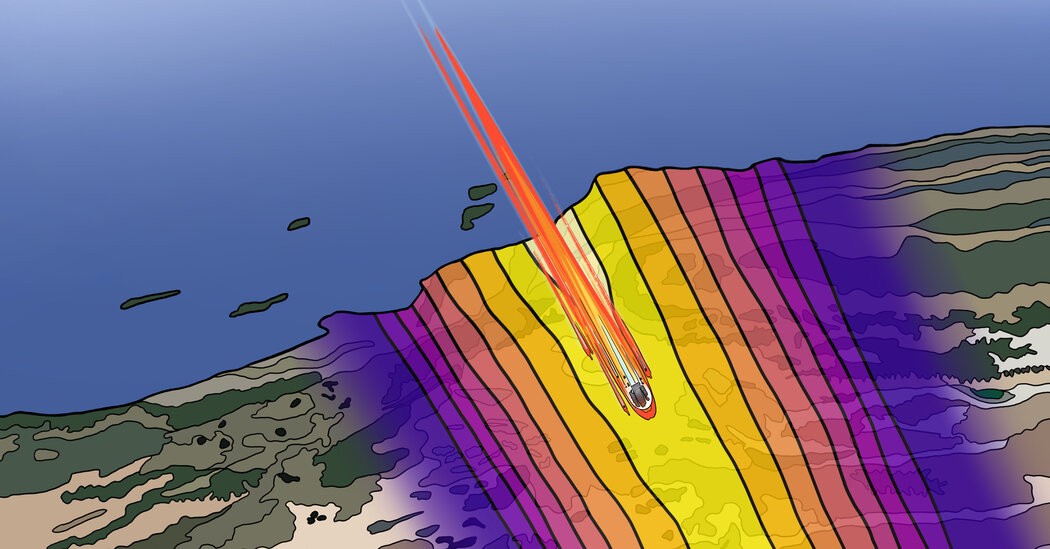
On April 2, 2024, residents in Southern California witnessed an unexpected aerial event: a 3,300-pound orbital module from China’s Shenzhou-15 mission re-entered the atmosphere at hypersonic speeds. This module was initially deployed from the spacecraft in 2022, but its decaying orbit unexpectedly brought it back towards Earth. The module was not designed for controlled re-entry, meaning its descent was unpredictable and potentially dangerous.
Why This Matters: The Risk of Uncontrolled Re-entry
Uncontrolled re-entry events pose a real risk of fatalities if debris strikes populated areas or aircraft. While luck prevented casualties in the Shenzhou-15 incident, the danger remains high: space debris travels at such extreme speeds that avoidance is nearly impossible without accurate tracking. The module’s descent could have been catastrophic had it impacted a plane mid-flight or landed in a densely populated zone.
How It Works: Sonic Booms as Tracking Signals
Dr. Fernando’s team leveraged seismometers—instruments typically used to detect earthquakes—to analyze the sonic booms generated as the module broke apart in the atmosphere. The study, published in Science this week, shows that these sensors across California registered the shockwaves, allowing researchers to map the debris’s trajectory and estimate its impact zone.
The key takeaway: Seismic data can provide valuable insights into how and when spacecraft components disintegrate, enabling better prediction of where fragments will fall. This method offers a new layer of safety for areas beneath potential re-entry paths.
Future Implications
Currently, warning people to avoid falling space debris is difficult, given the unpredictability of these events. However, the ability to map trajectories using seismometers could significantly improve our capacity to warn at-risk populations. This approach offers a proactive solution to a growing concern as more space missions launch and orbital debris accumulates.
The research underscores the need for improved space debris management and better tracking technologies to mitigate the risks associated with uncontrolled re-entry. By combining atmospheric data with seismic analysis, we can move closer to safeguarding communities from the hazards of falling space junk.