
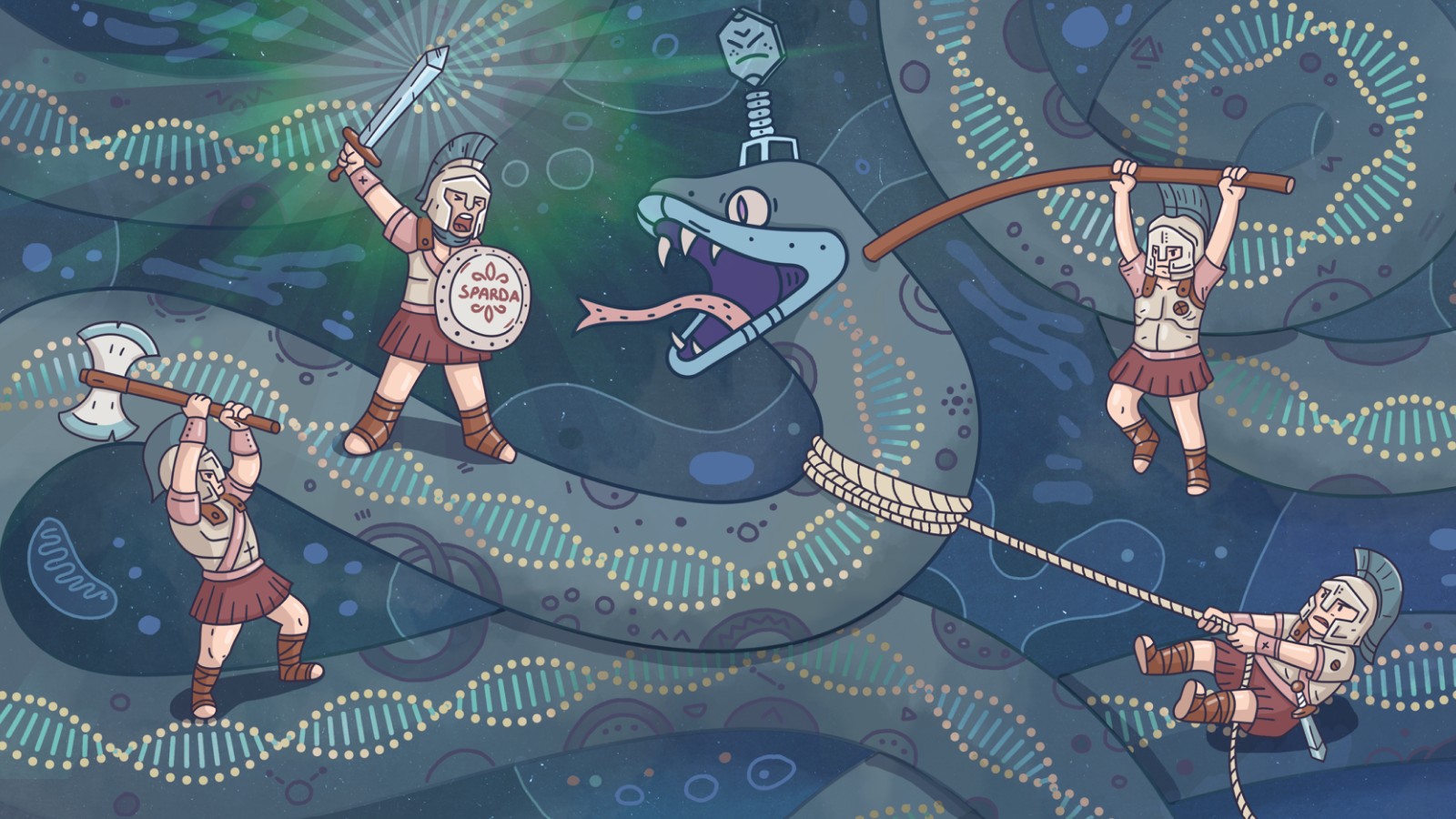
Scientists are uncovering the secrets of SPARDA, a naturally occurring bacterial defense mechanism that could revolutionize genetic research and diagnostics. While CRISPR has dominated the gene-editing landscape, SPARDA represents one of many unexplored systems in nature with untapped potential. A new study reveals how this “kamikaze” system works at a molecular level, opening doors for more versatile biotech tools.
Bacterial Immune Systems: Beyond CRISPR
CRISPR isn’t the only game in town. Bacteria have evolved a vast array of defense systems to protect themselves from viruses (phages) and foreign DNA like plasmids. SPARDA (short for prokaryotic Argonaute, DNase associated) is one such system, known for its drastic approach: destroying infected cells and the invading genetic material to prevent further spread. Before this recent research, SPARDA was understood only in broad strokes.
How SPARDA Works: Molecular Self-Sacrifice
Researchers used AI protein analysis (specifically, DeepMind’s AlphaFold) to map the structure of SPARDA proteins. The system hinges on Argonaute proteins, named for their resemblance to octopus tentacles due to their shape. These proteins, found across all life, contain a critical “activating region” called the beta-relay.
When SPARDA detects a threat, the beta-relay changes shape, activating the protein. Activated proteins then assemble into spiraling chains that indiscriminately shred any nearby DNA, effectively killing the host cell but stopping the infection cold. This is a last-ditch defense, deployed only when an infection is certain.
SPARDA vs. CRISPR: A Universal Adapter
The key advantage of SPARDA lies in its flexibility. Existing CRISPR-based diagnostics require specific DNA sequences (PAM sequences) to function, like a plug needing a matching socket. SPARDA, however, doesn’t need these PAM sequences.
This means SPARDA could act as a “universal adapter” for DNA diagnostics, making tests more accurate and versatile. Instead of being limited to targets with specific flanking sequences, SPARDA could be engineered to react to any genetic material of interest—like flu viruses or SARS-CoV-2—with greater reliability.
Future Implications
SPARDA’s highly accurate recognition system makes it ideal for diagnostics. By altering the beta-relay, scientists could create tools that respond only to specific genetic sequences, offering a more efficient and adaptable alternative to current CRISPR methods. The discovery underscores the vast potential hidden within bacterial immune systems, waiting to be unlocked for biotechnology applications.
This research is a reminder that nature’s toolkit is far richer than previously imagined. The ability to harness these unexplored systems could lead to breakthroughs in diagnostics, gene editing, and beyond.