





Rock climbers in Italy have unearthed extraordinary evidence of a prehistoric panic: a mass exodus of sea turtles fleeing an earthquake approximately 80 million years ago. The discovery, detailed in a recent Cretaceous Research study, provides a rare snapshot of how ancient marine reptiles responded to sudden geological upheaval.
A Serendipitous Discovery
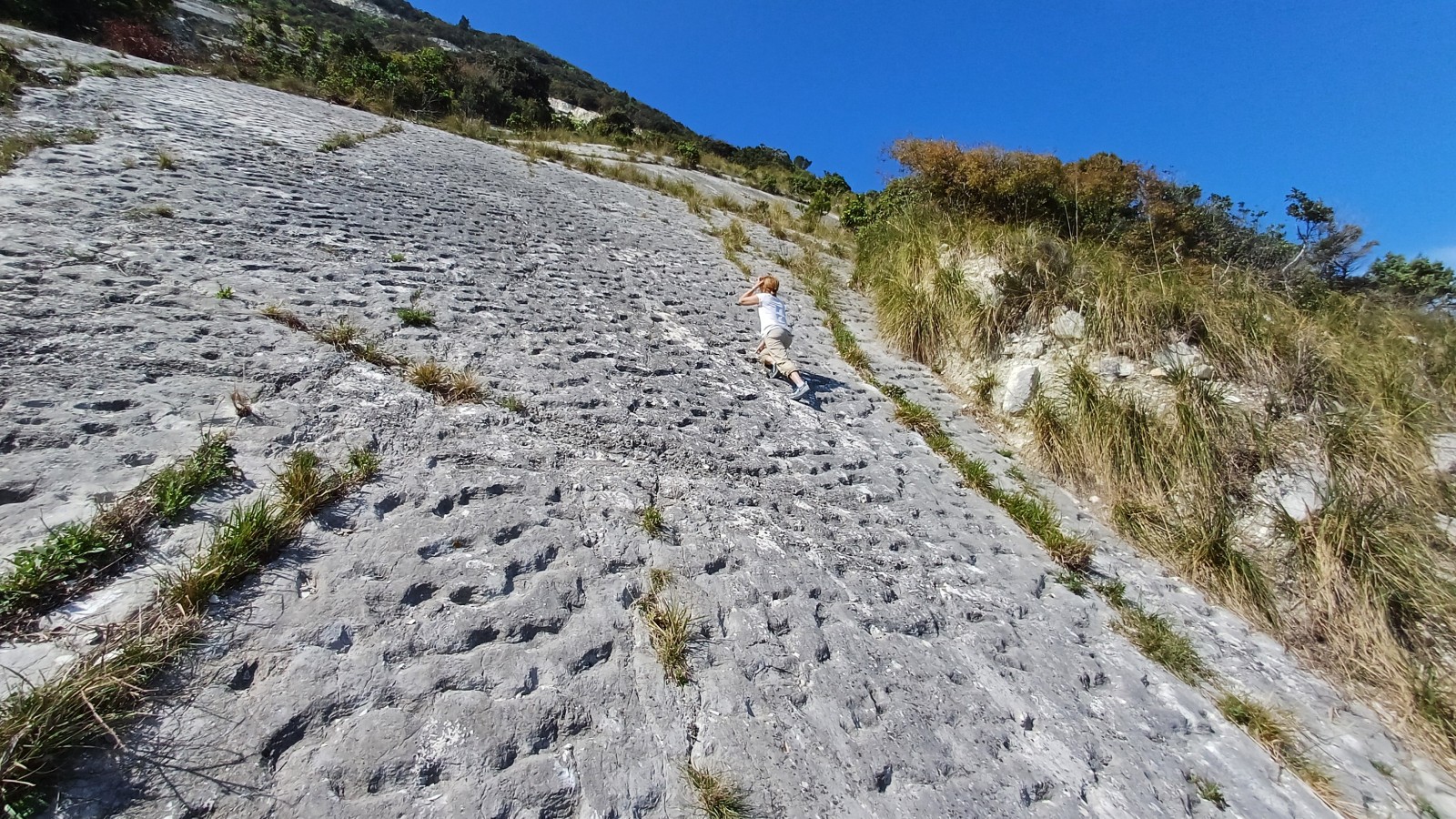
The tracks were first noticed by climbers on Monte Cònero, overlooking the Adriatic Sea. Recognizing their potential significance, they alerted geologist Paolo Sandroni, who then consulted with Alessandro Montanari, director of the Coldigioco Geological Observatory (OGC). Subsequent investigation confirmed the grooves in the rock face weren’t isolated; hundreds of similar markings were present across a layer of Scaglia Rossa limestone within the Cònero Regional Park.
The Geological Story
The limestone formation holds millions of years of deep-sea sedimentation, now exposed as a mountain due to tectonic uplift. Rock samples reveal the tracks were made around 79 million years ago during the Late Cretaceous Period. Critically, the samples also contain evidence of an underwater avalanche triggered by an earthquake. This avalanche rapidly buried the tracks, preserving them from being erased by seafloor currents and scavenging organisms.
This preservation is key. Normally, any traces left by animals would be quickly destroyed. But the earthquake-induced landslide entombed the tracks within minutes, creating a fossil record of a desperate escape.
What Were They Running From?
The tracks suggest a coordinated stampede. While plesiosaurs and mosasaurs also inhabited these waters, sea turtles are the most likely culprits, given the size and pattern of the imprints. The researchers theorize that the turtles may have been foraging near shore or even attempting to nest on land when the earthquake struck.
This raises a critical question: if ancient sea turtle behavior mirrored modern species, why didn’t they simply swim away? The tracks reveal a distinct “punting” motion, where both forelimbs pushed into the sediment simultaneously. This suggests a frantic attempt to gain traction and flee in unison.
Skepticism and Further Research
Paleontologist Michael Benton from the University of Bristol, while acknowledging the geological context, questions whether turtles were the only plausible track-makers. He notes the unusual “punting” pattern doesn’t align with typical marine reptile locomotion. Benton also wonders why the animals didn’t simply swim to safety.
Montanari and his team emphasize the geological evidence: an earthquake triggered an underwater avalanche, and the tracks are indisputable proof of a panicked response. They hope their findings will spur further paleontological study of the site.
This discovery underscores how even ancient ecosystems were shaped by sudden and violent geological events. The turtle stampede is a vivid reminder that survival has always been about reacting to chaos, even 80 million years ago.