

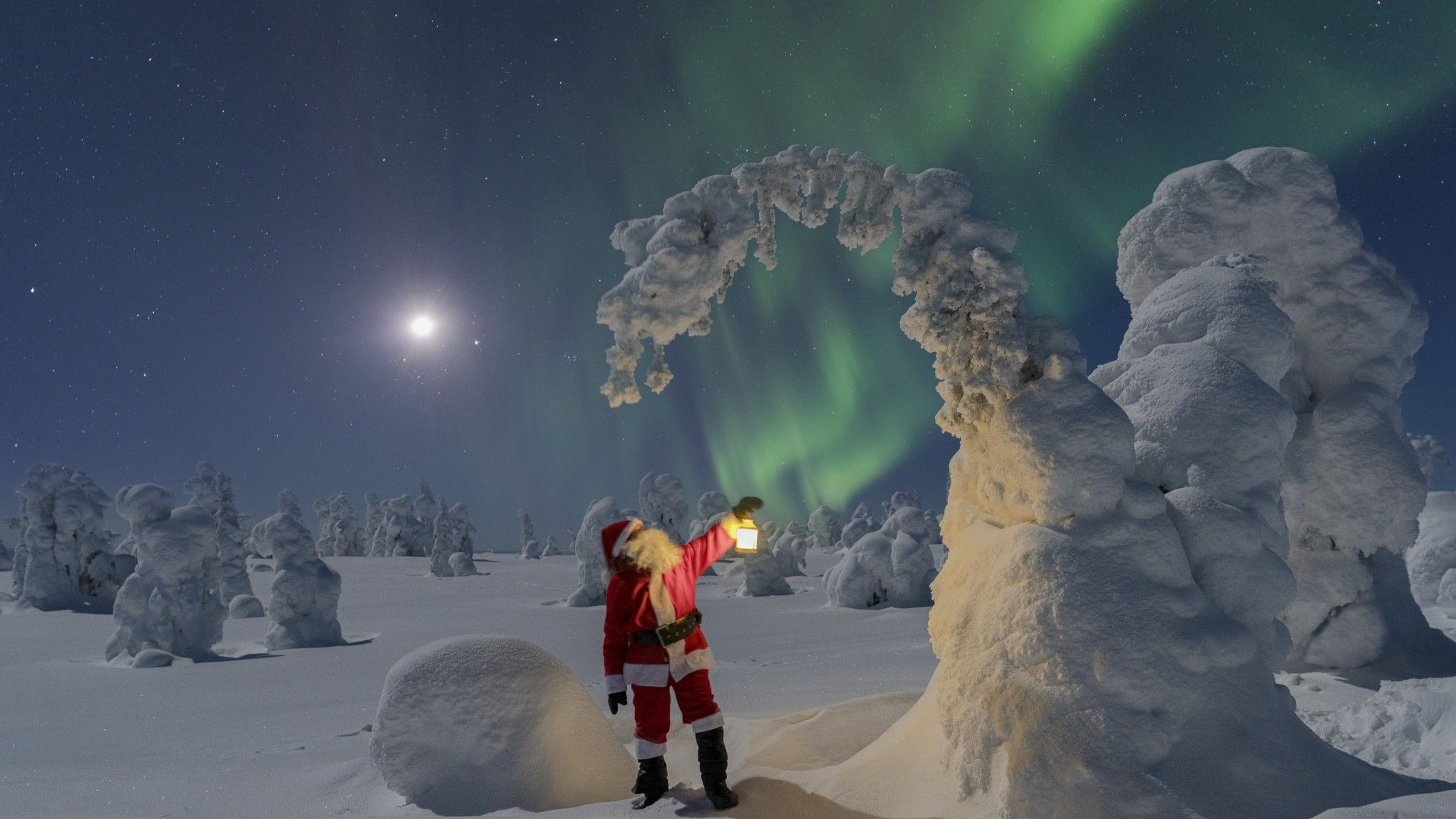
The chances of witnessing the aurora borealis – also known as the northern lights – are notably higher than usual this Christmas week, as space weather remains unsettled. While a spectacular, widespread display isn’t guaranteed, current conditions significantly increase the probability of seeing the lights, particularly in high-latitude regions.
What’s Driving the Activity?
The heightened aurora activity is due to a stream of fast-moving solar wind originating from a large coronal hole on the Sun. This isn’t just a minor fluctuation; solar wind speeds are currently twice as fast as typical background levels, averaging around 430 miles (700 kilometers) per second. This increased velocity has already triggered minor geomagnetic storms (G1 level) and is expected to persist through Christmas Eve and Christmas Day.
Why does this matter? The Sun doesn’t emit energy evenly. Coronal holes are areas of concentrated magnetic field lines that allow solar wind to escape at higher speeds. When these fast solar winds interact with Earth’s magnetosphere, they cause geomagnetic disturbances that manifest as auroras.
Where Can You See Them?
The best viewing locations will be in high-latitude regions:
- Alaska
- Northern Canada
- Scandinavia (Norway, Sweden, Finland)
- Far northern Scotland
- Parts of Greenland
- Northern US states like Washington, North Dakota, and Minnesota
For those in the United States, viewing opportunities are limited to the far northern states. Elsewhere, skywatchers in the regions listed above will have the highest chance of seeing auroral displays.
A Potential Boost from a Coronal Mass Ejection
There’s a small but significant wildcard: a coronal mass ejection (CME) that left the Sun on December 20th. While not directly aimed at Earth, it may pass close enough on December 24th to disrupt the already disturbed solar wind environment, briefly enhancing aurora activity. This is an unpredictable factor, but even a glancing blow could increase visibility.
Staying Informed
To maximize your chances of seeing the northern lights, use a space weather app that provides aurora forecasts based on your location. Popular options include “My Aurora Forecast & Alerts” (available for iOS and Android), but any similar app will be useful. These tools use real-time data to predict aurora visibility, helping you know when and where to look.
The combination of ongoing unsettled conditions and the potential CME impact means this Christmas could bring a beautiful, unexpected gift to skywatchers in the right locations.