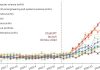




Antarctica is poised to warm 1.4 times faster than the rest of the Southern Hemisphere in the coming decades, potentially triggering extreme sea-level rise and devastating impacts on the fragile polar ecosystems. A recent modeling study indicates that this Antarctic amplification – a phenomenon where warming occurs at an accelerated rate compared to other regions – is likely to occur if global temperatures reach 3.6°F (2°C) above pre-industrial levels.
The Speed of Change
The world has already warmed by 2°F (1.1°C), and the pace of new temperature records is accelerating. If current emission trends continue, the 3.6°F threshold could be reached as early as 2040, or by 2050 at the latest. This is critical because Antarctic amplification has been difficult to detect due to the Southern Ocean’s ability to absorb heat and its strong circumpolar currents, which insulate the continent from global warming.
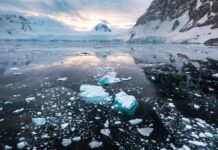
For years, Antarctica seemed shielded from the worst effects of rising global temperatures, but this is changing rapidly. Between 2014 and 2016, Antarctica lost as much sea ice as the Arctic had lost in four decades. Sea ice coverage remains exceptionally low, especially during the winter months, and the continent has not recovered.
The Difference Between Arctic and Antarctic Warming
The Arctic has long experienced amplification, with temperatures rising roughly four times faster than the global average over the past 50 years. This is driven primarily by the ice-albedo feedback : melting ice exposes darker water, which absorbs more heat, leading to further melting.
Antarctica behaves differently. Its swirling ocean and wind currents have historically protected it from warming. However, the study reveals that Antarctic amplification will be driven primarily by accelerating heat release from the surrounding ocean, rather than the ice-albedo effect.
Why This Matters Now
The rapid decline in Antarctic sea ice is a clear warning sign. Scientists have already observed catastrophic breeding failures in emperor penguins due to melting ice, and this trend is expected to worsen. The study’s findings underscore the urgency of curbing emissions to avoid irreversible damage to the Antarctic region.
Model Limitations and Future Uncertainties
While climate models suggest that Antarctic amplification will occur, some scientists believe the results may be conservative. Models struggle to fully capture the complex interactions within Antarctica’s unique climate system, particularly the behavior of its circumpolar currents. This raises the possibility that the actual rate of warming could exceed current projections.
“Every fraction of warming that we can avoid matters,” says Ariaan Purich, a climatologist at Monash University. “We’re now seeing abrupt changes occurring in Antarctica, at very rapid rates.”
The study’s findings serve as a stark reminder that climate change is already impacting Antarctica, and the consequences of inaction will be severe. Continued warming will not only accelerate sea-level rise but also threaten the survival of unique polar species and ecosystems.