



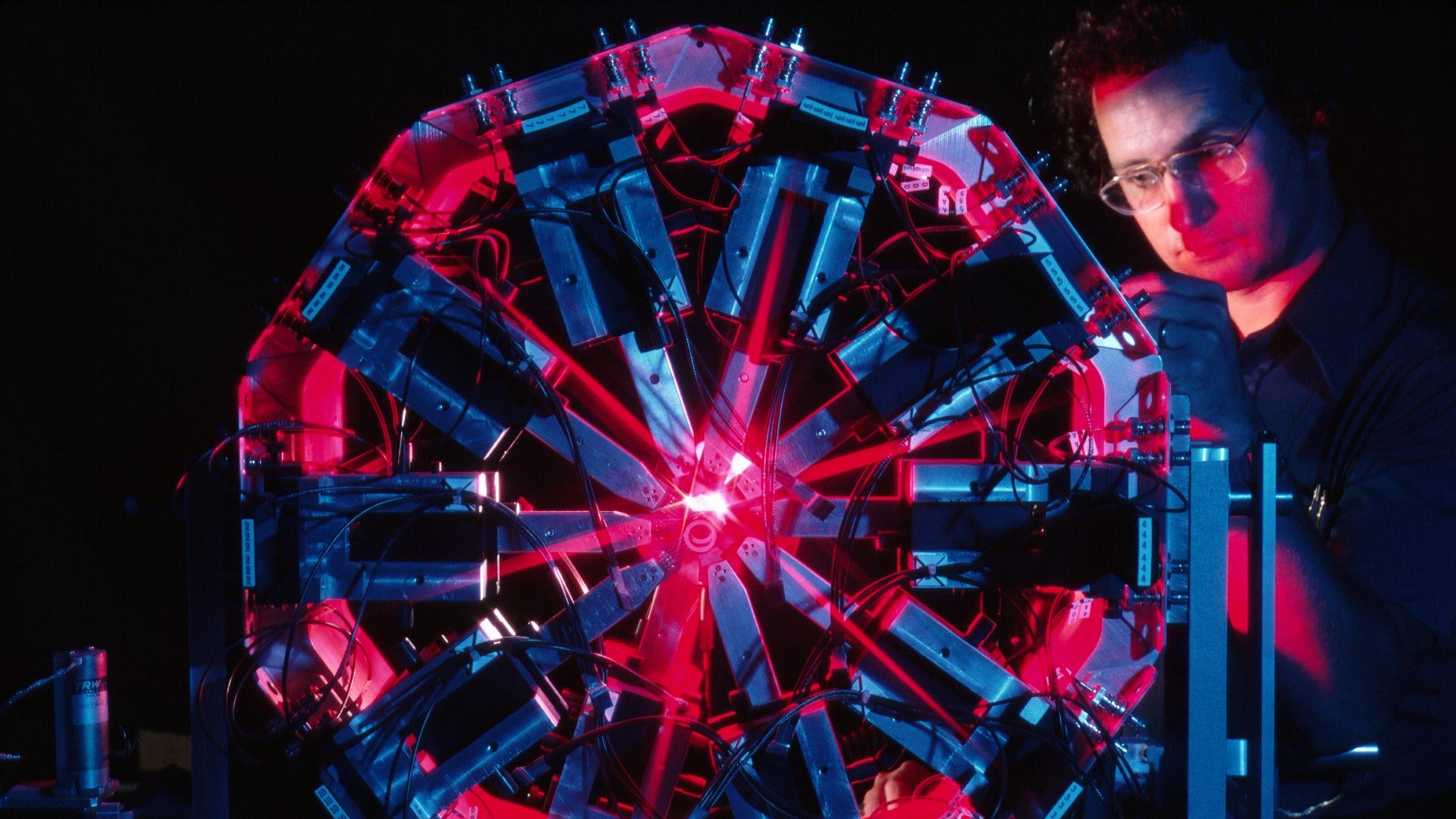
On February 27, 1940, a breakthrough in nuclear chemistry opened a previously unimaginable window into history: the discovery of carbon-14. This radioactive isotope, initially deemed too unstable to measure, would become the cornerstone of radiocarbon dating, revolutionizing archaeology, paleontology, and our understanding of ancient civilizations.
The Hunt for an Elusive Isotope
Throughout the mid-1930s, scientists theorized the existence of a carbon isotope with an unusually heavy nucleus – two extra neutrons. However, prevailing assumptions suggested its half-life would be too short for practical detection. Undeterred, Ernest Lawrence, director of the Berkeley Laboratory, assigned chemists Martin Kamen and Samuel Rubin the task of finding it in 1939.
For nearly a year, their efforts yielded nothing. The prevailing belief was that it would decay too quickly to be useful. This initial failure underscores a common challenge in scientific research: sometimes, the most impactful discoveries require pursuing what appears impossible.
A Serendipitous Breakthrough
In January 1940, a desperate experiment changed everything. Kamen and Rubin bombarded a graphite sample inside a cyclotron, a primitive particle accelerator, with deuterons (heavy hydrogen nuclei). The goal: force the carbon to absorb neutrons, becoming a heavier, radioactive form. After 120 hours of continuous operation, Kamen, exhausted and disoriented, stumbled out of the lab. He was briefly detained by police mistaking him for an escaped criminal.
Upon his return, Rubin detected faint signs of radioactivity in the sample. Over the next two weeks, they refined the carbon into carbon dioxide gas and measured its radioactivity with a Geiger counter. To their astonishment, the carbon-14 didn’t decay rapidly as predicted. Their initial calculations suggested a half-life of thousands of years—a figure later refined to approximately 5,730 years.
From Fundamental Science to Historical Revelation
The implications were immediately clear. As the researchers noted in their March 15, 1940, publication in Physical Review Letters, long-lived carbon-14 held immense potential for chemical, biological, and industrial applications. Within years, Kamen and Rubin used the isotope to trace pathways in photosynthesis.
However, the full power of carbon-14 wasn’t realized until 1949, when James Arnold and Willard Libby at the University of Chicago demonstrated its utility in dating organic materials. By measuring the ratio of carbon-14 to stable carbon, they could accurately estimate the age of ancient artifacts and fossils. Libby’s groundbreaking work earned him the 1960 Nobel Prize in Chemistry.
A Legacy Complicated by History
Tragically, the story isn’t without its darker turns. Samuel Rubin died in a lab accident in 1943, and Martin Kamen faced persecution during the Red Scare. His association with musicians and perceived “leftist” sympathies led to his dismissal from Berkeley and interrogation before the House Un-American Activities Committee. Despite never being convicted of wrongdoing, Kamen was shadowed by baseless accusations for years.
The discovery of carbon-14 stands as a testament to the power of persistence and serendipity. It not only advanced nuclear science but also revolutionized our ability to reconstruct the past, connecting us to civilizations long gone. The legacy of Kamen and Rubin is a reminder that scientific progress often comes at a human cost and that even the most objective discoveries can be caught in the crosscurrents of history.


