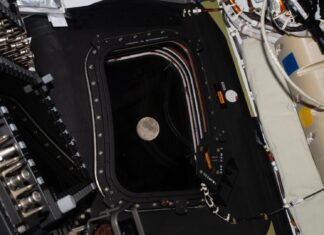



The Artemis II mission is entering its most critical phase yet. After five days of traveling through deep space, the four-person crew—Reid Wiseman, Victor Glover, Christina Koch, and Jeremy Hansen —is preparing to reach their maximum distance from Earth, marking a historic milestone in human spaceflight.
While this mission will not involve a lunar landing, it serves as a vital “pathfinder” for NASA. The crew is currently testing the limits of life support systems and human biology in deep space, providing the essential data needed for future missions that will eventually place humans back on the lunar surface.
Breaking Distance Records
On Monday, the crew will officially begin the lunar flyby phase. At 7:07 p.m., they are expected to reach their furthest point from Earth, surpassing the distance reached by the Apollo 13 astronauts during their famous mission.
The mission schedule includes several key milestones:
– 2:45 p.m.: The lunar flyby phase begins, initiating intensive observation of the moon.
– 6:44 p.m.: The crew will enter a 41-minute radio blackout as the moon obstructs signals between the spacecraft and Earth.
– 7:02 p.m.: The Orion spacecraft will make its closest approach to the moon, passing at an altitude of approximately 4,070 miles.
– 8:35 p.m.: The crew will experience a 53-minute solar eclipse, offering a rare view of the solar corona and unique perspectives of Earth and other planets.
A New View of the Lunar Far Side
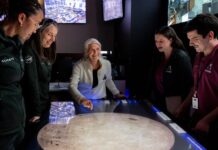
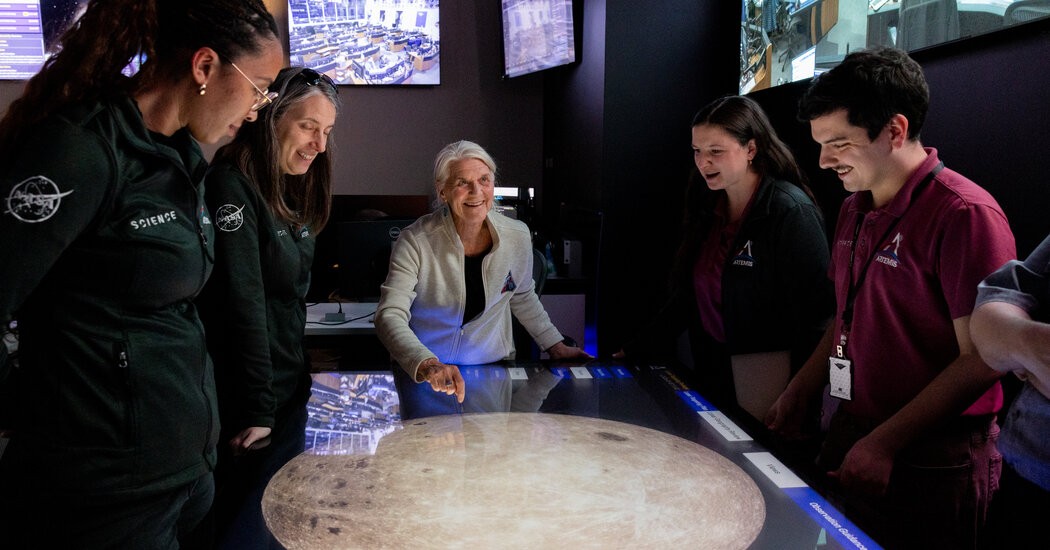
For the first time in human history, astronauts will observe the far side of the moon with their own eyes. While robotic probes have photographed this region, NASA scientists emphasize that human observation adds a “physical reality” that cameras cannot replicate.
Dr. Julie Stopar of the Lunar and Planetary Institute notes that the far side will likely appear brighter and grayer than the near side due to its high density of impact craters, which reflect more sunlight. The crew is acting as “field scientists,” tasked with documenting:
– Ancient lava flows and mountain ranges.
– Geological textures and colors.
– Occasional flashes of light caused by meteoroids impacting the lunar surface.
These observations are critical for designing future landing sites, ensuring that the next generation of Artemis astronauts can navigate the terrain safely.
The Science of Survival: Biology and Nutrition
Beyond geological mapping, Artemis II is a massive biological experiment. One of the most significant components is the AVATAR (A Virtual Astronaut Tissue Analog Response) experiment.
Researchers are using “organs on a chip”—tiny samples of bone marrow—to study how microgravity and life outside Earth’s protective magnetic field affect human cells. By studying how these cells develop and how DNA (specifically telomeres) responds to space radiation, NASA aims to mitigate the risks of bone density loss and radiation damage for long-duration missions.
Even the crew’s diet is a matter of rigorous science. To maintain morale and health, NASA food scientists have designed a menu that balances nutrition with the physical realities of microgravity:
– Crumb Control: Foods like tortillas and breakfast sausages are used to prevent floating debris from interfering with spacecraft systems.
– Morale: Meals include diverse options such as mango salad, beef brisket, and even treats like chocolate and cake to provide a sense of “togetherness” during the long mission.
– Evolution of Space Food: This menu represents a massive leap from the Apollo era, where astronauts ate simple bread cubes and puréed tubes. Modern space nutrition focuses on preventing weight loss and nausea, ensuring the crew remains physically capable of performing complex tasks.
“The perspective they have from Orion will be unique,” says planetary volcanologist Brent Garry. “The photos they capture will be driven by a blend of scientific curiosity and the heart of humanity.”
Conclusion
As the Artemis II crew rounds the far side of the moon, they are doing more than just breaking distance records; they are validating the technologies and biological understandings required for humanity to become a multi-planetary species.
How to Watch: NASA is providing 24-hour live coverage of the mission via YouTube, X (formerly Twitter), and NASA’s official website.