


A surprising discovery in Central and Southeast Asian rainforests reveals that multiple mammal species—from sloths to wildcats—are converging on a single tree species, Ficus tuerckheimii (a type of strangler fig), to use as a communal latrine. This behavior, documented by ecologists in Costa Rica and now reported anecdotally in Honduras and Borneo, highlights a previously unknown level of shared resource use in the canopy.
The Discovery of a Forest Bathroom
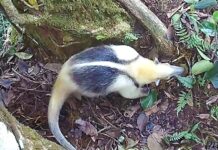
The unusual pattern was first noticed by Jeremy Quirós-Navarro, an ecologist who stumbled upon a platform high in a strangler fig tree covered in animal droppings. Subsequent video monitoring at one site in the Monteverde Cloud Forest Preserve recorded 17 different mammal species using the same latrine over two months, with roughly three visits per day. This included species like margays (wildcats), porcupines, opossums, capuchin monkeys, and even two-toed sloths—previously thought to defecate only on the ground.
Why This Tree?
Ficus tuerckheimii trees are uniquely suited to this role for several reasons. Their structure forms a natural, protected platform at canopy height, resembling an “upturned hand” with branches creating a comfortable, sheltered space. These trees also boast unusually long branches—some stretching over 12 meters—effectively acting as canopy highways between distant forest patches. This makes them critical for connectivity in fragmented ecosystems.
The Purpose of Shared Latrines
Communal latrines aren’t unique to canopy mammals. Ground-dwelling species like rhinos and hyenas also use them. Scientists believe these spaces serve multiple functions:
- Territorial marking : Urine and scent deposits identify residents.
- Information exchange : Droppings and scent communicate identity and status.
- Navigation : Latrines act as recognizable landmarks.
- Predator avoidance : Concentrating waste reduces scattered scent trails.
Ecological Importance and Threats
Quirós-Navarro warns that disturbing even a single Ficus tuerckheimii tree could disrupt forest-wide communication networks. Because these trees act as canopy bridges, their removal may fragment populations and affect broader ecological processes. The trees are also sometimes used by climbers, raising further concerns about human impact on this unusual, yet vital, ecological feature.
This discovery underscores how little we still understand about complex interactions in rainforest ecosystems. The shared latrine behavior suggests a deeper level of interdependence among canopy mammals than previously recognized, and emphasizes the need for conservation of key species like Ficus tuerckheimii.