






Scientists are puzzled by the sudden disappearance of Osedax, commonly known as “zombie worms,” from a key feeding ground off the coast of British Columbia. These worms play a crucial role in breaking down whale carcasses on the deep seafloor, transforming bones into thriving ecosystems. Their absence threatens the unique biodiversity these habitats support and highlights a worrying trend linked to climate change.
The Role of ‘Zombie Worms’ in Deep-Sea Life
Fallen whale skeletons create rare oases of nutrition in the otherwise barren deep ocean. Osedax worms exploit this by burrowing into the bones, using acid to dissolve collagen and fats. This unlocks essential nutrients for a wide range of other deep-sea creatures, effectively turning whale falls into temporary but critical “stepping-stones” for species dispersal across vast distances.
The worms themselves host symbiotic bacteria that aid in digestion, making them uniquely adapted to this niche. Their feeding frenzy is slow but persistent, sustaining entire communities for decades.
The Mysterious Vanishing Act
For ten years, researchers led by Fabio De Leo of the University of Victoria monitored whale bones placed in the Barkley Canyon, a deep-sea environment near British Columbia. Despite ideal conditions for Osedax colonization, no worms appeared on camera. This is highly unusual, as the worms normally arrive quickly when a new food source becomes available.
“Basically, we’re talking about potential species loss,” says De Leo.
The Link to Expanding ‘Dead Zones’
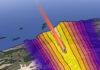
The likely culprit behind the disappearance appears to be expanding oxygen minimum zones (OMZ), also known as “dead zones.” These areas of the ocean naturally have low oxygen levels, but climate change is exacerbating the problem by warming waters and reducing oxygen solubility.
The Barkley Canyon is already low in oxygen, and the expansion of these OMZ could be pushing the worms beyond their tolerance levels. If Osedax cannot survive in these conditions, the entire whale-fall ecosystem could suffer. This isn’t just a local issue; the potential loss of these worms could lead to reduced diversity across regional scales.
What’s Next?
Researchers are now monitoring another whale fall at the Clayoquot Slope to gather more data. The fate of these ecosystems hangs in the balance, and the disappearance of Osedax serves as a stark reminder of how rapidly climate change is altering even the deepest, most remote corners of the ocean. The continued expansion of OMZ will likely have severe consequences for whale-fall and wood-fall ecosystems along the northeast Pacific Margin.