





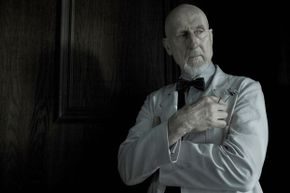
Do you want to conquer the earth with death rays? Maybe you just want a basement full of zombie tourists? Before you tackle Mad Science, remember the following: Few practitioners can hang up their white coat with dignity.
This is a huge industry. Time is infinite. The danger is real. Funding often comes from terrorist groups and sometimes from Richard Branson. Success brings its own problems. An army of super soldiers has incurred the wrath of the government. Magazine articles can attract the attention of superheroes.
So put on your goggles. Inject the mutagen. But look first. Consider the example of a mad science failure. These ten figures reached the pinnacle of scientific brilliance. They paid a high price for it.
10: Victor Frankenstein
Let’s start with the OG. The original monster maker. Victor Frankenstein didn’t just fail. He destroyed his family tree.
He tried to conquer death. He wanted to play God. He gathered the creatures together from the garbage of the cemetery. It worked. Technically speaking.
But did he succeed? Not really. This creature is a nightmare. literally. It killed Victor’s younger brother. Then his friend. Then there’s his wife. Victor spent his life searching for his creation. He ended up freezing to death, chasing his own creation.
Did he learn? It’s unlikely. He died obsessed. That creature? It wandered off into the arctic ice. Frozen solid. Eventually it burned to ashes.
No human dignity. There is no honor. Just a bunch of dead bodies and one very lonely scientist.
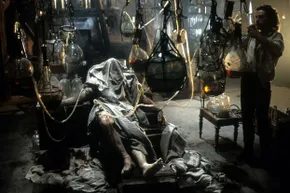
Victor Frankenstein had it too easy. Most fictional mad scientists work for decades in pursuit of immortality or world domination, but are frustrated by annoying heroes or their arrogance. Victor? He hit his stride in his mid-twenties.
Between 1792 and 1796, this young scientist put together an interesting synthesis of modern biochemistry and medieval alchemy. He didn’t just discover the secret of life; He weaponized it. He animated two separate corpses. He did all this before he could legally buy a drink in many jurisdictions.
Then, at 26, he quit.
He didn’t just pause his research. He abandoned the entire field, erased the notes, and disappeared into the darkness. It’s a waste of potential. A tragic waste of God’s power.
First Failure: Cold Feet
To be honest, the first time Victor left because he panicked.
Victor’s resolve is shattered when his patchwork breathes for the first time. He was fine with the grave robbing. He was fine with the anatomical dissection. He even seemed to agree with the philosophical implications of creating new species. But the moment the thing stood up and looked at him? He bolted.
Most people continue here. Most people adapt. Victor ran.
His creation, naturally, followed. The lonely monster found his female companion, not by violence but by pleading. Victor agreed, but then went back on his word. The second creation was also aborted. The result? Serial murders, broken engagements and death wishes.
Arctic Chase
Power relations shift from producers’ production to hunters’ hunting. What begins as a domestic dispute between creator and creature turns into a deadly chase across the Arctic wastes. Victor dies of cold, perhaps exposure or exhaustion, and his monster vows to burn himself out in a funeral pyre.
Lesson: Victor wasn’t a true mad scientist. Although he was an amateur with extensive defensive ability, he was confused. A true madman, H.P. Lovecraft’s Herbert West, fear not the blasphemy in the cellar. They accept the horror as part of the job description. Victor’s failure was not due to his science. It was in his sanity. He accomplished too much too quickly to handle the monster he unleashed.
If you want to know how to do it right, read Mary Shelley’s original classic. Or check out HowStuffWorks for a breakdown of how it works. This research is needed to explain why ambition without fortitude leads to ruin.
9: Professor Hubert J. Farnsworth
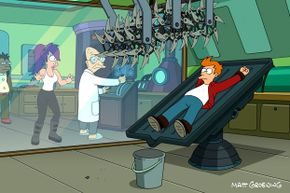
Most cartoon villains end up being eaten by their own robots. Professor Hubert J. Farnsworth doesn’t. He’s 160 years old, completely ignored, and still somehow saving the universe on Tuesday. It’s a strange immortality. He used his own doomsday technology to stop two galactic apocalypses, but may have broken the rules in doing so. He’s seen it all. He has done it all. So why does he look so bored?
Because he survived.
If you live long enough to have long fingers or smell, you have a hidden curse. You start out as a terrifying genius. You become a naked old man yelling at interns in a basement lab. The public was not afraid of Farnsworth. They just thought he was weird. he is not afraid He is not respected. There he is.
The lesson: If you’re too careful, you’ll avoid the monster’s wrath, but you’ll also avoid the honor you wanted in the first place.
Farnsworth’s longevity is actually a punishment. He wanted world domination. Instead, he got administrative drudgery. Sure, he escapes a dramatic death, but he also doesn’t get to know what it means to be a mad scientist. Say it louder. It is very dangerous. Don’t survive in the dark. Say it out loud, not crying. You can find this tragic figure in every episode of Futurama.
8: Dr. Seth Brundle
Below is a case study that shows what happens when your invention “works too well.”

Teleportation pioneer Seth Brundle in The Fly is an eternal warning sign to anyone who believes that mad science and messy romance can coexist. By 1986, Brendel was already chasing the Nobel Prize. Bartok Scientific Industries funded his research and successfully built the world’s first teleportation device. What’s in it? Refuses to transplant living tissue without causing fatal biological errors.
The results are displayed graphically. The laboratory floor is littered with fallen baboons. This is a confusion you want to avoid.
If he had more time, Brendel could have fixed the organic programming of his cell phone. Then Veronica Key arrived. His presence caused a wave of inspiration that led to real breakthroughs in the subject of moving living organisms. But then something dramatic happened. A misunderstanding about Quaif’s ex-boyfriend sets off a cycle of self-pity. Blundell drinks too much and accidentally messes up the code, splicing his DNA with that of a housefly.
You probably know the rest of the horrors.
The point here is clear. There is no safe way to jump into a plasma pool of romance. We might all wish we could destroy and rebuild our bodies to solve our relationship problems, but scientists don’t. Let your passion cool. Detailed investigation. If you absolutely must combine alcohol and genetic testing, limit your subjects to inanimate objects, or at least use dead baboons.
If you have a high tolerance for physical horror, David Cronenberg’s The Fly remains an essential viewing experience. This is a textbook case study of this type of scientific hubris.
7: Dr. Moreau
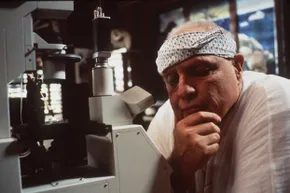
The Island of Dr. Moreau: A Cautionary Tale in Two Acts
Physiologist Dr. Moreau didn’t just start his career in the world of mad science. He launched it with such fanfare that it would stun modern ethics committees. Dissecting cadavers was too passive for him. He wanted live test subjects. He wanted to experiment in real time. It was a bold move, perhaps in keeping with the moral standards of the 4th century BC friends of the heroes known as the father of anatomy, but too radical for modern medical research.
In other words, Moreau did what any self-respecting madman would do. He packed his bags, abandoned society and set up shop on a remote island.
Isolation changes people. You leave your apartment for the weekend to visit family and come back to find your roommate wearing nothing but a towel, eating cold pizza and watching Gilmore Girls. This is a normal human deviation. But mad scientists take it to another level.
Moreau did more than conduct human experiments in his tropical playground. He became part of the action. He started wearing mime makeup and a muumuu. He declares himself the god-king of a twisted human-animal hybrid. One level of insanity wasn’t enough, so he created a smaller version of himself. He dressed up a little clone to look like a clown pope.
Why not? That’s what you do when you decide you’re the only one sane and you’re not.
Needless to say, Moreau never published his final study. The monsters he created ultimately ate him.
Lesson: A grotesquely inflated ego is the standard equipment of mad scientists. However, resist the urge to deify yourself among your mutated creations. Also, keep the costuming to a minimum.
Additional Research: To get the most out of it, read H.G. Wells’ The Island of Dr. Moreau. If that’s not your thing, why not check out the 1996 film adaptation starring Marlon Brando?
6: Dr. Kurt Leopold
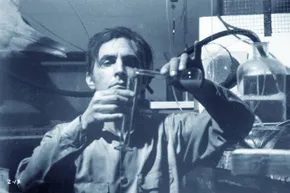
Dr. Kurt Leopold wanted more than power. He wants to rewrite biology itself with a specific and strange goal in mind: to become a giant catfish. This sounds silly until you remember that in the world of low-budget horror movies, ego often trumps logic. Leopold was a biochemist. He is very organized. He was also completely unhinged.
Working in a lonely laboratory in North Florida, he devises a plan so complex that his own destruction is inevitable. The core idea? Release a mutagen called Zaat into the sea. result? Sea life turns into a hostile army bent on destroying humanity. And where are the leaders of this water rebellion? And of course, there’s the mutated Dr. Leopold himself.
Too heavy a plan
The plan starts simple. Release the chemical. Become a fish. Rule the waves. But then Leopold started adding clutter. He kidnaps a girl on the beach and hopes to use her as a model for his “she-monster” bride. He also decided to kill some people who had wronged him in the past.
These are not side quests. They are distractions. Every kidnapping or murder attracts the attention of the police and prevents them from reaching their primary scientific objective. He tries to conquer the world while avoiding handcuffs.
The Timing Was Terrible
Leopold manages to get Zaat into the water, but has a transformation was premature. Gunfire … interrupted due to gunfire from law enforcement. He stumbles into the sea alone, injured and half-mutated. He could never get a bride. He never got the kingdom. He had just turned into a tragic, bleeding catfish in the bay.
The lesson here is clear. Don’t confuse your master plan with petty revenge. If you’re going to go through a complete biological transformation, make sure you can survive a police attack first.
Where to Watch
If you are curious about this chaos, watch the 1971 movie Zaat. A cult classic known for its haunting and eerie atmosphere. It may also be known by its more famous alternate name The Blood Waters of Dr. Z, which was featured in Mystery Science Theater 3000. This is a great example of how a simple idea can rot if too much baggage is added to it.
5: “Grandpa” Sam Dracula

Grandpa Munster had the credentials. Lab coats, lightning, chaotic energy, it’s all there. Of course he was careless. His lab looks more like a warehouse basement where electronic components are kept than a medical facility. But carelessness does not kill genius. In fact, it is often associated with it.
His real failure was not technical. It was personal.
Grandfather treated his grandson, young Eddie Munster, not as a child to be raised but as a project to be engineered. This is the only dialect he speaks with his family because he only understands the language of mad science. He offered no consolation. He offered machinery.
When Eddie needed to grow, Grandpa didn’t buy him shoes. He made a enlarging machine. This should help him reach the heights he needs by using brute force physics to get around nature. It failed, naturally. The kid stayed small, or maybe he shrank. The timeline is fuzzy, but the trauma is clear.
When Eddie had problems with music, Grandpa didn’t have a teacher. He brewed a talent potion. A liquid shortcut to trumpet proficiency. The results were chaotic. The boy couldn’t play the notes; he just screamed them.
Then came the request for a sibling. Eddie wanted a brother. Grandpa heard a directive. He created a robot. A mechanical playmate designed to complete chores through circuits and steel. It didn’t work. It never does.
These tests not only fell short of expectations; They left scars. Rumor has it that these early, misguided attempts to “help” defined Eddie’s awkwardness and missteps in adulthood. He becomes the awkward, lovable adult we know. Because a boy was never allowed to just be a boy.
And yet. Marilyn? She turned out fine.
How? We don’t know. Maybe the stress of living in a house where your grandfather tried to improve your teenage years with a hydraulic press can make you more resilient. Or maybe he just got the short end of the stick and the boys got the long end of the wrench.
Lesson: Mad science is perfect for world domination. Perfect for revenge parties involving weather control. This is difficult for raising children.
Look at other fictional fathers who tried this. Fringe’s Walter Bishop uses science to protect his son, but his experiments often put him in danger. In Invader Zim, Professor Membrane treats his son like a lab rat, which causes a serious imbalance in their relationship, and his son also develops a strong grudge against Professor Membrane.
No need to go that deep. You don’t need machines to raise your children. You just have to show up.
Additional Research : All 70 original episodes of The Munsters. Cheesy, cheesy and full of lessons about what happens when you love your kids and your soldering iron too much.
4: Dr. Frank-N-Furter

The Transylvanian Galaxy’s delegation to Earth had a noble origin story. Or at least, that’s the theory. Dr. Frank-NFurter arrived with Magenta and Riff Raff, presumably to tackle global warming or cure the common cold. Science, after all, is supposed to be about progress.
Then the vibe shifted.
Instead of healing, Frank-NFurter got distracted by something far more immediate: Rocky Horror. The good doctor abandoned his medical research to build a humanoid companion purely for hedonistic purposes. It was a pivot from saving lives to serving pleasure, using two planets’ worth of resources to create the ultimate “sex buddy.”
Spoiler alert: It didn’t end well.
Riff Raff and Magenta didn’t stick around for the after-party. They blasted Frank-NFurter with an antimatter weapon and fled back to their home planet, leaving the castle in ruins. The takeaway? You don’t need to be a monk to be a serious scientist, but losing control is a quick ticket to disaster.
Think of Doctor Durand Durand from Barbarella. He invented the deadly Positronic Ray, sure. But history remembers him for the Excessive Machine, the device that forced people into orgasmic submission. His legacy isn’t his innovation; it’s his indulgence.
Overindulgence isn’t just a distraction; it’s a full-blown descent into space-age hedonism that derails even the most brilliant minds.
If you want proof, skip the obscure lore about “The Denton Affair” and just watch The Rocky Horror Picture Show. It’s the primary source material. The cautionary tale is loud, glittery, and impossible to miss.
3: Herman von Klempt

Of course, mad science is a noble pursuit. But life outside the lab helps. Remember Dr. Victor Fries from Batman who kept his sanity by freezing his wife? Or Dr. Anton Phibes, “The Abominable Dr. Phibes”, who finds solace in his pipe organ. Then there was Professor Herman von Klempt. He had… nothing.
Driven by scientific enthusiasm and a strong desire to conquer the Earth, von Klempt participated significantly in several top-secret projects during World War II. This included the Nazi space program and various German doomsday plans. Even the burns from the rocket accident didn’t stop him. he continues his work. When his closest colleague Karl Ruprecht Kroenen died, von Klempt retired to South America to study alone.
But isolation is a huge burden. In the end, loneliness and despair overtook Herman von Klempt. He becomes a head in a jar. He survived on pilfered spinal fluid from local women. With only cybernetic gorilla parts around him, his plans for world conquest have failed. Faced with emptiness of his un-life, the once coldly logical von Klempt abandoned his plans for world domination. Instead, he decided to destroy it.
Lesson: You are a mad scientist. No one expects a balanced life and a nuclear family (unless it’s a real nuclear family). Still, facts are facts. Attempts at world conquest are rarely successful, and cheating death can cause real damage, both physical and psychological. So keep your feet on the ground. At least play golf or something.
Additional Research : Explore the beautiful, pulptastic world of Mike Mignola’s Hellboy comics.
2: Dr. Jacob Freudstein

Lucio Fulci’s 1981 masterpiece “The House by the Cemetery” isn’t all about ghosts and horror. It’s a slow burning flesh horror that leaves a stain on your soul. At the center of this rotten nightmare is one man: Dr. Anton Arcane. At least that’s what he pretends to be.
The real story begins with his ancestor, Dr. Jacob Freudstein.. Jacob is a Victorian-era surgeon whose ambitions come before morality and who wants something no one else wants: immortality. How does he do it? His method? A steady diet of human blood and stolen body parts. He thought he was playing God. Instead, he played himself out of existence.
His research is flawed. Deeply, catastrophically flawed.
Jacob did not receive eternal life, but eternal decay. His once brilliant brain turned into rotten jelly. His eyes and mouth shrank, leaving only a writhing, maggot-infested shell. He didn’t live forever. He simply refused to die and was trapped in the state of the living necrosis for nearly 180 years.
The Basement Laboratory
Let’s fast forward to today. Arcane’s family still owns the house next to the cemetery. But the basement tells a different story.
Jacob’s Of bodies is still down there. Not preserved. Not buried. There… right there. Rotting in real-time. Maggots wriggle through his flesh. His brain is a lump of sludge. He can’t speak. He can’t think coherently. All he could do was crouch down and butcher anyone dumb enough to wander into the basement.
This is not science. It’s a mockery of life. It’s a ghastly joke, and the punch line is always a Of bodies.
Lesson
If you’re a mad scientist (or an aspiring scientist), here’s some advice no one listens to: Submit your paper for peer review.
Nobody likes bad reviews in scientific journals. But it’s even worse to getting eaten by your own failing experiment. Especially if you are the experiment is you.
Jacob Freudstein thought he could hack biology. he was wrong. Eternal life is worthless if you eat worms for blood.
Why Watch It?
You probably already know that The House by the Cemetery is an Italian horror classic. But if you haven’t seen it yet, or need a refresher on why Dr. Anton Arcane (and his undead ancestor) matter, here’s what you need to know.
- Fulci’s Vision : Lucio Fulci doesn’t care about plot logic. He cares about the atmosphere. The house feels alive. The basement felt like a wound.
- The Arcane legacy : Jacob Freudstein is more than just a back story. He is the engine of the film’s horror. His decay mirrors the family’s moral decay.
- Body Horror : This isn’t slasher stuff. It’s visceral. You feel the rot. You smell the decay.
Dr. Anton Arcane: Successor
Who is Dr. Anton Arcane? He is a descendant of Jacob. The current head of the family. The man who inherited the house, the curse and the basement.
Anton is not a surgeon. he is a collector. Of secrets. Of bodies. /

Dr. Anton Arcane is the worst example of mad science gone wrong. He was kicked out of medical school for crimes that ranged from horrific to downright depraved, but that didn’t stop him. He took his twisted experiments to the muddy trenches of the First World War. There he became the worst military doctor in history. Naturally, he crossed paths with Adolf Hitler in this dark time.
After two world wars and countless sadistic experiments, Arcane lived a life of luxury. He achieved near immortality. He built a loyal army of monstrous Un-Men. He organizes global evil from the research facility in his castle. Then he made a grave mistake. He meets Swamp Thing.
Despite the depraved genius, Arcane is unable to resist the temptations of super villainy. An ordinary superhero is not enough for him. He had to deal with a real earth elemental. This feud quickly overshadowed all of his other twisted pursuits. That grudge is very personal. It ended Arcane’s natural life. It also robbed him of his reanimated unnatural existence.
Rivals can be a good source of ego boost, but petty revenge efforts can consume valuable research time.
Since his encounter with Swamp Thing, Arcane’s career has been torn between the real world and the real Hell. Yes, it is literally the underworld. Here, a once-brilliant scientist endures eternal torture. He occasionally took low-level jobs. The lesson is clear. Think carefully about your plans for eternal life. Never mess with superheroes.
If you want to know what this terrifying story is all about, immerse yourself in DC Comics’ Swamp Thing series. Alan Moore’s psychedelic run is a must-see for fans of the genre. If comics aren’t your thing, you can explore his achievements by watching two feature films and two television series. But the question remains whether Arcane has truly learned his lesson or is simply waiting for his next chance to rise from the ashes.