



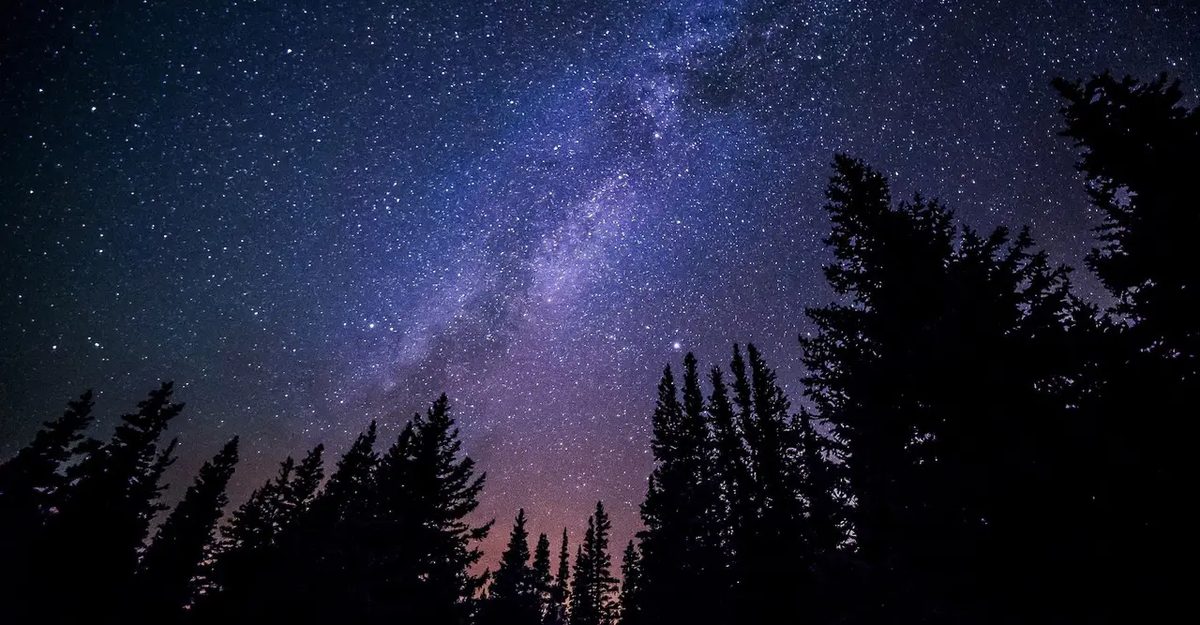
It happened again. By sheer dumb luck, the astronomers found something strange in the darkness. Deep in the Milky Way, about 30,000 light-years away from Earth, researchers have discovered a star that is moving faster than expected.
See S5-HVS1.
This is not just a celestial body in the night sky. It is currently traveling at 1,017 km/s. It was blistering fast. To put things into perspective, our sun orbits the center of the Milky Way at about 150 miles per second. S5-HVS1 moves more than 4 times faster. By any current standards, this is the fastest main sequence star ever discovered.
How S5-HVS1 Was Accelerated
Starr didn’t wake up one morning and decide to go to Seattle. I was fired. difficult.
Scientists believe that the acceleration occurs in the center of the Milky Way. More specifically, it was trapped under the gravitational pull of Sagittarius A*, the supermassive black hole at the center of the Milky Way. This is the general mechanism for launching hypervelocity stars, but the details here differ.
The initial burst must have been more violent than what we see now. Scientists estimate that the star was blown outward at nearly 1,700 km/s before it began its long journey away from its center. Gravity has been dragging on it for about 4.8 million years. It has been slowing down since it left the party.
Why is this star important?
Other high-velocity stars have also been observed. But most of those weren’t accelerated by black holes. They are the result of many phenomena, including the explosion of binary stars and interactions with other massive objects. S5-HVS1 stands alone. It’s the result of a high-stakes gravitational encounter with a monster at the center of the galaxy.
Why do we care about gas rocks burning 30,000 light years away? Because it maps the invisible. Black holes do not emit light. They do not use flares to announce their presence. However, its gravity leaves scars on the surrounding stars. Finding S5-HVS1 proves that it is possible to follow the dynamics of the center of the Milky Way, even if the source is not directly visible.
Is it still the fastest?
Yes. For now.
This difference is true for two reasons. First, it’s the star of the main series. This means it is in the prime of its life, burning hydrogen like the Sun, rather than becoming a remnant like a white dwarf or neutron star. Next, its speed is verified. Theoretical models allow for faster objects, but this is the fastest observed example of its kind.
The star is slowing down. In the end, it would just be a traveler in the galactic disk. But for now, the title still stands. This is a reminder that even in galaxies we’ve been mapping for decades, we still find objects that break the rules.
We rarely find things by accident. But in astronomy, chance is synonymous with discovery.

If you’re tired of algorithmic noise, follow Futura on WhatsApp and Google News. This is a low-friction way to stay in the loop without scrolling through an endless feed.
The goal is simple. Get the science and tech updates directly. No clutter. No clickbait. Just the facts as they break.