

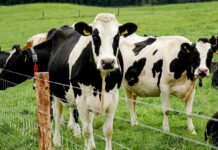



Recent research has uncovered a significant evolutionary shift in the H5N1 bird flu virus. The virus has developed a “molecular trick” that allows it to more effectively infect the mammary glands of dairy cattle, though this specific adaptation does not currently appear to make the virus more dangerous to humans.
The Molecular “Sugar Switch”
To infect a host, influenza viruses must first attach to specific sugar molecules that decorate the surface of cells. This process is akin to a key fitting into a lock.
According to findings published on bioRxiv, certain H5N1 strains have acquired two specific mutations that allow them to latch onto a sugar called N-glycolylneuraminic acid (NeuGc). This is a critical development because:
- Cattle produce NeuGc: This sugar is abundant in the mammary tissue of cows.
- Humans and birds do not: Humans and birds lack the enzyme required to produce NeuGc, producing a different sugar called NeuAc instead.
By evolving the ability to grip NeuGc, the virus has unlocked a highly efficient way to infect and replicate within bovine mammary glands.
Why This Matters for Livestock
The ability to utilize NeuGc is not just a niche adaptation; it has broader implications for agricultural stability. Because the virus can now target cattle-specific sugars, researchers suggest several potential risks:
- Increased Viral Load: The virus can grow more effectively in cow mammary tissue, potentially leading to higher concentrations of the virus in milk.
- Aerosol Transmission: This adaptation may facilitate easier spread from cow to cow through the air.
- Cross-Species Spillover: Other farm animals—such as pigs, sheep, and horses —also produce NeuGc, making them potential targets for this newly adapted strain.
The Human Risk Factor: A Complex Balance
A major concern with any viral mutation is whether it paves the way for a human pandemic. In this specific case, the data offers a nuanced picture.
While the H5N1 virus has learned to use the “cattle sugar” (NeuGc), it has not abandoned its ability to use the “human sugar” (NeuAc). This is a departure from previous viral evolutions. For example, an extinct equine influenza virus once switched entirely to NeuGc, which actually made it less effective at infecting birds and humans.
The current H5N1 strain, however, is a dual-user. It can grip both types of sugar.
“The cattle-adapted H5N1 has just learned to use the second type while quite happily using the first type just as well,” notes Thomas Peacock, a virologist at the Pirbright Institute.
Does this mean humans are safe?
Not necessarily. While laboratory tests show that the NeuGc mutation does not give the virus an advantage in human nasal cells—and may even slightly hinder growth in those cells—there is an indirect risk.
If cattle are carrying much higher viral loads due to this adaptation, any human worker exposed to infected cows or contaminated milk may be exposed to a significantly higher dose of the virus. In virology, a higher initial dose can sometimes overcome the body’s natural defenses, potentially increasing the severity of an infection.
Conclusion
The H5N1 virus has successfully expanded its host range by learning to exploit cattle-specific sugars, a move that increases the viral burden in livestock. While this hasn’t yet made the virus more efficient at spreading between humans, the increased viral presence in dairy environments remains a significant point of concern for public health monitoring.