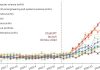






Why does a spike in sexually transmitted infections across Europe matter to you? Or to anyone in Africa who doesn’t feel personally at risk? It isn’t just about the STIs themselves. It’s the signal. A flare of resistance that tells us how easily drug-resistant pathogens move now. Not just between hospital beds, but through streets, borders, and entire populations.
The speed of our modern movement helps it spread. Travel connects everyone, from wealthy nations to low-and middle-income countries where the burden sits heaviest. Surveillance is weaker there. That makes it easier for threats to grow in the blind spots.
We have proof already. Gonorrhea. Eighty-two million new cases worldwide in 2020. Mostly in those lower-resource settings. We are watching a growing share of them turn untreatable. Antibiotic resistance eats away at the drugs that used to stop them. In some places, they are becoming impossible to cure.
They move with us. Across cities. Across continents. Carried by people who are sick, sure, but also by those simply hosting the germs without knowing. Asymptomatic carriers are invisible highways for resistant genes.
STIs need sex to spread. That’s specific. Resistant bacteria? No such limit. They jump through routine touch. They survive on surfaces long enough to hop onto clothes, phones, luggage. Think about billions of trips every year. Migration, trade, commuting. Dense urban centers are growing fast, especially in LMICs. Perfect mixing grounds for germs.
Gonorrhea is showing us the map. Strains resistant to almost everything popped up in Cambodia. They didn’t stay there. They traveled to France. To Australia. The bacterium, Neisseria gonorrhoea, has outsmarted our tools. One drug remains, really. Ceftriaxone. A last line of defense. Cases resistant to that are growing. Is this the start of the end for a treatable STI? Probably.
It is not unique to gonorrhea. We often wait for hospitals to notice, because that’s where tests get done. But the resistance is out there in the air we breathe and the dirt we walk on.
Consider the mcr-1 gene. Discovered in the nineties, it killed off the effectiveness of colistin, a last-resort drug. Within ten years it was global. Speed is the key word.
Drug-resistant bugs thrive in hospitals, yes. But evidence piles up on MRSA, methicillin-resistant Staphylococcus aureus, coming from everyday places too. It’s more common. And far deadlier for fragile groups like cancer patients.
In poorer health systems, outpatient care does more heavy lifting. Resources for preventing infection? Slim. The danger multiplies. Large studies show high rates of resistant infections among cancer patients getting care outside hospitals. Pneumonia strikes often. Deaths follow. Frequently.
This points to a shift in how we face the threat. Antibiotic stewardship helps. Stop abusing drugs. Use them wisely. Many governments are trying this. It isn’t enough on its own. Stewardship and infection control cannot solve a supply problem.
For the toughest, deadliest infections, resistance wins faster than new drugs can be made. We lose tools quicker than we find new ones. One in six bacterial fights uses first-line drugs that simply no longer work.
It is a massive blind spot. The traditional commercial model for making drugs is broken here. It chases profit. Antibiotics don’t sell enough. Or long enough. So the companies skip them. The people in LMICs need them most. Their wallets hold the least promise for returns.
So the industry stays silent. The gap widens.
A different approach is working, though. Zoliflodacin. It is new. Designed specifically for multi-drug resistant gonorrhea. The first in its class for decades. Developed through a not-for-profit framework, led by the Global Antibiota Research & Development Partnership. The goal changes from profit margin to global public good. Access. Stewardship. Sustainability. Not sales numbers.
This proves the right drugs can be built this way. They just won’t be built the old way.
AMR killed nearly 5 million people last year. Estimates suggest that number grows by 70% before the century is out. That is a heavy cost. But the danger isn’t just the numbers.
It’s the location of the threat. It used to be confined to sterile rooms with hand sanitizer stations. Now? The boundary has dissolved. Community settings have become the frontline.
Ordinary moments. At home. Work. A crowded market. These interactions carry pathogens that medicine can barely touch anymore. The safety net is unraveling, strand by strand, outside of our immediate sight.
If nothing changes, common infections will lose their reliability. Cures will vanish into rarity. We will all pay for that loss. Beyond hospital walls, anyway.