




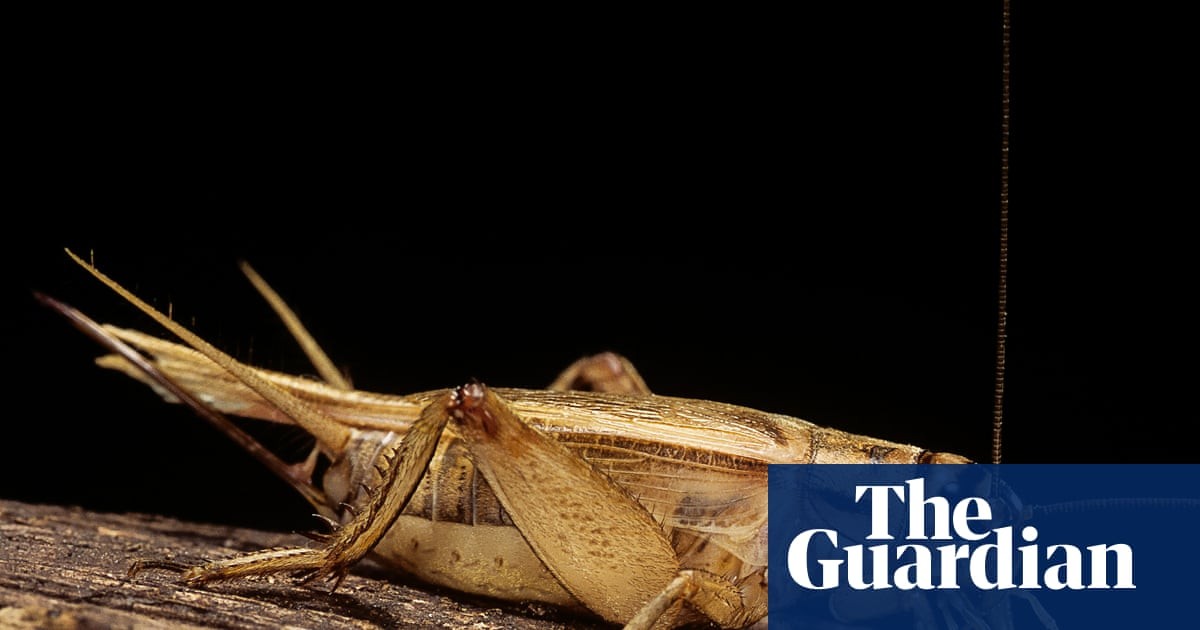
New research indicates that crickets exhibit behaviors consistent with pain perception, specifically by nursing injured body parts in a manner similar to mammals. Published in Proceedings of the Royal Society, the study challenges the long-held assumption that insects are merely reactive machines, suggesting instead that they may experience a prolonged, subjective sensation of discomfort.
The “Ouchy” Test: Methodology and Results
To investigate whether crickets experience pain rather than just reflexive nerve responses, Associate Professor Thomas White of the University of Sydney and his team designed an experiment focused on flexible self-protection. This behavioral cue—where an animal directs care to a specific injured area over an extended period—is a key indicator used by scientists to ascribe pain to non-human species.
The researchers subjected dozens of crickets to three distinct conditions:
1. Heat Exposure: A heated soldering iron (65°C) was briefly applied to one antenna. This temperature was chosen to be “unpleasant” without causing permanent damage.
2. Touch Control: The same probe was applied without heat.
3. No Intervention: A control group received no treatment.
The results were distinct. Crickets exposed to the heat overwhelmingly directed their attention to the affected antenna, grooming it more frequently and for longer durations than usual. In contrast, crickets in the control groups showed only brief agitation before resuming normal activity.
“They weren’t just agitated and flustered. They were directing their attention to the actual antennae that was hit with this hot probe,” White noted.
This targeted care mirrors how a dog might lick a sore paw or limp on an injured leg—behaviors humans intuitively recognize as responses to pain.
Beyond Reflexes: The Case for Insect Consciousness
The study highlights a critical distinction in biological science: the difference between a hardwired nociceptive response (a simple reflex to harmful stimuli) and pain (a longer, drawn-out, “ouchy” feeling). By demonstrating that crickets prioritize care for a specific injured site over general agitation, the research provides evidence for the latter.
This finding aligns with a broader scientific shift regarding insect cognition. The New York Declaration on Animal Consciousness, signed by over 500 scientists and philosophers, acknowledges the “realistic possibility of conscious experience” in many invertebrates. Recent studies have shown that bumblebees engage in play-like behaviors, while stressed bees exhibit signs of pessimism. These insects are not just executing programmed tasks; they possess the capacity for learning, complex decision-making, and emotional states.
Why This Matters: Ethics and Industry Implications
Historically, humans have underestimated insects due to their physical differences and cultural bias toward vertebrates. However, Associate Professor Kate Umbers of Western Sydney University argues that this view is evolving. She notes that insects are evolutionarily related to crustaceans—animals whose sentience is increasingly recognized in welfare laws in countries like the UK and New Zealand.
The implications of this research extend beyond academic curiosity. Crickets are often described as the “chickens and cows of the insect world,” farmed in billions for food, feed, and scientific research. If crickets are capable of experiencing pain and having “better or worse lives,” current farming and handling practices may require ethical reevaluation.
Conclusion
This study serves as a pivotal reminder that biological complexity does not always correlate with size. As science reveals the rich inner lives of insects, society is challenged to reconsider its interactions with these species. Recognizing the potential for insect pain suggests that empathy, rather than dismissal, should guide our approach to the billions of insects we rely on for food and research.