



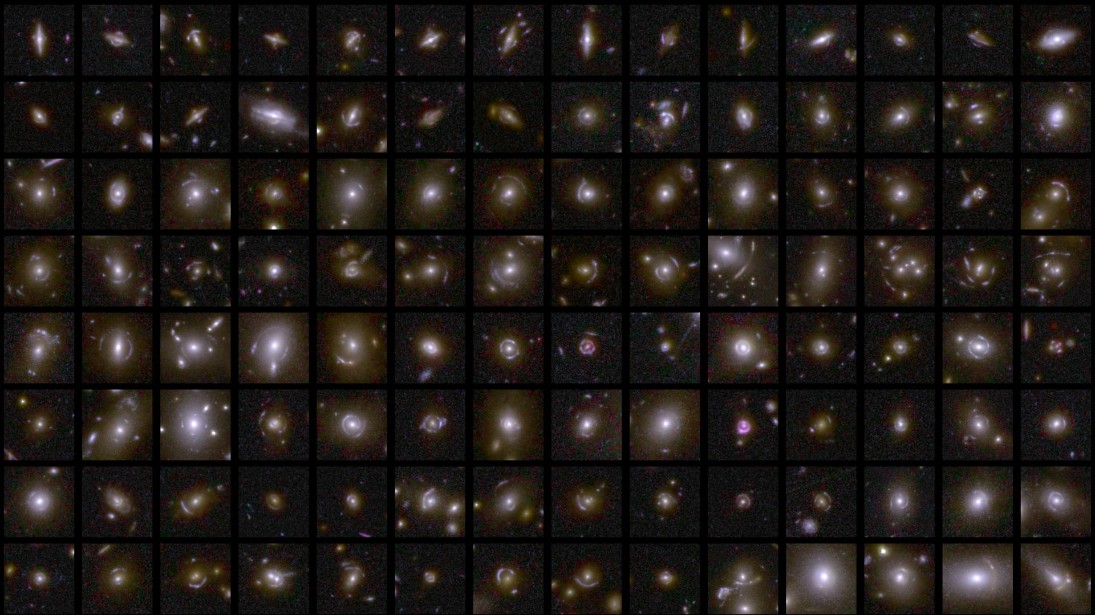
A new citizen science initiative is turning the public into amateur astronomers to help decode the mysteries of the cosmos. Led by the European Space Agency (ESA), the “Space Warps” project invites anyone with an internet connection to scan high-resolution images from the Euclid Space Telescope to find rare phenomena known as gravitational lenses.
The Science of “Space Warps”
In the vastness of space, gravity does more than just pull objects together; it can actually bend the fabric of spacetime itself. When a massive object—such as a galaxy or a cluster of galaxies—sits between Earth and a much more distant light source, its gravity acts like a giant magnifying glass.
This phenomenon, called gravitational lensing, creates several distinct visual signatures:
– Stretched arcs of light that appear to curve around a central mass.
– Duplicated images of a single distant galaxy.
– Einstein rings, which are near-perfect circles of light caused by precise alignment.
These “warps” are far more than just beautiful cosmic oddities. They serve as natural telescopes, magnifying incredibly faint, distant galaxies that would otherwise be invisible to us. Furthermore, studying how light bends allows scientists to map the distribution of dark matter, the invisible substance that makes up much of the universe’s mass.
Why Humans are Still Better Than AI
The Euclid mission is a data powerhouse, transmitting approximately 100 GB of data to Earth every single day. While astronomers use advanced machine learning and AI to sift through this mountain of information, these algorithms are not perfect. Subtle distortions and complex patterns can sometimes trick even the most sophisticated software.
This is where the “human element” becomes vital. Citizen scientists are remarkably adept at recognizing unusual patterns and “outliers” that algorithms might overlook or misclassify. By combining the speed of AI with the intuitive pattern recognition of humans, researchers can achieve a level of accuracy that neither could reach alone.
How the Project Works
Hosted on the Zooniverse platform, the Space Warps project provides a user-friendly way for the public to contribute to high-level research:
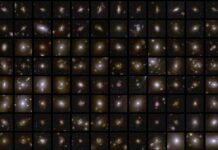
- The Dataset: Participants will examine roughly 300,000 AI-selected images. These are the most promising candidates drawn from a massive pool of 72 million galaxies.
- The Task: Volunteers are asked to identify potential lensing features and place markers on them. The interface allows for zooming, panning, and viewing different color filters to better spot distortions.
- No Expertise Required: The project is designed for everyone. Zooniverse provides a “Field Guide,” training images, and real-time feedback to help newcomers distinguish real cosmic signals from “imposters.”
- Early Access: Volunteers get a rare opportunity to view images that have not yet been released to the general public.
The Impact of Crowdsourced Discovery
The scale of this mission is ambitious. Researchers estimate that volunteers could help identify over 10,000 new lens candidates, significantly expanding our current cosmic catalog.
The effectiveness of this model is already proven. In early 2025, volunteers managed to find 500 galaxy-galaxy strong lenses within just the first 0.04% of Euclid’s data—most of which were previously unknown to science. These discoveries do more than just add to the database; they provide the “ground truth” data needed to train and refine the next generation of astronomical AI.
“We can’t wait to see what we will find within this unprecedented dataset,” says Aprajita Verma, project lead at the University of Oxford.
Conclusion
As space telescopes generate increasingly massive datasets, the line between professional research and public participation is blurring. Through Space Warps, the hunt for the universe’s hidden structures is no longer confined to laboratories, but is being shared with the world.