


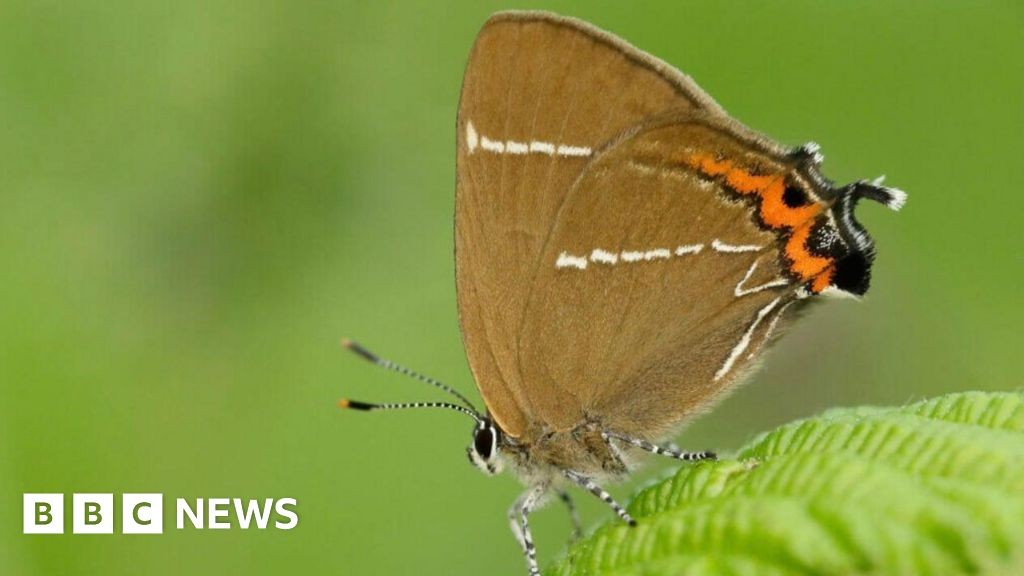
A dedicated conservation effort in the Quantocks is yielding early signs of success. After a volunteer-led initiative to plant hundreds of elm trees, rare butterflies—once thought to have vanished from the area—are being spotted once again.
The Return of the White-Letter Hairstreak
The white-letter hairstreak is a butterfly species currently facing a precarious future. According to data from the UK Butterfly Monitoring Scheme, populations of this species have plummeted by 80% since 1973.
In the Quantocks, the situation was particularly dire; the butterfly had not been officially recorded in the area since 2008 and had only been documented five times in the last 75 years. However, recent sightings of 11 butterflies and three caterpillars suggest that the local ecosystem may be recovering.
Rebuilding a Lost Habitat
The recovery is no accident. The Friends of the Quantocks launched a targeted project to restore the butterfly’s primary food source: the elm tree.
The project faced two significant ecological hurdles:
1. Dutch Elm Disease: This widespread disease often kills elm trees before they reach maturity. Because white-letter hairstreaks prefer very tall, flowering elms, the loss of mature trees effectively destroyed their living space.
2. Ecological Amnesia: As Robin Stamp, chairman of the group, noted, many people have lost their connection to the landscape, often forgetting what even a common elm tree looks like.
To combat these issues, the group has implemented a strategic replanting program:
– Planting Scale: 430 disease-resistant elm trees have been planted across 38 different plots.
– Current Inventory: The group identified approximately 100 existing elms to supplement the new growth.
– Funding: The initiative was supported by the Farming in a Protected Landscape fund.
Why This Matters for Biodiversity
The resurgence of the white-letter hairstreak is more than just a single species’ victory; it is a litmus test for local biodiversity. Because these butterflies rely on a specific, aging tree population, their presence indicates a healthy, complex woodland structure.
The success of this project raises important questions about how we manage “protected landscapes.” It demonstrates that targeted, species-specific interventions—such as planting disease-resistant varieties of a host tree—can create a ripple effect that restores entire food chains.
Looking Ahead
The work is far from over. The Friends of the Quantocks plan to continue planting more elm trees this coming winter. The ultimate goal is not only to stabilize the hairstreak population but to create a habitat robust enough to support other rare butterfly species that have also disappeared from the region.
“We hope to find more butterflies this year,” says Robin Stamp. “We’re also looking for other species of butterflies that have not been seen in years.”
The successful sighting of these rare butterflies proves that proactive habitat restoration can reverse decades of species decline, offering a blueprint for broader conservation efforts.