





What began as a heartfelt reaction to a museum field trip has escalated into a high-level conversation involving the leadership of NASA. Kaela Polkinghorn, a 10-year-old student from Tampa, Florida, has captured the internet’s attention after her letter requesting that Pluto be reinstated as a planet received an official response from NASA Administrator Jared Isaacman.
From a Museum Field Trip to NASA Headquarters
The spark for this cosmic campaign was a visit to the Museum of Science & Innovation (MOSI). During a presentation in the museum’s dome theater, Kaela watched a depiction of the solar system that featured eight planets orbiting the sun, leaving Pluto out in the cold.
Moved by the perceived isolation of the small, icy world, Kaela described Pluto as “so cute” and “like a little baby.” Alongside her classmate Zoey Mead, she drafted a letter to NASA advocating for Pluto’s return to the planetary lineup. The message gained momentum after it was shared by local weather personality Mike Boylan, eventually reaching the desk of NASA’s top official.
“Kaela — We are looking into this.” — Jared Isaacman, NASA Administrator
The Science Behind the Controversy
To understand why a child’s letter is making waves, one must look back to 2006. That year, the International Astronomical Union (IAU)—the global authority on celestial nomenclature—reclassified Pluto as a “dwarf planet.”
The decision was based on specific scientific criteria: to be considered a full planet, a celestial body must be round and “clear its neighborhood,” meaning it must be gravitationally dominant in its orbit. Because Pluto shares its orbital path with numerous other objects in the Kuiper Belt, it failed this requirement.
This reclassification remains one of the most polarizing moments in modern astronomy because it pits two different perspectives against each other:
- The Formalist View (IAU): Classifications must be based on strict, evidence-based definitions to maintain scientific order.
- The Geophysical View: Some scientists, including Philip Metzger of the University of Central Florida, argue that Pluto’s complex geology and active surface suggest it should be treated as a planet, regardless of its orbital neighborhood.
Can NASA Change the Rules?
While the NASA Administrator’s response is significant, there is a catch: NASA does not have the authority to unilaterally change planetary definitions. Those decisions rest solely with the IAU.
However, the Administrator’s engagement is not merely symbolic. Isaacman has previously expressed support for restoring Pluto’s status, and his attention could help shift the scientific consensus. If NASA leaders champion a new definition, it could pressure the IAU to re-evaluate its criteria based on evolving astronomical data.
Why It Matters
The “Pluto debate” is more than just a matter of semantics; it represents the intersection of scientific rigor and public engagement. For many, Pluto is a symbol of nostalgia—a fixture of childhood education that was abruptly changed. For others, it is a gateway to discussing how we define the universe around us.
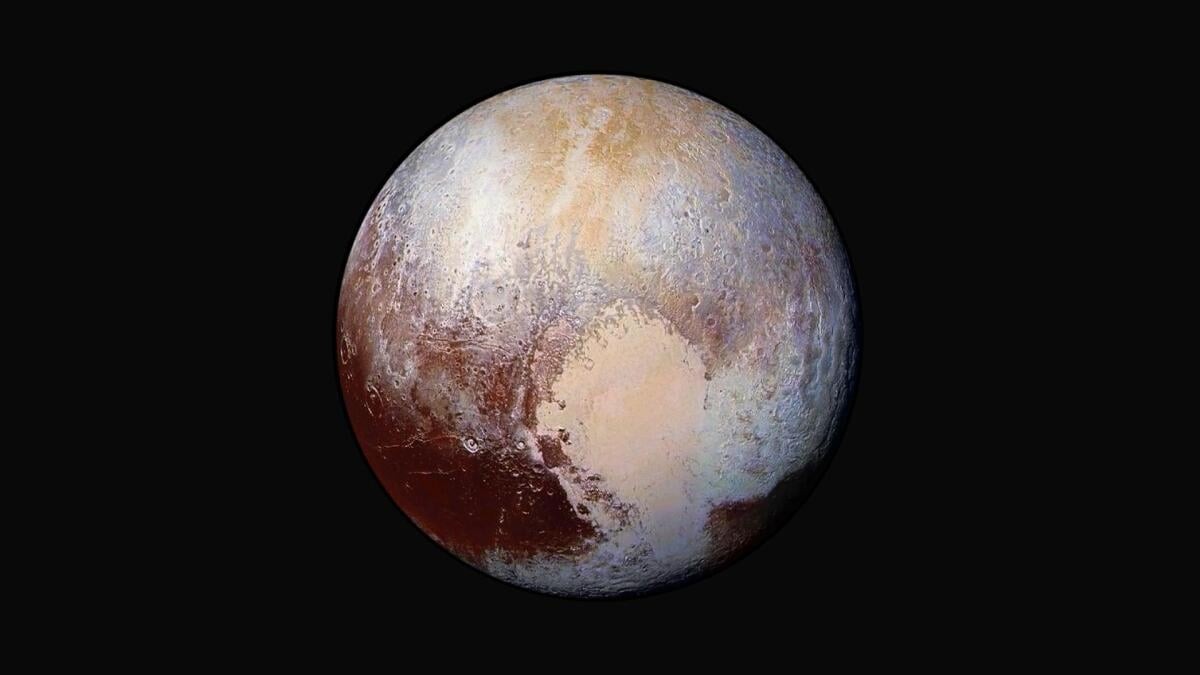
For Kaela Polkinghorn, the mission is simpler. Driven by a sense of fairness and a love for the “heart-shaped” landscape seen in NASA’s New Horizons photos, she has successfully bridged the gap between an elementary school classroom and the highest levels of space exploration.
Conclusion: While the official status of Pluto remains unchanged, a 10-year-old’s letter has successfully reignited a global scientific debate, proving that even the smallest voices can reach the highest levels of NASA.