
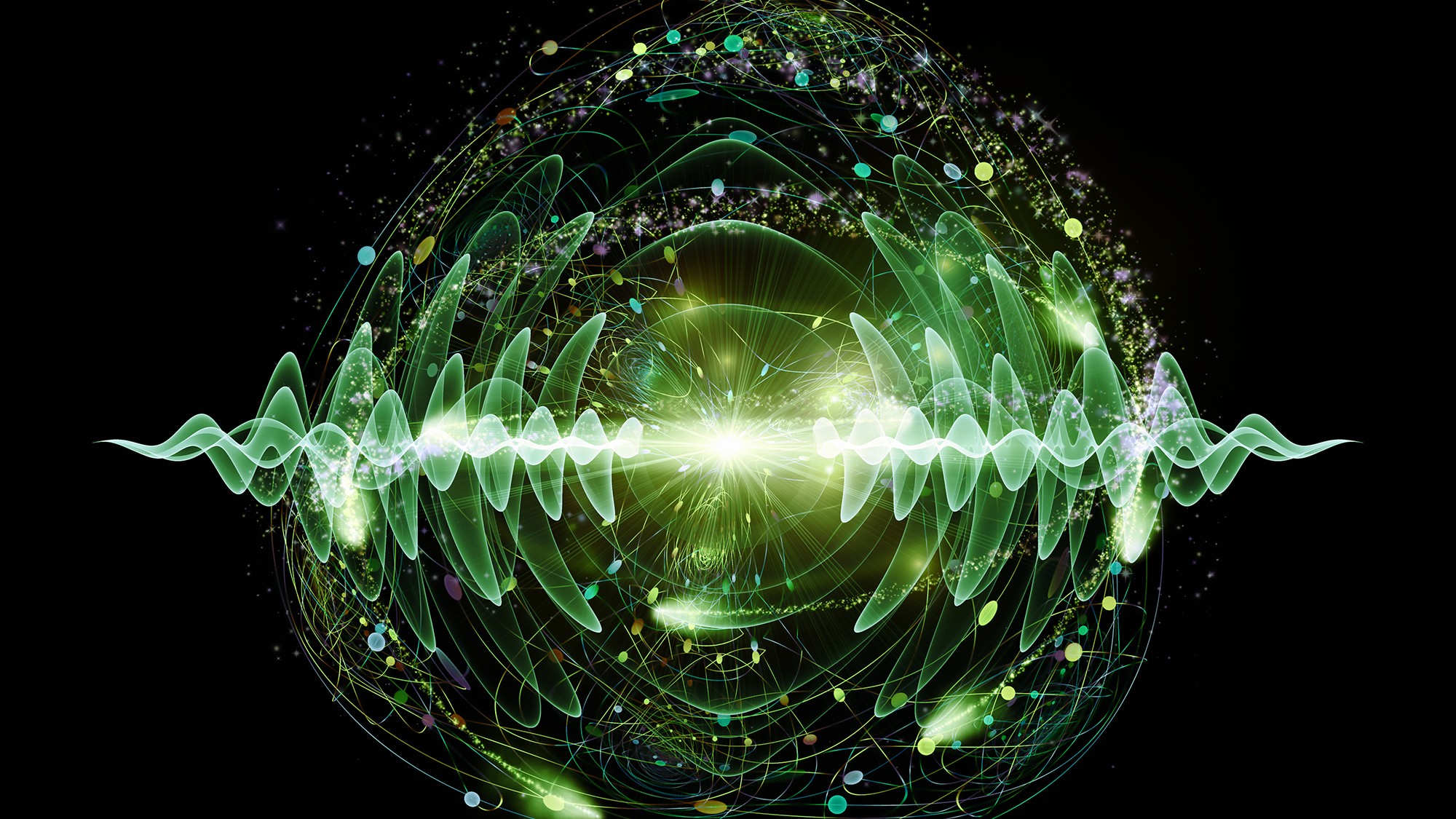
Here is the short answer: quasiparticles are real, but only if you let go of the idea that a particle has to be a lone wolf.
They are not little billiard balls. They are not protons. They are certainly not electrons in the traditional sense. Instead, they are excitations. Ripples. Collective behaviors of matter acting like a single unit. It sounds abstract because it is, until you look at how we use them to explain everything from superconductors to solar panels.
How Quasiparticles Work in Matter
To understand what quasiparticles are, you first have to break the childhood image of physics.
We are taught that particles are discrete objects. A marble. A bullet. A grain of sand. Then quantum mechanics happened. Louis de Broglie showed in 1924 that electrons behave like waves. That shook things up.
Modern physics takes it further. Particles are just ripples in fields that fill the universe. Light? A ripple in the electromagnetic field. An electron? A ripple in its own field.
But what happens when that ripple moves through stuff?
Imagine a stadium. Thousands of people sitting in rows. They stand up and sit down in sequence. A “wave” moves around the arena. It has speed. It has a location. It travels from section A to section B.
But where is the wave?
It is not a person. It is not a physical object you can hold. It is a pattern of behavior. If you empty the stadium, the wave vanishes. It cannot exist in a vacuum. It needs the crowd.
That is a quasiparticle.
Douglas Natelson, a physicist at Rice University, puts it bluntly. Quasiparticles exist only within a medium. They are the collective response of interacting parts. Electrons and protons can float in empty space. Quasiparticles cannot. They are bound to their material home.
So, are they fake? No. You can detect them. You can measure them. You can even manipulate them for technology. They behave like particles because the math treats them as particles. It simplifies a chaotic system into something you can calculate.
Which Quasiparticles Actually Exist?
Lev Landau came up with the concept in the 1950s. It won him a Nobel Prize. Since then, scientists have found a whole zoo of these things.
Here are the main ones you need to know.
- The Phonon: This is a particle of sound. It is the smallest packet of vibrational energy in a material. When you touch something and feel it vibrate, you are feeling phonons.
- The Electron Hole: When an electron moves, it leaves a void behind. That void has a positive charge. We treat that empty space as a particle called a “hole.” It moves opposite to electrons. It is real in its effect, even if it is literally nothingness.
- The Exciton: Imagine an electron and a hole stuck together, orbiting each other. They are bound by electric attraction. This quasiparticle is key for solar cells. It carries energy without carrying a net charge.
- The Anyon: These only show up in two-dimensional systems. They are weird. They can carry fractions of an electric charge. Standard particles have integer charges. Anyons do not.
Ross McKenzie from the University of Queensland suggests there are potentially infinite types. There are infinite states of matter. Each state likely has its own quasiparticle signature.
Why Do We Use Quasiparticle Theory?
You might ask: why complicate things? Why not just track every single atom?
Because the math is impossible otherwise.
Natelson says quasiparticles make the math of solids manageable. Without them, describing how electricity flows through a copper wire or how a laser works would require tracking billions of individual interactions. It would be chaos.
With quasiparticles, we treat the crowd as a single entity.
“Scientists describe activity in material as quasiparticles because it simplifies everything dramatically.”
This is not just theoretical bookkeeping. It is engineering. When you design a semiconductor, you are designing for holes and electrons. When you build a quantum computer, you are hunting for anyons. These quasiparticles determine how materials conduct heat, light, and power.
The Reality Check
So, back to the big question. Are they real?
If “real” means “exists in isolation in a void,” then no. You cannot put a phonon in a jar and take it home.
If “real” means “has measurable properties and follows physical laws,” then yes. Absolutely.
McKenzie argues they are as real as standard particles for all practical intents. You can catch them. You can watch them bounce off boundaries. You can use them to power devices.
The line between “fundamental particle” and “emergent phenomenon” is blurry. Maybe too blurry for some. But physics is not about clean definitions. It is about models that work.
Quasiparticles work.
They let us see the hidden structure of matter. They turn noise into signal. They turn a chaotic crowd into a single, moving wave.
Whether you call that real depends on what you value. Tangibility? Or behavior?
The wave keeps moving regardless.