






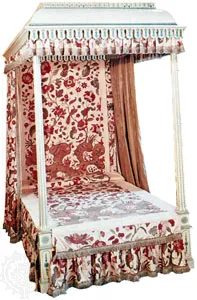
The bedspread is a lie. It sits on top of the real blankets, the ones that actually keep you warm, and its only job is to look good. Tidiness is its primary function. Display is secondary. Warmth? Forget it.
This isn’t a modern interior design trend. It is an ancient custom. The Bible mentions it in Proverbs 7:16: “I have decked my bed with coverings of tapestry.” Before tapestry, people used fur. Just raw animal hide over the mattress. Practical? Sure. Pretty? Debatable.
How luxury bedcovers changed Roman society
As weaving technology improved, so did the vanity. Romans started importing fancy stuff. The historian Livy wrote in the 1st century BC that Roman armies brought back “valuable bed covers” from Asia. This marked the beginning of bedding as a status symbol.
By the late 1400s, English records describe a “counterpane cloth of gold furred with ermine.” That is not for warmth. That is for showing off. Medieval inventories are full of these descriptions. People were spending fortunes on covers they never slept under directly.
The rise of the American quilt
The word counterpane comes from the old French contrepoinct, meaning “stitched quilt.” Early versions were patched together. Applied pieces. Quilted layers. It was resourceful.
In the US, this evolved into something specific during the 18th and 19th centuries. Quilting became a major form of American folk art. It wasn’t just utility anymore. It was art.
Which quilt patterns tell the best stories?
American quilters didn’t just make squares. They made pictures with fabric. The patterns had names that told stories or described shapes.
- Duck’s Foot in the Mud : A geometric pattern that looks like footprints.
- Robbing Peter to Pay Paul : A name with a moral lesson embedded in the stitches.
- Missouri Puzzle : Complex geometry that looks like a jigsaw.
- Broken Dishes : Shards of ceramic translated into cloth.
- Delectable Mountains : A landscape view from the bedroom.
Each pattern has a story behind it. Symbolism matters. The bedspread shifted from a Roman luxury item to a canvas for American storytelling. It’s still decorative. It still hides the messy sheets underneath. But now it carries history in every stitch.
We still buy them. We still drape them over the foot of the bed. Do we still care about the origin of the pattern? Probably not. But the act remains. Covering the bed to make it look tidy. Hiding the chaos of sleep.