



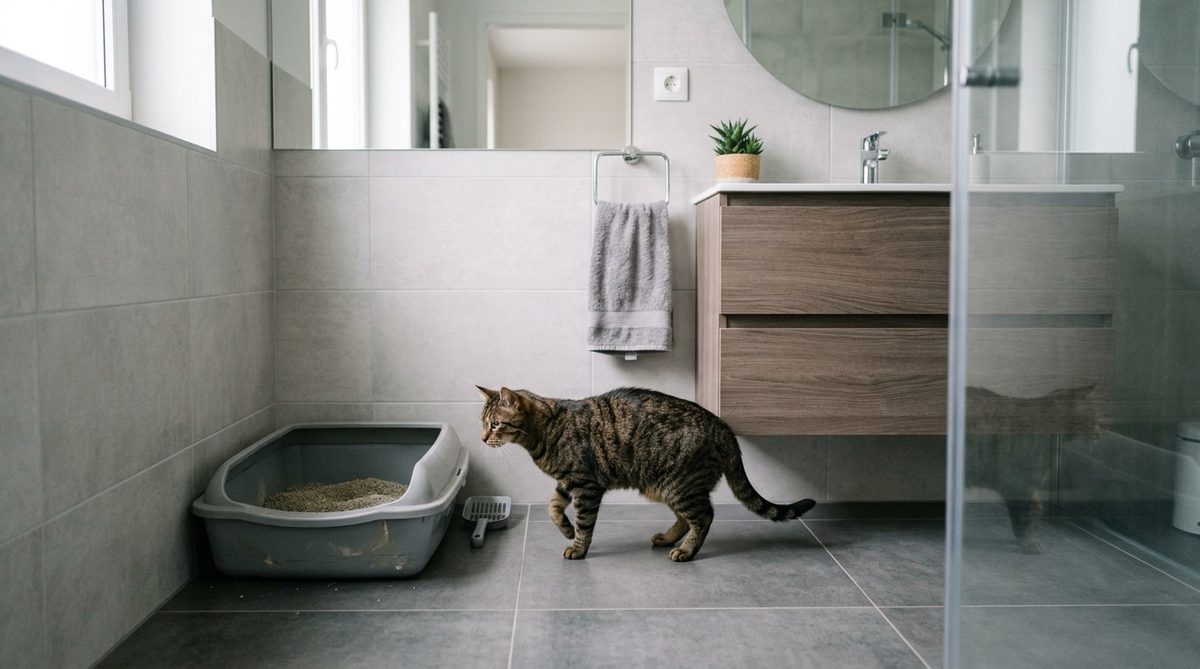
Buy the cheapest bag. This is a reflex. You’re standing in the aisle, your shopping cart is full of snacks and toys, and the price tags on the bottom shelf look like gifts from the universe. After all, isn’t litter just litter? A pile of clay. A bag of sand.
This is not true.
For cats, the box is an intimate refuge. Here they breathe heavily. Where they dig. They smelled everything there. Where they press their pads into the substrate multiple times a day. The price on the box tells a very incomplete story. In the silence between the price tag and actual use, your cat will pay the difference.
The dust problem no one sees
Cheap mineral litters often has a quiet flaw. It’s dusty.
You see it when you pour the bag into the litter box. A small gray cloud drifts up in the bathroom air. This is annoying for you. This is an inhalation hazard for cats. Every time your cat enters the box, it inhales dust.
This may seem trivial. Until it isn’t.
Fine dust can irritate cats with sensitive airways, elderly cats, brachycephalic cats (such as Persians) or cats that sneeze easily. Settled. It accumulates. The cat coughs after using the box. The cat rubs its face against the side of the box. The cat suddenly avoids the litter completely. These are not bad deeds. Those are warning signs.
Summer makes it worse. Heat traps particles. Stale air holds the odor. The litter box becomes a haze. Yes, good sand absorbs waste. But it must also remain breathable. Cheaper options often fail this basic test.
The illusion of savings
This is a trap.
A budget bag looks like a bargain at the checkout. But it saturates fast. It sticks to the bottom. Does not retain odors. Instead of a nice piece, it turns into a gooey, gooey mess that’s hard to handle.
So what happens?
You replace the litter twice as often. Scrub the box more often. You buy more trash bags. You can also use chemical deodorants to mask the smell, but cats don’t like this smell anyway. Their noses are thousands of times more sensitive than yours.
The math changes.
Better quality, more absorbent cat litter or cat litter that clumps easily may have a higher initial cost. But it lasts longer. It requires less frequent full changes. Stop throwing money in the trash. The actual calculation is not the price of the bag. It is the monthly cost. If a cheaper bag requires weekly emptying and refilling, but a more expensive bag lasts three weeks, the cheaper option is actually a more luxurious expense. Melts like ice on a hot terrace.
Comfort is functional, not decorative
Choosing the right cat litter means what your cat experiences every day.
- Dust level: Does it cloud the air when poured?
- Clumping: Do clumps stay firm enough to be easily removed?
- Odor control: Do artificial fragrances neutralize odors without masking them?
- Texture: Is it comfortable to walk on?
Avoid using strong perfumes. Some odors are pleasant to humans, but can be intolerable and even toxic to cats. Look for low-dust, highly absorbent formulations that respect animal biology.
For kittens, older cats, or cats with urinary or breathing problems, a litter box is not a piece of furniture. This is a necessity for health. Cats who like the litter box will continue to use it. It digs right. It hides waste. You can avoid problems. Accidents don’t happen on the carpet.
It isn’t as Instagram-worthy as a designer cat tree. But it might save you a vet bill.
The hidden bill
It is a mistake to focus only on the purchase price.
Cheap mineral litters often have a quiet flaw. They are dusty. They need to be changed often, and over time they become the most expensive option in the shop. If you make the right choices, you can protect your cat’s respiratory system. Reduce waste. It creates a very comfortable space.
The question should not be how much the bag costs.
It should be: what does it cost your cat’s health? What are the real long-term costs of this?
The answer rarely fits a positive label.


