





Red butterflies are not just decorative. They are bold, impossible to ignore, and scientifically significant. While we often dismiss them as mere eye candy, these insects serve as vital indicators of ecosystem health. Their bright wings signal more than just beauty; they warn predators of toxicity or simply demand attention. From the temperate forests of North America to the tropical zones of Asia and Europe, a diverse array of species keeps the skies colorful.
The Red Admiral (Vanessa atalanta)
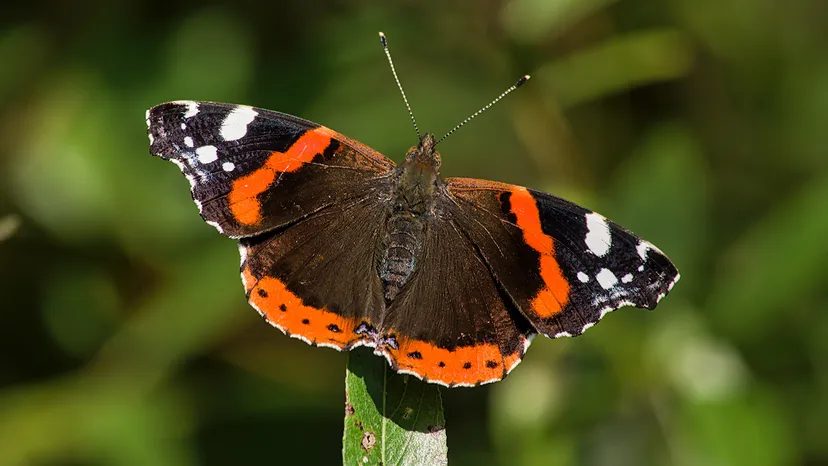
If you see a butterfly with a red band across its black wings, you are likely looking at the Red Admiral. This species is widespread, found across North America, Europe, and parts of Asia. It is not truly red, though. The color is a vivid orange-red that contrasts sharply with the black and white markings.
This butterfly is a traveler. It migrates long distances, which is why it appears in so many different regions. In North America, it is one of the most common sights in late summer. The larvae feed on nettles, a detail that might surprise gardeners who usually treat nettles as weeds. The adult butterflies prefer nectar from flowers like thistles and milkweed.
Why does this matter? The Red Admiral’s presence helps pollinate a wide range of plants. Its migration patterns also give scientists data on climate shifts. When these butterflies move earlier or later than usual, it often signals changing temperatures.
The Red Admiral is a master of adaptation, thriving in both wild fields and suburban gardens.
Other Notable Red-Hued Species
The Red Admiral is just the beginning. Several other species carry the red label, either in their name or their appearance.
- American Lady (Vanessa virginiensis) : This butterfly has a smaller red band. It is common in North America and prefers open fields.
- Painted Lady (Vanessa cardui) : Found on six continents, this species has orange-red patches. It is one of the most widespread butterflies in the world.
- Gulf Fritillary (Agraulis vanillae) : Found in the southern United States and parts of South America, this butterfly has bright orange-red wings with black markings. Unlike many butterflies, its larvae feed on passionflower vines.
These species vary in size and habitat. Some prefer forests. Others thrive in urban parks. Despite these differences, they all share a need for nectar-rich plants and specific host plants for their larvae.
Why Red Wings?
Evolution favors bright colors for a reason. For butterflies, red and orange often serve as warning signals. This is called aposematism. Predators learn to associate these colors with bad taste or toxicity.
But it is not always about warnings. Some red butterflies use their colors for mating. A bright male can attract a female more easily. Others use red for camouflage in autumn leaves. The context matters.
Where to Spot Them
You do not need a plane ticket to see these butterflies. Look for them in gardens with native plants. Milkweed, coneflowers, and zinnias are good draws. In North America, late summer is the best time. In Europe, late spring and summer see the highest activity.
The key is to observe without disturbing. Red butterflies are delicate. Their wings are easily damaged. A quiet approach and a

The Crimson Rose: A Toxic Beauty
If the Red Admiral is the garden visitor you see every spring, the Crimson Rose (Pachliopta hector ) is the one that stops you in your tracks. It isn’t just about the color, though the deep, blood-red markings on those black wings are impossible to ignore. It’s about the story behind the wings. This butterfly, also known as the Common Rose, belongs to the swallowtail family, but it wears its toxicity like a badge of honor.
Found across a vast stretch of Asia and parts of Australia, this species is a masterclass in evolutionary signaling. The bright red bands aren’t just for show. They are a warning label. Larvae of the Crimson Rose feed on plants in the Rue and citrus families, which are toxic to most predators. The butterfly absorbs these toxins, storing them in its body to make itself unpalatable to birds and other hungry wildlife. When you see those stark red and black patterns, you’re looking at a creature that has essentially said, “Do not eat me.”
The visual contrast is striking. The wings are predominantly black, but the veins and borders are painted in vivid crimson. Males and females look similar, though females can sometimes be larger. This species is often found in open woodlands, gardens, and forest edges, hovering around nectar-rich flowers during the day.
Why It Matters
The Crimson Rose isn’t just a pretty face in the Asian ecosystem. Its presence indicates healthy populations of host plants like wild rue and citrus relatives. But more importantly, it’s a textbook example of aposematism—coloration that warns predators of danger. For entomologists and conservationists, studying populations of Pachliopta hector helps track the health of local flora. If the citrus or rue plants disappear, the butterflies follow.
They are also frequent visitors to gardens where nectar sources are abundant. Unlike many butterflies that dart quickly and disappear, the Crimson Rose tends to be more leisurely, often resting with its wings spread open to display those warning colors. It’s a reminder that beauty in nature is often tied to survival. The brighter the warning, the more likely the species is to thrive in a competitive environment.
Identification Tips
Spotting a Crimson Rose is relatively straightforward if you know where to look. Key identifiers include:
– Color Pattern: Black wings with bold red bands across the forewings and hindwings.
– Submarginal Dots: A row of small red spots along the outer edge of the wings.
– Behavior: Slow, fluttering flight near nectar sources.
– Habitat: Open forests, gardens, and areas with abundant host plants like citrus or rue.
While it shares some visual similarities with other red-and-black butterflies, the specific arrangement of the red bands and the size of the submarginal dots help distinguish it. The Red Admiral has white spots near the tips of its wings; the Crimson Rose does not. Instead, it relies on the continuous red banding to signal its toxicity.
Conservation Status
Unlike some of its more endangered cousins in the swallowtail family, the Crimson Rose is currently listed as Least Concern by the IUCN. It is widespread and adaptable, thriving in both wild and cultivated environments. However, habitat loss in parts of Southeast Asia and Australia remains a
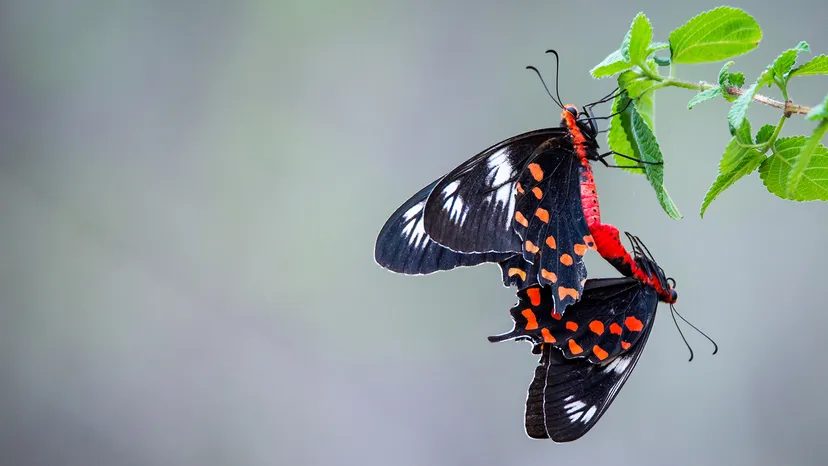
The Poisonous Beauty of the Crimson Rose
Native to India and Sri Lanka, the Crimson Rose is not just visually striking; it is chemically defended. This swallowtail butterfly displays black wings accented with distinct red and white markings. Its toxicity stems from chemicals accumulated during its larval stage, serving as a potent defense against predators.
These insects thrive in warm climates and remain active throughout daylight hours.
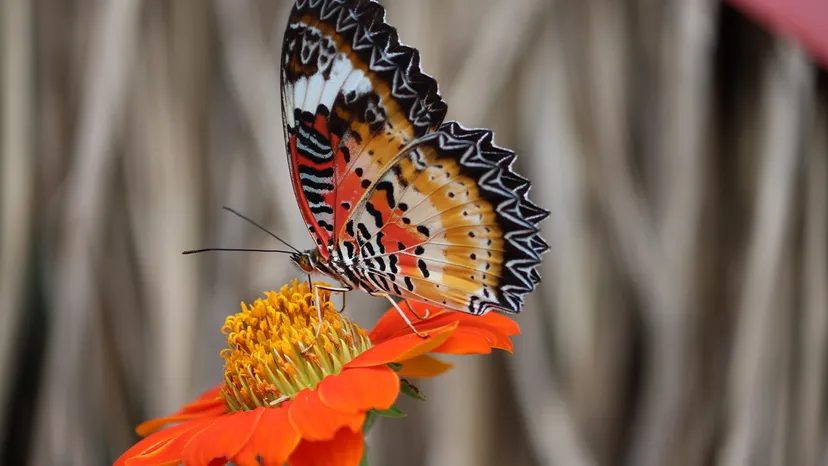
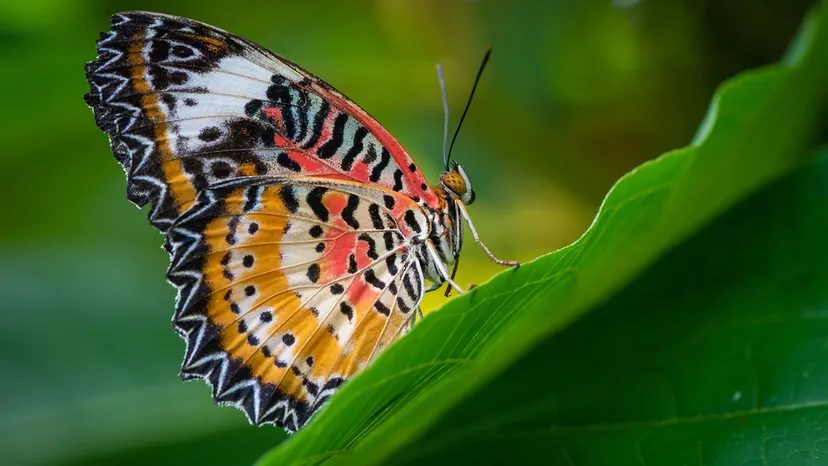
Red Lacewing (Cethosia biblis)
The Atala Butterfly: A Species Hanging by a Thread
If Red Lacewings are the flashy tourists of the forest, the Atala butterfly is the quiet, desperate survivor. Its scientific name, Eumaeus atala, barely hides the tragedy of its existence. This tiny, striking insect is not just rare; it is the only butterfly in the United States that relies on a single, specific plant for survival. That plant? The coontie.
The coontie is a cycad native to tropical Florida and the Caribbean. It looks nothing like a typical flowering plant. It is tough, spiky, and toxic. Most insects avoid it. The Atala caterpillar, however, has evolved to feast on it, turning the plant’s poison into a defense mechanism of its own. The caterpillars sequester the toxins, making them unpalatable to predators. The adults, with their metallic blue-black wings and bright orange spots, are beautiful, but their beauty is built on a fragile foundation.
Why the Atala Butterfly is Endangered
The story of the Atala butterfly is a story of near-extinction. By the 1970s, the species had vanished from the wild in Florida. Habitat destruction, urbanization, and the clearing of coontie plants for development pushed it to the brink. There were no wild populations left. None.
This is not a minor blip. This was the complete erasure of a species from its native range. Conservationists stepped in, breeding the butterflies in captivity and reintroducing them. It was a delicate, decades-long effort. The coontie had to be protected. The habitat had to be restored. And the public had to learn to tolerate the caterpillars, which are not exactly cute. They are covered in spines and look more like alien larvae than charming insects.
How Habitat Restoration Saved the Atala
The recovery of the Atala butterfly is one of the most significant conservation successes in recent American history. It proves that targeted action can reverse extinction. But it also highlights the fragility of ecosystems. The Atala does not live in just any patch of green. It lives where the coontie thrives.
Today, you can still find Atala butterflies in South Florida, particularly in protected areas like the Florida Keys and parts of Miami-Dade County. They are not abundant. They are not widespread. They are a reminder of how close we came to losing something unique forever.
The Atala butterfly is not just a pretty face. It is a biological lifeline tied to a single plant species. Save the coontie, save the butterfly.
Where to See the Atala Butterfly
Finding an Atala butterfly requires patience and location knowledge. They are not common garden visitors. They are specialists. If you are in South Florida, look for coontie plants in natural areas, parks, and protected reserves. The butterflies are often seen basking on leaves or flying low near their host plants.
The best time to spot them is during the warmer months when coonties are actively growing. Spring and early summer are prime times. But remember, these butterflies are shy. They do not come to you. You have to find them in their habitat.
The Bigger Picture
The Atala butterfly’s story is not just about one insect. It is about the interconnectedness of life. Remove
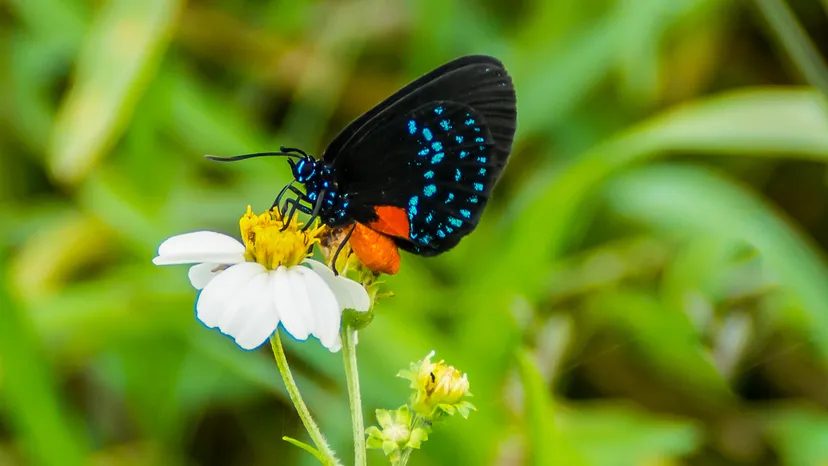
The Atala Butterfly’s Near-Extinction and Recovery
The Atala butterfly isn’t entirely red, but those brilliant crimson spots on its abdomen are hard to miss. You’ll also catch flashes of blue-green iridescence on its wings as it moves. Native to Florida and the Caribbean, this species often flits among ornamental plants in gardens and parks.
For a long time, the Atala was thought to be extinct. Conservation efforts, combined with the widespread planting of coontie plants—the essential larval host—helped the population rebound. Today, it serves as a reminder of how targeted conservation can reverse decline.
5. Postman Butterfly (Heliconius melpomene)
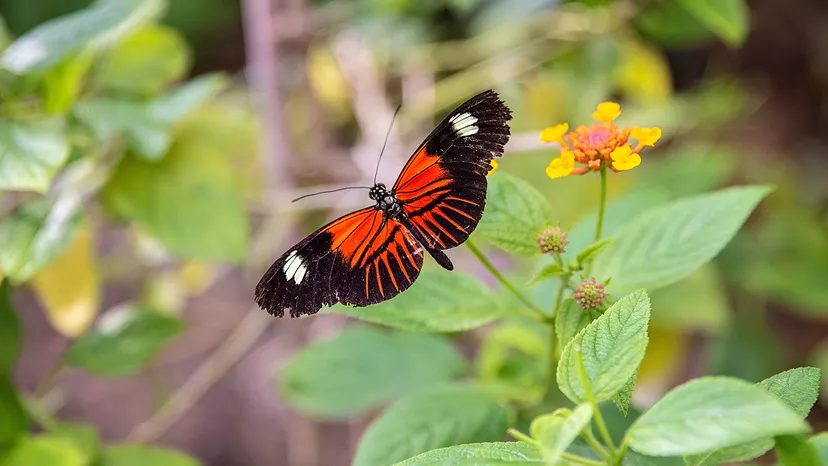
Look at a butterfly in Central or South America and you might be looking at a warning sign. The Postman Butterfly (Heliconius melpomene ) is hard to miss. It wears black wings cut with bold red bands. It’s not just for show. Those colors scream toxicity.
Predators learn quickly. If you bite a Postman, you regret it. The chemical defense is real. But here is where it gets interesting. The Postman isn’t alone in this strategy. It shares its bad reputation with other species. This is Müllerian mimicry. Several unpalatable species converge on the same visual signal. It reinforces the lesson for predators. Stay away. All of them.
The Postman also has a sweet side. It visits nectar-rich flowers. It’s a pollinator, not just a poison pill. The contrast between its bright warning colors and its role in the ecosystem is stark. It’s a key player in the region’s biodiversity.
The Red-spotted Purple Switch
Then there is the Red-spotted Purple (Limenitis arthemis astyanax ). This butterfly is a master of disguise. It looks almost identical to the Viceroy butterfly. For years, scientists thought the Viceroy was mimicking the toxic Monarch. That theory has been updated. The Viceroy is also unpalatable. So, the Viceroy and Monarch engage in their own Müllerian mimicry.
But the Red-spotted Purple takes it further. It mimics the Pipevine Swallowtail in some regions. The Pipevine Swallowtail larvae feed on toxic plants. The adults carry that toxicity. The Red-spotted Purple copies the look. It gains protection by association.
This isn’t just aesthetic. It’s survival. Predators avoid the look. The Red-spotted Purple doesn’t produce its own toxins in the same way. It borrows the shield. The result is a complex web of visual cues across the continent.
Why It Matters
You might think this is just about pretty bugs. It’s not. Mimicry groups help stabilize ecosystems. Predators learn faster when many species share a warning signal. The cost of trial and error is lowered for everyone. The Postman benefits from the Red-spotted Purple’s bad reputation. And vice versa.
It’s a delicate balance. If one species declines, the warning signal weakens. Predators might take more risks. The whole system shifts. We see this in fragmented habitats. Isolated populations lose the shared visual language.
The Red-spotted Purple is found across North America. Its mimicry patterns vary by region. In the south, it looks like the Pipevine Swallowtail. In the north, it might mimic other toxic species. Context is everything. The environment dictates the costume.
We often overlook these connections. We see a butterfly and think of beauty. We should think of strategy. Every wing pattern is a sentence in a long conversation between prey and predator. The Postman and the Red-spotted Purple are just two voices in that chorus. The rest of the conversation is still being written. 🦋
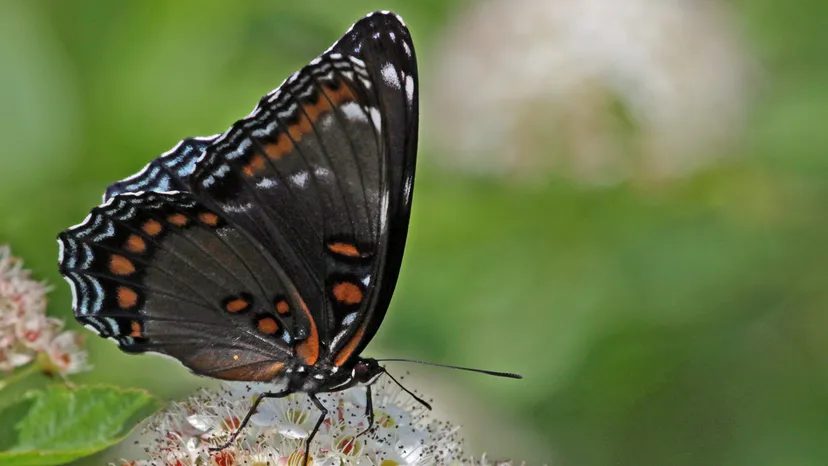
The Purple Emperor’s Hidden Red Markings
The name Purple Emperor might lead you to expect a uniform wash of violet across every wing. The reality is a bit more complex. Its hindwings feature distinct reddish markings that break up the primary color. This isn’t just aesthetic variation. It serves a functional purpose in its survival strategy.
This butterfly is primarily found in the eastern United States. It favors densely wooded areas. You will most often see it basking in patches of sunlight. This behavior helps regulate its body temperature. It also makes the butterfly more visible to predators. Visibility is risky. But it is part of the calculation.
A Group Defined by Bold Coloration and Mimicry
The Purple Emperor belongs to a group known for bold coloration. These species often mimic toxic models. This is a defense mechanism. Predators learn to avoid bright colors. These colors signal toxicity or bad taste. The Purple Emperor uses this association. It benefits from the reputation of other species.
Mimicry is not random. It is a calculated risk. The butterfly relies on the presence of toxic species in its habitat. Without these models, the mimicry loses its power. The environment dictates the strategy.
Why This Matters in Real Life
Understanding this mimicry changes how we see these butterflies. They are not just pretty insects. They are participants in a complex ecological dialogue. Their survival depends on the health of the entire food web. This includes the toxic species they mimic. It also includes the predators that learn to avoid them.
The Purple Emperor’s reddish hindwing markings add another layer to this strategy. They may disrupt the outline of the butterfly. This makes it harder for predators to recognize its shape. It is a subtle detail. But it contributes to the overall defense.
Where to Spot Them
Look for them in wooded areas of the eastern United States. They are often seen basking in the sun. This behavior makes them easier to observe. But it also makes them vulnerable. Patience is key. Wait for them to settle. Observe the interplay of color and pattern.
The Purple Emperor is a reminder that nature is full of hidden strategies. Bold coloration is not just for show. It is a language. One that predators and prey have been speaking for millennia. The reddish markings on the hindwings are just one word in that language.
The Future of Mimicry
Climate change may affect the distribution of these butterflies. It may also affect the toxic species they mimic. If the models disappear, the mimics suffer. This highlights the interconnectedness of ecosystems. The survival of the Purple Emperor is tied to the survival of others.
This is not just about one butterfly. It is about the integrity of the ecosystem. Every species plays a role. Even the ones that seem to rely on deception. The Purple Emperor’s strategy is a testament to the complexity of natural selection. It is a reminder that survival is often a matter of perception. And perception is shaped by the environment.
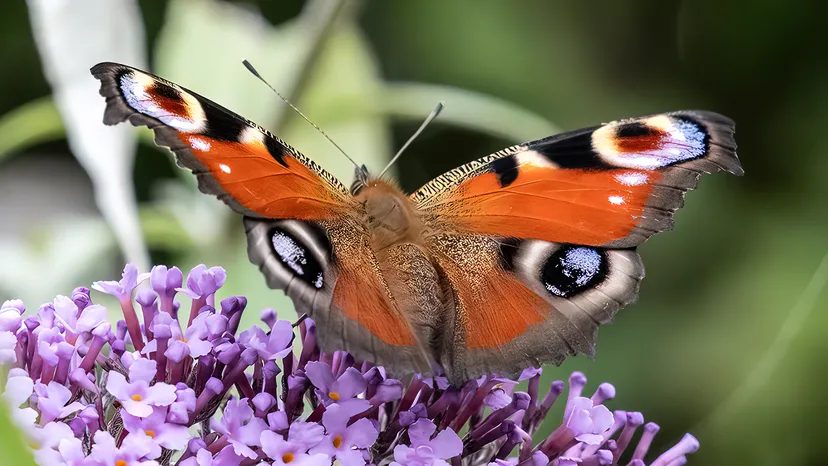
The Painted Lady: A Global Survivor with a Red Strategy
The Painted Lady (Vanessa cardui ) doesn’t just show up; it arrives. This species dominates early spring landscapes, a vibrant flash of color before most other butterflies have even thought about emerging. While many might expect a cold-weather survivor to be drab, the Painted Lady chooses the opposite strategy: red dominance.
Yes, it has the classic eyespots on its wings—a common defense mechanism across many species—but the primary visual signal is vivid red. Why red? Because it works.
Startle Tactics and Predators
Most butterflies rely on camouflage. They blend into bark or leaves. The Painted Lady takes a different approach. When a bird swoops down, the sudden flash of bright red acts as a startle tactic. It’s not just about hiding; it’s about confusing the hunter long enough to escape.
“Its vivid coloration helps it startle predators.”
This isn’t just aesthetic. It’s survival engineering. The red isn’t a warning of toxicity (like some other bright insects) but a psychological barrier. It creates a momentary pause in the predator’s attack sequence. That pause is everything.
Nettle Nurturing
The lifecycle is tightly bound to a specific host plant. The mother butterfly seeks out nettle plants to lay her eggs. It’s a precise relationship. The larvae that hatch rely on these stinging nettles for food, a paradoxical choice that protects them from many other herbivores. The nettles provide the necessary nutrients for the caterpillars to grow strong enough to survive the transition to pupae.
A Global Traveler
Unlike many localized species, the Painted Lady is a wanderer. It doesn’t stay put. It migrates across continents, adapting to various climates. This mobility makes it one of the most widespread butterflies on Earth. You can find it in Europe, Asia, Africa, and the Americas. Its ability to thrive in diverse environments speaks to its resilience.
The early spring emergence is key. By appearing first, it captures resources before competition becomes fierce. It feeds on available nectar sources, building energy for the next generation. This timing gives it an advantage in a season where food can be scarce.
Why It Matters
Understanding the Painted Lady isn’t just about identifying a pretty insect. It highlights how color functions in nature beyond mere decoration. The red wings are a functional trait, tied directly to predation pressure and survival rates. It also shows the importance of specific plant relationships, like the nettle connection, in supporting butterfly populations.
As climate patterns shift, the timing of these early spring emergences may change. Observing when and where the Painted Lady appears can serve as a bioindicator for ecological health. It’s a small creature with a large role in the broader web of life.
The next time you see a flash of red in early spring, pause. It’s not just a butterfly. It’s a survivor using color as a shield, timing as a weapon, and migration as a strategy. The world is full of such intricate designs, often overlooked in plain sight.
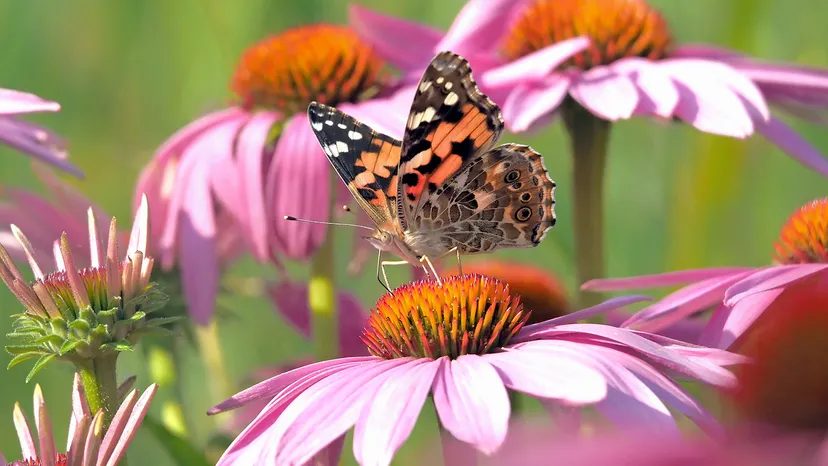
The Red-banded Hairstreak’s Tropical Stronghold
The Painted Lady leaves the stage for Calycopis cecrops, a species that swaps the global wanderer for a more localized, yet equally striking, presence. This butterfly is the Red-banded Hairstreak.
It doesn’t cover the same map as its predecessor. While the Painted Lady touches every continent except Australia and Antarctica, the Hairstreak stays closer to home. Its range is tightly bound to the warmer climates of the Americas. You will find it from the southern United States down through Central America and into South America. It avoids the chill. It avoids the deep dryness.
The visual cues are distinct. The name gives it away. A bold red band cuts across the wings. But look closer. The edges are fringed with black and white markings that mimic the appearance of a small bird or a leaf fragment. This is not just decoration. It is defense.
How does the Red-banded Hairstreak survive in such varied environments?
The answer lies in its host plants. The larvae do not wander far from their food source. They feed almost exclusively on plants in the legume family. Look for them on acacias, mimosa, and various flowering shrubs common in suburban gardens and wild thickets. The caterpillars are green with a distinctive black stripe running down their back. They blend in. They wait.
Adults are different. They are nectar feeders. They visit a wide array of flowers, preferring those with shallow corollas. Sunflowers, zinnias, and coneflowers are common stops. They hover briefly. They probe. They move on.
Why does this matter to you?
If you have a garden in a warm climate, you might already be supporting them. Planting native leguminous shrubs and providing a continuous bloom of nectar-rich flowers creates a habitat. It is not about creating a perfect ecosystem. It is about providing a stop on the highway.
The Red-banded Hairstreak is often overlooked. It is smaller than the Painted Lady. It flies lower to the ground. It does not make the dramatic migrations. But its persistence is notable. It thrives in disturbed areas. It adapts to urban heat islands. It is a survivor in the modern landscape.
The Red-banded Hairstreak proves that you do not need to migrate across continents to be a global success story. Local adaptation can be just as effective.
Compare it to other hairstreaks. Many are elusive. They hide their tails beneath their wings. They mimic ants. The Red-banded Hairstreak is more open. It basks in the sun. It is easier to spot. This visibility makes it a favorite among casual observers. It brings the beauty of the Lycaenidae family into the open.
Consider the question of range expansion. Climate change is shifting boundaries. Is the Red-banded Hairstreak moving north? Reports suggest yes. What once was a strictly tropical and subtropical resident is now showing up in states like New York and Massachusetts. This is not an anomaly. It is a trend.
Where do they hide when the rain falls?
Under leaves. Along the undersides of branches. They tuck their wings tight. The red band disappears. The grey and brown patterns take over. They become invisible. This camouflage is key to their survival. Predators see only bark
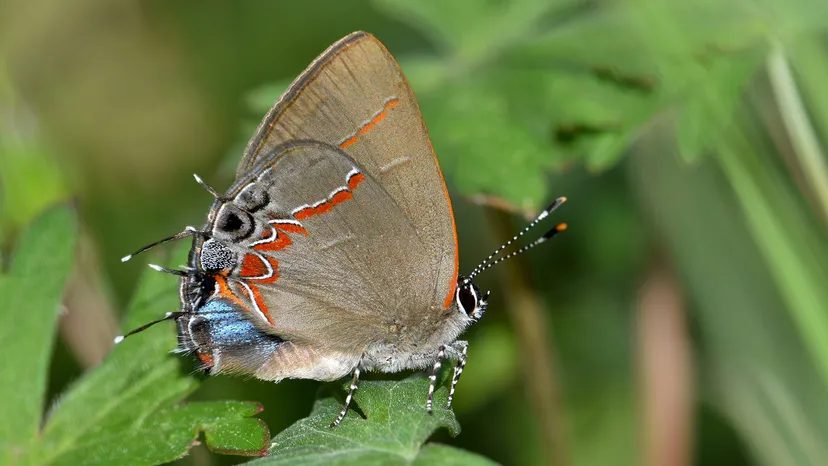
The Southern Lookalike You Might Be Mistaking for the Small Tortoiseshell
If you spot a butterfly in the southeastern United States with grayish wings and a bold red-orange band, your first instinct might be to name it the Small Tortoiseshell. That’s a natural assumption. The name fits the color scheme perfectly. But here is where things get complicated for amateur entomologists and birdwatchers alike. The Small Tortoiseshell (Aglais urticae ) is not native to North America. It’s a resident of Europe and parts of Asia. So if you are seeing this specific color pattern in the woods of Georgia or the Carolinas, you are likely looking at a different insect entirely, one that shares the aesthetic but not the lineage.
The butterfly you are actually seeing is likely the Tawny Emperor (Aglais chlosine ) or a similar species within the Aglais genus, which are native to the region. These lookalikes fly low to the ground, a behavior that mimics the ground-hugging flight path of their European cousins. They thrive in wooded areas, preferring the shade and moisture of dense canopies. Their diet is equally specific. They don’t just sip nectar from flowers. They are notorious for landing on rotting fruit, often drawn to the fermentation process. This feeding habit makes them easy to spot near overripe berries or fallen apples.
The confusion stems from a historical naming convention that didn’t account for geography. In the early days of butterfly classification, similar wing patterns were grouped together under broad names. The red-orange band on a gray background is a striking visual cue, but it’s not enough to confirm identity. You have to look at the underside of the wings, the specific venation patterns, and the geographic range. For anyone trying to identify their sightings using field guides based on Eastern North America, assuming every red-banded butterfly is a Small Tortoiseshell leads to inaccurate data.
Why does this distinction matter? It’s not just about correcting a label. Misidentifying species affects how we track population changes and understand local biodiversity. If you report a sighting of a European species that isn’t actually present, it skews the data for researchers monitoring invasive species or native range shifts. The Tawny Emperor, by contrast, is a well-established native. Knowing the difference helps in conserving the correct habitats. The Tawny Emperor relies on specific host plants like nettles and stinging nettle relatives, just like its European namesake, but the ecological context is entirely different.
The red-orange band on gray wings is a common evolutionary trait, but assuming it belongs to the European Small Tortoiseshell in the US is a frequent and costly error for citizen scientists.
When you are out in the field, don’t just rely on the bright band. Look at the flight pattern. These butterflies often bask in the sun with their wings spread to regulate temperature, a behavior that reveals the intricate patterns on the dorsal side. They are also more likely to be found near their host plants rather than just open fields. The Small Tortoiseshell, had it been present, would show up in more varied habitats, including open meadows. But in the southeastern woods, sticking to the tree line, you are looking at a native specialist, not an immigrant.
This isn’t about pedantry. It’s about seeing what is actually
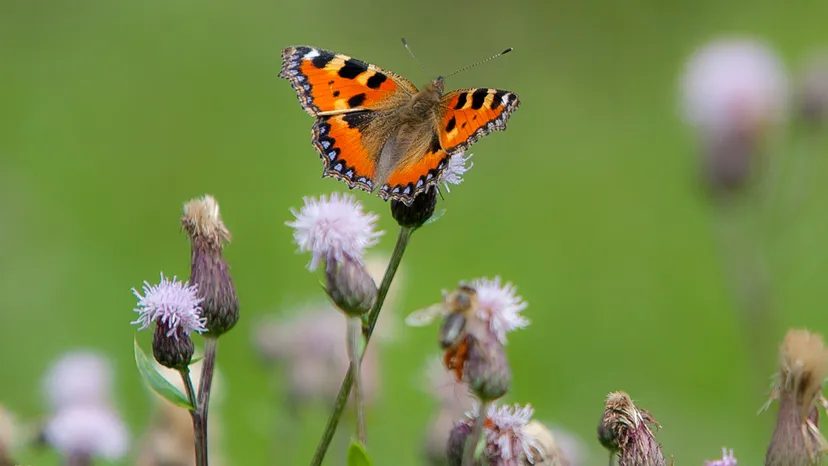
The Red Admiral: A Flash of Orange in the Garden
Look up.
There. That flash of burnt orange against the green.
It’s not a maple leaf falling too early. It’s a Red Admiral (Vanessa atalanta ). If you saw one dart past your window yesterday, you’re looking at a butterfly that feels less like an insect and more like a mistake by a painter who ran out of red but had plenty of passion.
The wings are a striking mix of fiery orange-red, slashed with black and dotted with yellow. But the real signature? The blue crescents along the trailing edges. They look like little bruises on the wingtips. Or maybe just a secret code.
This isn’t just pretty decoration. It’s a warning. A flag.
Why the Stinging Nettle Matters
You won’t find Red Admiral caterpillars on roses. Or daisies. Or that fancy lawn you just had aerated.
They lay their eggs exclusively on stinging nettle (Urtica dioica ).
Why does this matter to you, the person trying to grow tomatoes?
Because if you want Red Admirals in your garden, you have to make room for the plant people hate. The nettle.
It’s a trade-off. You get a butterfly that can travel thousands of miles. You get a splash of color that draws eyes. In exchange, you accept a patch of prickly green that bites if you touch it.
Conservation programs are closely monitoring these populations. Not because they are rare, but because they are indicators. They tell us if our hedgerows are connected. If our wild spaces are still breathing.
How Far Will They Fly?
Here is the thing that surprises people.
The Red Admiral is a migrant.
They don’t just hover around their birth patch. They fly. Long distances. From southern Europe, all the way north.
Some years, they show up in massive numbers. A swarm. A cloud of orange and black. Other years, they are scarce.
This unpredictability is why scientists track them. It tells us about wind patterns. About temperature shifts. About the health of the entire ecosystem from the Mediterranean up to Scandinavia.
When they arrive in late summer, they are often tired. Starved. They need nectar. Any nectar.
What to Plant If You Want Them
You don’t need a PhD in entomology to attract them.
Plant milkweed. Plant coneflowers. Plant joe-pye weed.
But also, leave the nettles alone.
Let them grow in the corner. By the fence. Where no one walks.
The caterpillars eat the leaves. They grow fat. They pupate. Then, in late spring, the adults emerge. And they fly.
They are resilient. They are adaptable. They are everywhere and nowhere.
Why You Should Care
It’s not just about the beauty.
It’s about the connection.
That butterfly on your windowsill? It’s linked to a nettle in a field three hundred miles away. It’s linked to the wind. To the rain. To the temperature of the soil.
When we lose the nettles, we lose the butterflies.
When we lose the butterflies, we lose a piece of the map. A piece of the story.
So next time you see that