


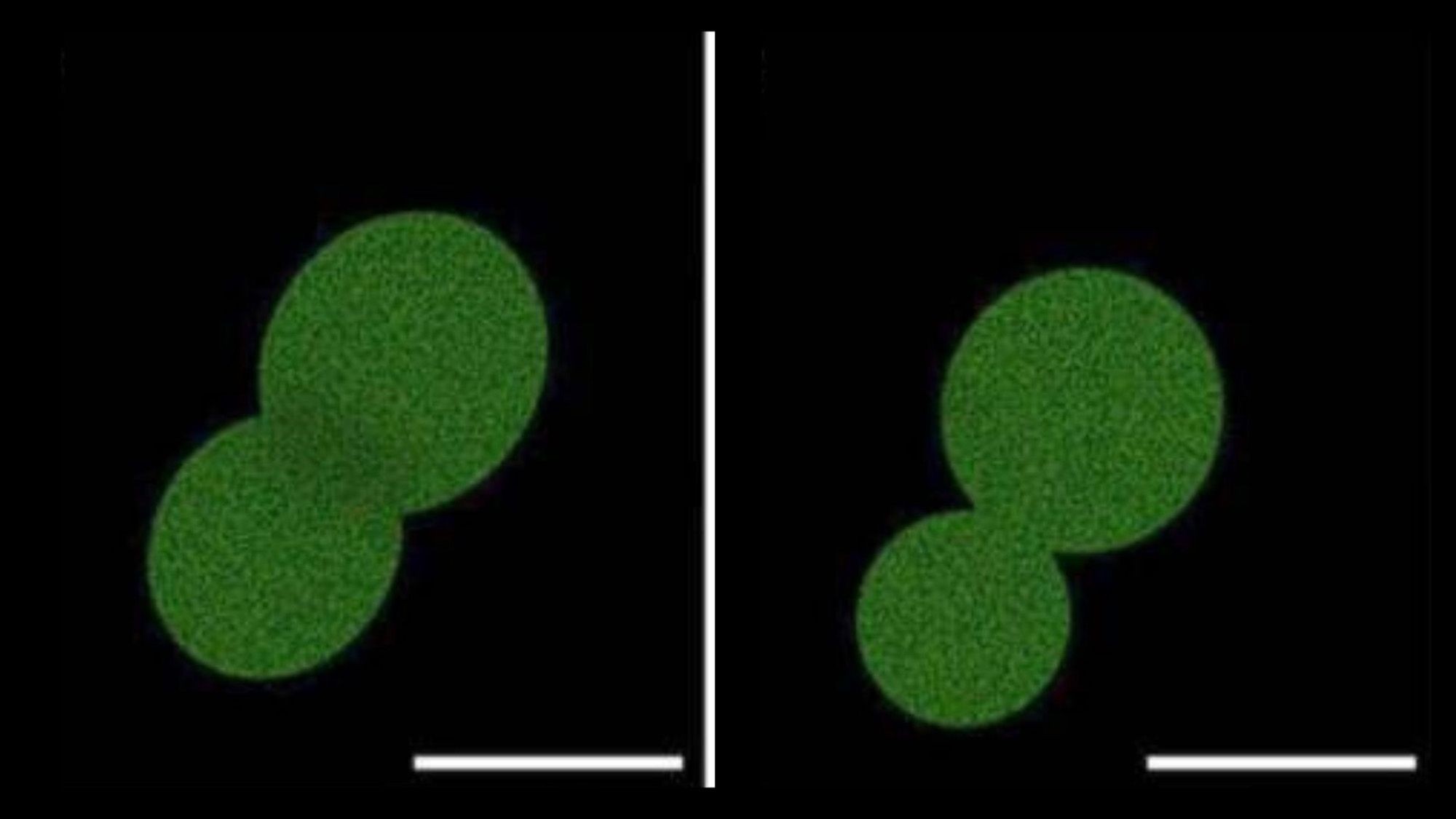
SpudCell lives. Sort of.
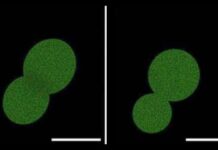
Scientists announced it July 2 on bioRxiv. The database hosts preprints, meaning this hasn’t seen peer review yet. But that hasn’t stopped the noise. They call it the most lifelike artificial cell ever built in a lab. It eats. It grows. It divides.
Kate Adamala, a synthetic biologist from the University of Minnesota and the study’s co-author, doesn’t think it’s alive. She prefers to call it a framework. A tiny factory.
“I do not believe [SpudCell is alive]… it’s a framework that could generate ‘all the chemicals we need for our Civilization with biology.'”
Medicines. Plastics. Fertilizers. She sees this not as a birth announcement but as an industrial revolution in miniature. The goal? Replace petroleum. Stop digging fossils out of the ground to make our stuff. Instead, we grow it.
Some critics are already rolling their eyes. They see the timing as a publicity stunt. Biotic, Adamala’s new nonprofit, launched simultaneously to raise funds. Coincidence? Maybe. But Adamala doesn’t care about the optics. She cares about the clock.
“I feel this incredible stressful urgency… if we don’t get to work, we’re running out of time.”
Climate crisis isn’t a distant threat for her. It’s a deadline. If bioengineering can offer an alternative to petrochemicals, we need to build the engine now.
Built from scratch
How do you make a fake cell? You don’t clone one. You construct it.
The team took 36 purified enzymes. They wrapped them in a fatty membrane. Then they added a stripped-down genome. This DNA snippet is roughly 50 times smaller than the genome of a typical bacterial cell. They mixed the parts in a dish. The result was a system that could feed itself and replicate. A full cell cycle, artificially induced.
“It is fully chemically defined,” Adamala explained. “No unknown building blocks.”
They named it SpudCell. Why? Because it looks like a potato. Also a nod to Sputnik, the first artificial satellite. Human ingenuity in two words: potatoes and satellites.
This isn’t the first attempt at minimal life. In 2016, the J. Craig Venter Institute created a “minimal cell” by deleting genes from an existing bacterium. That was top-down engineering. SpudCell is bottom-up. Built from raw materials, not leftovers.
Mauro Rinaldi from the University of Hull calls it a “great advancement.” He points to one specific feat. Division. That is the hallmark of life. To divide without a template is a major step forward.
But hold on.
There are caveats. Big ones.
SpudCell can’t make its own energy. Real cells have mitochondria. These do not. They need externally provided sugars and fats. They can’t make their own ribosomes. Those are the machines that translate DNA into protein. So SpudCell needs proteins delivered to it from the outside.
The genetics are messy too. Its genome is split across plasmids. These are small circles of DNA. Not neatly packed in chromosomes. When it divides, it lacks the cellular skeleton that normally ensures each daughter cell gets a fair share of the DNA. So it gives them a haphazard mix. Some get more. Some get less.
“[Its] approach uses ingenious engineering tricks as shortcuts,” said biophysicist Cees Dekker.
Dekker works at Delft University in the Netherlands. He isn’t impressed by the lack of robustness. He thinks the team took shortcuts to prove they could achieve growth. The challenge remains creating an autonomous cell. One that runs itself.
He also prefers his science with a review first. Peer review filters hype from reality. Right now, the media is reporting on raw data. If the peer review reveals flaws later, this moment will look embarrassing.
The promise and the hype
Adamala sees SpudCell not as biology but as engineering. A blank slate.
Cells already make useful things. Insulin, for example. We put the instructions into bacteria and yeast, and they pump it out. Millions of diabetics rely on that trick.
But natural cells have guardrails. Evolution installed them. If a chemical hurts the cell, the cell refuses to make it. Or it stops working. SpudCell has no evolutionary history. It has no instincts to protect itself. That means you can program it to make anything, even if it’s toxic.
This could revolutionize drug manufacturing.
Think about mRNA vaccines or peptide therapies. They often require tweaked building blocks. Amino acids with extra stability. Nucleotides that don’t break down. Currently, scientists synthesize these in chemical labs. Expensive. Slow. SpudCell could produce these modified parts directly.
The vision is bigger than pharma labs, too. Imagine dry, shelf-stable cells. You ship them without refrigeration. You add water and food. They wake up and produce vaccines or medicines right there, on site. In a clinic. In a developing country.
That’s the pitch.
Is it ready? No.
It is a proof of principle. Step one of what Adamala admits is a long climb.
“[SpudCell is] step one,” Adamala said. “Probably at least a couple of decades… before we replace petrochemicals.”
Biotic, the nonprofit, will fund the next steps. Adamala hopes philanthropists will throw money at the research directly, bypassing slow grant committees.
Rinaldi remains cautious. The technology looks promising. The science looks interesting. But the terminology feels inflated. He expects the hype to fade as the years pass and the work matures through proper peer review.
Until then, we have a potato-shaped construct that eats, divides, and divides poorly. It isn’t alive. It doesn’t claim to be.
But it wants to replace oil.