

Once you have mastered the basics of celestial navigation—identifying the Big Dipper or locating Orion’s Belt—you may find yourself asking: What comes next?
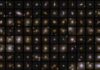
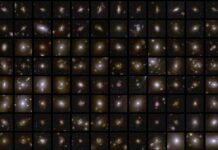
The next step in your astronomical journey is moving beyond individual stars and planets to explore Deep-Sky Objects (DSOs). Unlike the sharp points of light provided by planets, DSOs are vast, sprawling structures located far outside our solar system. They include galaxies, nebulae, and star clusters.
Because these objects are often faint and diffuse, observing them requires a shift in mindset. You are no longer looking for bright, colorful points; you are hunting for subtle shapes and ghostly glows. Success in deep-sky observation depends less on high magnification and more on patience, dark skies, and the right equipment.
Understanding the Targets: What are DSOs?
Deep-sky objects are generally categorized into three distinct types, each offering a different glimpse into the history of the universe:
- Galaxies: Massive systems containing billions of stars. Depending on their orientation, you might see them as a bright disk (face-on) or a thin streak (edge-on).
- Nebulae: Giant clouds of gas and dust. They can be “emission” nebulae (glowing with their own light), “reflection” nebulae (reflecting nearby starlight), or “dark” nebulae (dense clouds that block light).
- Star Clusters: Groups of stars held together by gravity. Open clusters are young, loose collections of stars, while globular clusters are ancient, tightly packed spheres of stars often found in the galactic halo.
A Note on Expectations: While professional images from the Hubble or James Webb telescopes are breathtakingly colorful, human eyes see these objects primarily in shades of grey. Prepare to trade vibrant colors for subtle textures and faint light.
Choosing Your Tools: From Binoculars to Smart Tech
The “best” equipment depends on your budget, your location, and your goals.
1. Binoculars: The Perfect Starting Point
Many beginners skip binoculars and go straight to telescopes, but binoculars are often a superior first step. They offer a wide field of view, making it much easier to locate large objects like the Pleiades or the Milky Way’s star fields.
* Recommendation: Look for 10×42 or 10×50 models. These provide the right balance of magnification and light-gathering ability.
2. Traditional Telescopes: The Power of Aperture
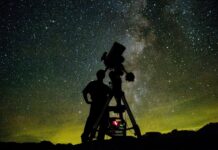
When it comes to deep-sky observing, aperture (the diameter of the lens or mirror) is king. A larger aperture gathers more light, allowing you to see fainter objects.
* Reflectors: Generally offer the best value for your money.
* Dobsonian Telescopes: Highly recommended for beginners. They are essentially large reflectors on simple mounts, providing massive apertures at an affordable price.
3. Smart Telescopes: The Digital Revolution
Smart telescopes use cameras and image processing rather than a traditional eyepiece. They “stack” multiple short exposures to create a clear, colored image sent directly to your phone.
* Best for: Urban observers dealing with light pollution, as the software can digitally filter out city glow.
Observation Strategies: How to See the Unseen
Observing DSOs is an art form that requires specific techniques to overcome the limitations of human vision.
For Galaxies and Nebulae
Galaxies are notoriously difficult to see from cities because they are incredibly faint. To maximize your chances:
* Dark Adaptation: Give your eyes at least 20–30 minutes in total darkness before looking through the eyepiece.
* Averted Vision: Instead of looking directly at a faint object, look slightly to the side of it. This utilizes the more light-sensitive peripheral part of your retina.
* Use Filters: If you are in a light-polluted area, “UHC” or “O-III” filters can help enhance the contrast of nebulae.
For Star Clusters
Clusters are generally easier to spot. Open clusters like the Pleiades are stunning in binoculars, while ancient globular clusters like M13 require a telescope to resolve the individual stars within the dense core.
Quick Reference: Top Targets for the Northern Hemisphere
| Category | Notable Objects |
|---|---|
| Galaxies | Andromeda (M31), Whirlpool (M51), Bode’s Galaxy (M81) |
| Nebulae | Orion Nebula (M42), Ring Nebula (M57), Lagoon Nebula (M8) |
| Star Clusters | The Pleiades (M45), Double Cluster (NGC 869/884), Great Globular Cluster (M13) |
Planning Your Session
The night sky is seasonal. To avoid wandering aimlessly, you must plan around culmination —the moment an object reaches its highest point in the sky (the zenith). At this point, you are looking through the thinnest layer of Earth’s atmosphere, providing the clearest view.
Use software like Stellarium, SkySafari, or Starry Night to create an observing list. If you use a “GoTo” telescope, these apps will sync with your hardware to guide you directly to your targets.
Conclusion
Deep-sky observing is a rewarding pursuit that rewards patience over high-tech complexity. Whether you use modest binoculars or a large Dobsonian, the key to success lies in seeking dark skies and mastering the art of seeing subtle light.