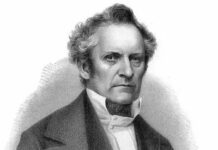





Ferdinand von Mueller was not just a scientist; he was a force of nature who transformed how the world understood Australian plants. Born in Rostock, Germany, on June 30, 1825, he eventually became the defining figure of Australian botany. By the time he died in Melbourne on October 10, 1896, he had cataloged more of the continent’s plant life than anyone before him. His story is one of migration, obsession, and a relentless drive to classify the unknown.
From German Pharmacy to Australian Bush
Mueller’s path to botanical fame wasn’t linear. He started as an apprentice pharmacist. That practical training likely shaped his meticulous eye for detail. He then studied botany at the University of Kiel, earning his Ph.D. before making a drastic life change. In 1847, he left Germany for Adelaide, South Australia.
He settled in the colony, working as a pharmacist while simultaneously launching a series of papers on the flora of southern Australia. This dual role—mixing daily commerce with high-level science—was typical of the era. But Mueller was already looking further ahead.
The Victorian Botanical Pioneer
By 1853, Mueller moved to Melbourne. He was appointed as the foundation government botanist of Victoria. This wasn’t a desk job. He traveled extensively through the surrounding areas, conducting rigorous botanical studies. The Australian landscape was alien to European science at the time. Most species were undocumented, misidentified, or entirely new to Western taxonomy.
In 1857, his reputation preceded him. He was appointed director of the botanical gardens at Melbourne. There, he built what would become the national herbarium. This institution became the backbone of his life’s work. It was a living library, a repository of pressed leaves, and a hub for scientific exchange.
Defining Australian Flora
Mueller didn’t just collect specimens; he wrote the definitive guides. In 1858, the first volume of his Fragmenta Phytographiae Australiae appeared. It would span twelve volumes, running until 1882. This work was exhaustive. It described plants with a precision that hadn’t been seen before.
He also collaborated with George Bentham, a British botanist. Together, they produced Flora Australiensis: A Description of the Plants of the Australian Territory. Published between 1863 and 1878, this systematic monograph remains a critical reference. It organized the chaos of Australian plant life into a coherent scientific framework.
But Mueller wasn’t only interested in pure science. He had a practical vision. His book Select Plants Readily Eligible for Industrial Culture or Naturalization in Victoria (1876) was his most popular work. He wanted to know which plants could be grown for industry. Which species could be naturalized? Could Australian flora feed, clothe, or build the colony? This question of utility drove much of his research.
Recognition and Legacy
Mueller’s contributions didn’t go unnoticed. At just 36, he was elected to the Royal Society of London. That is a young age for such an honor, reflecting the immediate impact of his work. By 1871, the king of