


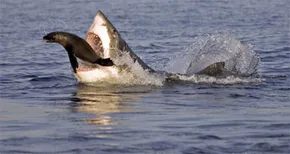
It wasn’t just another nature show. Planet Earth was a cultural phenomenon that redefined what viewers expected from the BBC and Discovery Channel. The crew didn’t just film wildlife; they captured moments that had never been seen before. How did they float silently above the Amazon rainforest canopy? How did they track a snow leopard on a near-vertical Pakistani mountain face? How did they catch a great white shark leaping from the ocean to kill a seal?
The answer lies in sheer persistence and staggering resources. With a budget hovering around $2 million per episode, this 11-part series took five years to complete. They shot in more than 200 locations across 62 countries. It stands as the most comprehensive documentary project ever attempted.
From The Blue Planet to Global Scope
BBC producer Alastair Fothergill had already proven he could handle massive productions. He cut his teeth on The Blue Planet, a $10 million, eight-part series about the ocean’s wonders. That show was a hit with its cinematic style and scope. A follow-up in the same vein was an obvious move.
More than 70 camera operators worked seven-day weeks around the globe. The BBC version featured narration by David Attenborough. The U.S. version, airing on Discovery, used award-winning actress Sigourney Weaver. The results were undeniable.
In the United States, the finale alone pulled in over 5.5 million viewers. This was rare for cable television, which typically only sees a couple of shows break into the top 10 across different age demographics. Planet Earth hit the top 10 in all three major groups nearly every week it aired.
Box Office and DVD Dominance
DVD sales matched the TV ratings. By June 2007, The Hollywood Reporter estimated that 42,000 units had been sold. That generated roughly $3.2 million. The box set shattered records for high-definition DVD releases at the time.
We will look at the creation of this series. We’ll cover the innovative techniques and challenging logistics. We’ll discuss the unbearable conditions and dangers from man, animals, and the earth itself. This is how Planet Earth works.
Working and Living Conditions

The Brutal Cost of Capturing Nature’s Most Intimate Moments
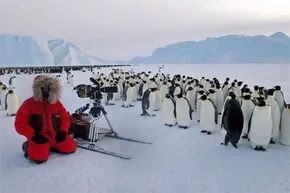
Imagine being asked to spend a year buried in a snow shelter. The temperature hovers at 60 degrees below zero. Winds scream at 125 mph. Your job? Film thousands of penguins huddled together like a rugby scrum.
You’d say no.
The camera crews for Planet Earth said yes.
They endured conditions most living things can’t survive. Often, they did so far from any human contact. From the bitter cold of the Antarctic tundra to the smoldering heat of the African plains, the team redefined suffering for art.
Filming Emperor Penguins in the Dead of Winter
Cameraman Wade Fairly and biologist Fred Oliver didn’t just visit Antarctica. They lived there. For a full year.
Their base? The far reaches of Macey Island.
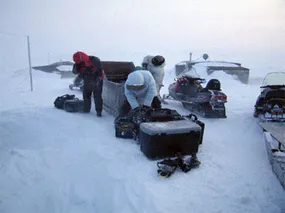
The setup was makeshift. An old freight container served as shelter. It sat about three and a half miles from the penguins’ roost. Every day, they commuted on ATV quads. Visibility was near zero. Blinding snow obscured everything. They relied on a GPS unit just to find their way back.
Why go through that?
To capture the behavior of the emperor penguin.
The harsh conditions paid off. The footage showed 10,000 penguins packed together for survival. They protected their fragile eggs from the freezing wind. It was a masterclass in endurance.
Chasing Nocturnal Secrets in the Costa Rican Jungle
The challenges weren’t limited to ice.
In Costa Rica, the crew faced humidity. And waiting.
They needed to film the calling of the lemur tree frog. It’s a nocturnal amphibian. The crew waited in the humid jungle every night for almost a month.
They got little luck.
Then came the twist. They reversed their sleep patterns to match the frog’s schedule. That didn’t work either.
The break came when they were led to a private pond. They had to convince the caretaker to let them in. Only then did they get the footage.
Why These Details Matter for Fans of Wildlife Documentaries
For fans of Planet Earth, the beauty on screen is only part of the story. The struggle behind the lens adds weight. It explains the rarity of certain shots.
It raises questions about how much nature can withstand before breaking. Or how much humans will endure to see it.
Consider the logistics. How do you film a creature that only moves at night in a jungle that never sleeps? You change your own biology. You wait. You beg.
The result is a visual record that feels almost sacred. Not because it’s easy. But because it was hard.
Does this effort translate to our screen time? We watch for the drama. The survival. The beauty. The crew’s sacrifice is the engine. Without it, the screen stays black.
Think about the next time you see a penguin huddle. Or hear a frog call. Remember the GPS. The freight container. The private pond.
The world is wide. The crew went where few would.

The Hardships of Living on Location
Sleeping quarters were little more than huts or tents, and the conditions were unforgiving. Even seasoned wildlife filmmakers found themselves pushed to their limits during Planet Earth. The production team sent hundreds of wet wipes to the Gobi Desert crew for bathing, assuming they would be a convenient alternative to water. The wipes froze solid. They offered no comfort. Odor became a constant companion for most teams.
Things didn’t stay dry. Any equipment left outside a sleeping bag iced over. Cameramen woke up with camera batteries, water bottles, and even urine bottles frozen to their hands. If they forgot the urine bottle, they had to thaw it by the fire the next morning. It wasn’t a pleasant task. The diet was equally basic. Nuts, energy bars, and dried meals were the standard. Some crew members smuggled vodka to warm up inside.
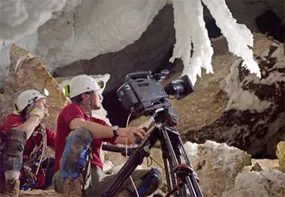
Beyond the cold and the smell, the crews faced extreme altitudes and depths. The sky team at Mount Everest tested the limits of high-altitude flying. In Mexico, filmmakers dropped into the Cave of Swallows, a cavern nearly 1,300 feet deep. One group survived what National Geographic called the “cruelest place on Earth.” That was the Danakil Desert in Africa. It is the lowest and hottest place on the planet. Virtually no life exists there. Dallol Springs might sound like a vacation spot. It is actually a toxic landscape of living lava. The crew filmed on the world’s lowest active volcano. Sleep was scarce. One member described it like trying to nap on top of a boiling cauldron.
The Logistics Behind the Scenes
Pulling off Planet Earth required more than just bravery. It demanded precise logistics. The scale of the operation was massive.


Ask any film production manager or coordinator how difficult it is to pull off an ordinary film shoot and they’ll say that it takes a lot of hard work from many people. Now imagine shipping equipment you’ve never worked with to the other side of the world or making travel arrangements to places you didn’t know existed. The production staff of “Planet Earth” spent years prepping for the job. Securing permits, hiring crews, lining up equipment and booking travel were only the tip of the iceberg, so to speak.
The BBC has the advantage of extensive resources. There are specialists for virtually every facet of the process. Need a camera lens shipped to Outer Mongolia? No problem, just ask the shipping expert. Need someone to break down the risks of breathing sulfuric acid? Easy, just consult the resident health guru. Many of the crew underwent survival training from extreme weather authorities to learn everything from how to prevent frostbite to how much water you need to drink in 110-degree heat. Then there’s the BBC safety store and “kit cage.” This is where the film units outfit their expedition. Tents, climbing ropes, life jackets, gas masks, first-aid kits, caving gear, scuba tanks and maps are just a handful of the items selected and packed up.
Getting film permits for many of the locations proved to be quite a challenge as well. The inhabitants of King Charles Land, an island in the Arctic Ocean off the coast of Norway, hadn’t seen human visitors since 1980. The BBC tried to get permission to film there for 25 years before finally being allowed for “Planet Earth.” It took a year to gain access to the rugged Karakoram Mountains of Pakistan because of the political instability of the region.
On thing that was crucial to the success of filming “Planet Earth” was the help and cooperation of the locals. Everywhere they traveled, BBC crews were assisted by the indigenous people of the region in one way or another. From having a pizza delivered at 14,000 feet in the Himalayas to getting Pakistani helicopter pilots to fly the crew around K2, the help the locals provided was invaluable. Guides led teams through jungles and deserts, helping to keep the crew safe while sharing their knowledge of the area to find reclusive wildlife. There were scattered encounters with conmen and thieves, but they were overshadowed by the tremendous amount of support most of the native inhabitants provided.
“The help the locals provided was invaluable.”
Mission: Planet Earth
Visit The Discovery Channel Web site and you’ll find a very cool interactive game that puts you in the producer’s shoes. In “Mission: Planet Earth,” scenarios are played out in seven locations around the world that force you to decide which direction to send your team, what supplies they need, and whether or not to press on or return to camp when faced with adversity.
Text
Equipment and Techniques

The Gear Behind the Beauty
You can’t talk about Planet Earth without talking about the toys. Seriously. The show’s massive success wasn’t just about having good storytellers. It was about having the best tech money could buy. This was the first nature series ever to go fully high-definition. And let me tell you, hi-def isn’t just a buzzword here. The resolution gave us images so sharp you could count the leaves. It also meant we could film in near-total darkness. Animals don’t care about your camera settings. They care about not getting watched. So we got the shots without the flash.
Flying Without Frightening
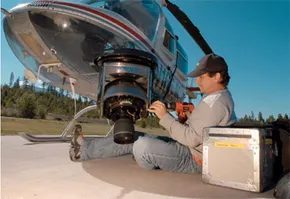
The real star of the equipment lineup? The heligimbal. It sounds like a sci-fi weapon. It’s not. It’s a gyro-stabilized camera housing bolted under a helicopter’s nose. Think of a gimbal as a pivot that keeps things level. Two gimbals stacked together cancel out vertical and horizontal shake. The heligimbal did exactly that. It kept the lens dead straight. Steady. Rock solid.
A cameraman sat inside the chopper. He controlled the rig with a joystick. No shaking hands. No bouncing. Just pure, smooth flight footage. We saw hunts from above because the helicopter could hang back. The zoom lenses were powerful enough to keep the birds and beasts at a safe distance. The animals stayed calm. The footage stayed crisp.
Gliding Over the Canopy
But helicopters? They create wind. Lots of it.
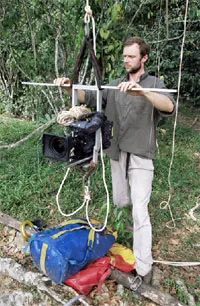
Helicopter blades churn up air. That wind breaks branches. It scatters animals. It ruins the natural moment. So for the jungle scenes, they needed something quieter. Something slower. Enter the cinebulle.
It’s not a drone. It’s not a fancy flying saucer. It’s a hot air balloon with a camera platform instead of a basket. Simple. Almost too simple. The inventor, Dany Cleyet-Marrel, rigged it with a large fan to steer. No rotors. No blades. Just hot air and a fan.
The cinebulle glided over the treetops. It didn’t stir the leaves. The shots were ethereal. Peaceful. Exactly what you want when you’re trying to capture the soul of a rainforest.
When Things Go Wrong
It’s not all smooth sailing. The cinebulle has a flaw. It’s not very responsive. It’s a giant balloon. It takes time to turn. It takes time to stop.
And sometimes, it forgets.
There are moments in the footage where you can see the balloon drift. Not over the trees. Into them. A near miss. A crash that didn’t quite happen. The balloon plowed straight into the canopy because the operator misjudged the drift. It wasn’t elegant. It was risky. But when it worked? It worked better than anything else on the market.
We got the shots. We got the stillness. And we got the truth. Even if the truth involved a few bruised balloons.

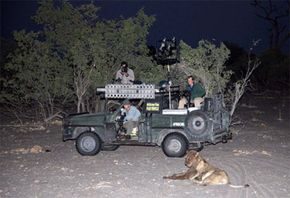
If you’ve seen Planet Earth, that night sequence sticks with you. Lions taking down an elephant isn’t new to nature documentaries, but seeing it in total darkness is. The production team didn’t just turn on a flashlight. They built walls of infrared lights. These are invisible to humans and most animals. Only special cameras could pick up the glow. The result was crystal-clear footage of nocturnal behavior we had never seen before. It changed how we view the night.
Cameramen faced extreme environments too. Underwater shots required waterproof housings. Cold weather sequences needed gear that could survive freezing temps. Often, they sealed cameras in containers. Then they left them alone. Remote controls operated them from a safe distance. This kept the crew out of the way. For skittish animals, they used motion sensors. The camera only recorded when movement happened. No waiting around in the bush. Just pure, triggered action.
The goal was simple. Don’t disturb the habitat. A shot of Amazon treetops getting whipped by helicopter wind looks fake. It breaks the illusion. What would animals do if they knew they were being watched from above or in the dark? They’d hide. They’d flee. Or they’d behave unnaturally. The tech had to be invisible to be effective.
Unprecedented Achievements
The series pushed boundaries in ways no one expected. It wasn’t just about getting close. It was about getting there without changing anything.
- Invisible Observation : Infrared tech allowed filming without artificial visible light.
- Remote Operations : Sealed cameras and sensors kept humans out of the frame.
- Environmental Integrity : No helicopter downdrafts ruining natural settings.
We’ll dive deeper into the specific firsts next. The scale of these achievements is hard to grasp until you see the gear involved. It wasn’t just better lenses. It was a whole new approach to staying invisible.
How did they get the lion to feed calmly under those lights? Why didn’t the elephants panic? The answers lie in the careful setup. And the sheer patience of the crew.
“The key is in not disturbing the surrounding environment.”
This isn’t just about cool shots. It’s about truth. If the scene feels staged, the story fails. The tech serves the narrative. Not the other way around.
What happens when the battery dies in the middle of a glacier? Or when the lens fogs up underwater? The challenges were constant. But the payoff was worth it. We got a view of the planet that felt real. Not manufactured. Just observed.
Filmmakers didn’t just want good shots. They wanted the impossible. The goal for “Planet Earth” was simple yet insane: capture images never seen before. Visit places no cameraman had stepped foot in. Use gear in ways nobody had tried. The result wasn’t just a documentary. It became a checklist of firsts.
Chasing the Bird of Paradise in Papua New Guinea
Most people think getting a shot is about waiting. For Paul Stewart, it was about endurance. He needed the blue bird of paradise. This creature is shy. It hides. To find it, the BBC team made three separate trips to Papua New Guinea.
They had to be smart. You can’t just walk up to these birds. The crew left fake cameras in the wild. Why? To get the birds used to seeing something strange in their trees. Acclimation was key.
Once the birds stopped caring about the plastic decoys, the real work began. Stewart climbed into a cramped hideout. He stayed there for eight weeks. Every single day. Fourteen hours a day. He woke up at four in the morning. He waited in the dark. He waited for the birds to wake up.
Did he get the shot? Yes. He captured the rare blue bird performing its mating dance. A female suitor was watching. The patience paid off. But it cost him everything else.
The Helicopter Hunt: Tracking African Wild Dogs
Animal hunts in nature docs are usually lies. They’re a montage. Editors stitch together clips from different days to make a story that makes sense. “Planet Earth” refused to do that. They wanted the whole thing. One take. One continuous sequence.
The target was an impala hunt by African wild dogs. The segment was called “Pole to Pole.” The method? A heligimbal team.
Here’s how it worked. Ground crews found a pack of dogs first. They radioed the helicopter. Then the chase started. It wasn’t a smooth ride. The long zoom lens on the rig had a tiny field of view. It focused on one dog. Just one.
When that dog ran left, you lost the rest of the pack. Finding the right dog at the right time was the tricky part. If you lost focus, you lost the story.
The crew persevered. They tracked the flanking maneuvers. They watched the dogs work together to trap a young impala. The impala did escape into a river. But we saw the whole attempt. From start to finish.
This wasn’t just action. It was behavior. We saw how they hunt. How they cooperate. We knew more about these dogs than we ever had before. The technology allowed it. The crew made it happen.
Why This Matters Now
We take for granted that we’ve seen it all. We haven’t. The boundaries of what’s filmable keep moving. New gear pushes those lines further.
The blue bird of paradise is still out there. The wild dogs are still hunting. But now we know how to look. We know how to wait. We know how to follow.
The list of firsts grows. Each one takes more time. More money. More risk. But the images? They’re worth it.
What’s next? The ocean is still largely unexplored. The canopy

Sometimes the location wasn’t just a backdrop. It was the first.
Filmmakers didn’t just visit famous places. They went where no one had gone before. The goal was simple. Get images never seen by human eyes.
Take Mount Everest. They filmed at record-breaking altitudes. The air is thin. The cold is brutal. But the shots were worth it. Then there is Lechuguilla Cave in New Mexico. The team used hi-def cameras to navigate its depths. The result was crisp. Clean. Unseen.
Under the Ice at Lake Baikal
One location defied logic. Lake Baikal.
It is the world’s deepest lake. Nearly a mile down. The pressure is immense. The cold is lethal. But underwater cameramen dove into the ice. They needed to capture the ocean-like life hiding beneath the frozen surface.
The conditions were extreme. Icy water seeped into every seam. Regulators and air tanks began to freeze mid-dive. This isn’t a minor inconvenience. It can stop breathing. It can stop filming.
The solution was crude but effective. Boiling water was poured directly over the equipment. Just to keep it from freezing. To keep the cameras running. To keep the divers alive.
“The crew used a motion control system to film intricate time-lapse shots of the changing earth.”
A Technical First
Breaking the ice was one thing. Breaking new ground in technique was another.
The Planet Earth team didn’t just show up with big lenses. They invented a workflow.
They combined motion control with time-lapse photography. This had never been done before.
Here is how it worked.
Motion control automates the camera’s movement. It allows for a progression that is extremely slow. And steady. No human hands shaking. No jerky pans. Just pure, mechanical precision.
Time-lapse uses an intervalometer. It shoots short bits of film at set intervals. Days pass in seconds. Seasons change in moments.
By blending these two techniques, editors created something unique. They took different stages and merged them. The result?
Shots of an autumn mountain landscape changing color. Cherry blossoms in Japan opening in real-time speed. A sandstorm swirling across the Sahara. All captured with a smooth, moving camera that didn’t exist until this project.
It wasn’t just about seeing the world. It was about seeing it move.
The Dangers of Filming
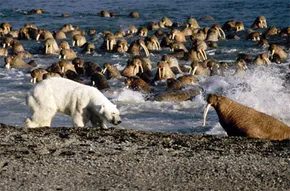

Documentary filmmaking isn’t just about finding the perfect lighting or waiting out a storm. It’s a gamble with life and limb. The Planet Earth crew didn’t just face the elements; they faced creatures that wanted them dead and humans who were dangerous for entirely different reasons. Getting the shot mattered. Staying alive mattered more.
The Walrus Surprise
Walruses look like gentle, lumpy teddy bears rolled out of the Arctic. They are not. These massive mammals hunt seals by crushing them with their tusks, a brutal method of feeding that doesn’t leave room for tourists.
Cameraman Doug Anderson knew the risks but ignored them. He jumped into the water with a pod of walruses, dismissing the local guide’s warnings. His fatal error wasn’t getting in the water. It was forgetting to check his blind spot.
A mother walrus struck him from behind. Hard. She swam off, then circled back for a second strike. Anderson didn’t cower. He jammed his camera into the animal’s side. The surprise and pain forced her to leave for good. Anderson was dazed. He was lucky. But he was out.
The Pit Viper in Borneo
Jeff Wilson, a researcher on the team, headed to Borneo to film the flying lemur, also known as the colugo. They stopped briefly to set up shots. Wilson placed his hand on a light stand.
A pit viper was waiting there.
One of the most venomous snakes on the planet bit him on the hand. The team didn’t hesitate. They rushed him by boat and then by car to a hospital nearly 25 miles away. Time was the enemy. The fact that the bite was on his extremity and Wilson managed to keep his panic in check likely saved his life. He survived, but it was a close call against nature’s most efficient poison.
The Puma’s Stalk
Chile’s wild pumas are elusive, but a protective mother can turn into a predator very quickly. A two-man camera team spotted one and tried to capture the moment. She didn’t run. She crept toward them on her belly.
That low, slow approach is a prelude to an attack.
The team stuck together, trying to look larger and more intimidating. They had pepper spray ready, just in case. But they didn’t use it. They stayed calm. They waited. The puma circled, checked them out, and eventually lost interest. The crew walked away without firing a shot or a drop of spray.
Oxygen Failure on Everest
Altitude is a silent killer. The team filming Mount Everest faced this reality when a Nepali engineer’s oxygen supply failed. At that height, hypoxia sets in fast. It’s a potentially fatal form of altitude sickness.
The engineer’s hands began to tremble. His eyes rolled back. He became unresponsive.
The co-pilot tried to share his own oxygen tank but realized his had failed too. There was no time for negotiation. The pilot initiated an emergency descent, dropping 10,000 feet in just 10 seconds. One producer described the G-force and the drop as “unbelievably painful and frightening.” The engineer survived, shaken but intact. It was a stark reminder that the mountain doesn’t care about your schedule.
The Bandit King’s Shadow
Not all danger comes from the wild. In southern India, a crew filming smooth-coated river otters found themselves in the crosshairs of human violence.
Veerappan, known as the “bandit king,” was a notorious figure. He had been responsible for over 120 murders, stealing, kidnapping, and smuggling for three decades. He was one of the most wanted men in India.
Rumors surfaced that two of Veappan’s captured men had been condemned to death. The bandit was reportedly looking to kidnap the BBC team as leverage. The crew worked during daylight hours, escorted by armed guards. But the threat was too real. They were told to leave. They left.
Their camp was attacked days later. Veappan was eventually captured and killed in 2004. The crew had escaped the immediate threat, but the danger had been real, immediate, and human.
Last-minute Shots
The next section will look at some of the shots the crew got just in the nick of time.

Waiting in the dark. That was the daily reality for the Planet Earth crew.
They didn’t just wait hours. They waited weeks. Sometimes months. The goal was simple: capture nature before it vanished. The result? Often nothing. Just wind, rain, and frustration.
But then, Mother Nature blinked.
The unpredictability of the wild is what made the series legendary. It also nearly broke it.
Angel Falls: The 45-Minute Window
Venezuela’s Angel Falls is the highest waterfall on Earth. It’s also notoriously difficult to film. Cloud cover usually swallows the peak.
The team made four trips to the site. Three failures.
On the fourth and final attempt, the sky broke. For exactly 45 minutes, the clouds lifted. The crew filmed everything they could. When the mist rolled back in, they had the shot.
It was a narrow margin. One minute later, and they would have left empty-handed.
Costa Rica: A Tip on the Final Day
Finding tree frogs in Costa Rica seemed impossible.
A two-man crew spent a month searching. High in the canopy. Low in the mud. Nothing.
They were ready to pack up. Then, a local offered a tip.
They went to the suggested spot. It was frog nirvana. Thousands of them. A dozen species.
The crew didn’t leave. They shot until sunrise. The month of searching ended on a high note because someone knew where to look.
Botswana: The 50-Hour Mark
Wild African dogs hunting impala. That was the mission in Botswana.
The budget allowed for long waits, but it wasn’t infinite. The team hit their limit.
They spent two weeks on the ground. More than 50 hours in the air with a heligimbal. The dogs were elusive. The impala were faster.
Success came in the final ten minutes of the shoot. Producer Mark Linfield’s patience finally paid off. They captured the hunt just as the window closed.
Pakistan: The Helicopter That Didn’t Show
Luck is a powerful ingredient in documentary filmmaking.
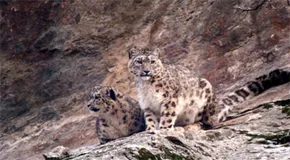
The team in Pakistan wanted snow leopards. These animals are rarely caught on film. They are ghosts in the mountains.
After six weeks of filming markor (blue sheep), the crew had good footage. But no snow leopard.
They had arranged for a helicopter to pick them up. It didn’t show up.
Trapped for another day, they set up their cameras one last time.
The reward? An exciting hunt. A chase over near-vertical terrain. A snow leopard in action.
All of it happened in the final hour of the final day. The helicopter arrived the next morning. The team was elated.
The Unpredictable Cost of Beauty
These stories aren’t just about luck. They are about the cost of capturing the uncapturable.
Every frame in Planet Earth required a gamble. Time. Money. Sanity.
The crew didn’t control nature. They waited for it to perform.
Most of the time, it didn’t.
But when it did, the result was breathtaking.
It leaves you wondering how many other secrets the earth is holding back. How many stories are waiting in the clouds, in the mud, in the thin air of the mountains?
We only saw a fraction.
And yet, we were still left wanting more.