
TV isn’t just background noise. It’s a ritual. More than 99 million American households keep a set running. People clock about three hours a day staring at screens. We build schedules around premiere nights. We argue about endings. This obsession didn’t just fill time slots; it forced innovation. VCRs. Cable. Satellite. High-definition. Each step up the tech ladder was driven by a desire to watch better.
Competition fuels the fire. We love the unknown outcome. The tension of not knowing who wins keeps us hooked. That’s why the Emmy Awards draw millions of eyes every year. A win changes everything. It can launch an actor into stardom. It can send a show’s ratings through the roof. Sometimes, it’s a lifeline. Consider Hill Street Blues. In the 1980s, this police drama was critically adored but ignored by the masses. NBC wanted to cancel it. Then the Emmys hit. Wins for acting, writing, and best dramatic series saved the show from the chopping block. A low-rated gem got a second lease on life because of a gold statue.
But how does the machinery behind the curtain actually function? Who decides which shows make the cut? Who votes? The process is complex. It starts long before the envelopes are opened live on stage.
The Origin of the Name Emmy
The name isn’t random. It’s a linguistic pivot. The Academy of Television Arts & Sciences (ATAS) didn’t start with “Emmy.” The original award was called the “Immy.” This was a nickname for the image orthicon tube, a critical component in early television cameras. The name was technical. Clunky.
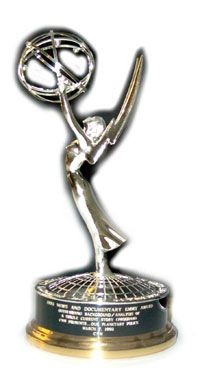
Then Louis McManus, a television engineer, stepped in. He designed the statuette. He used his wife as the model for the winged woman holding the atom. The ATAS explains the symbolism: the winged woman represents the arts. The atom represents the sciences. The design was solid. The name needed work.
“Immy” sounded too mechanical. “Emmy” sounded softer. More feminine. It suited the delicate figure of the statuette. The name stuck.
Crafting the Golden Trophy
The physical award is a heavy object. It weighs 4-3/4 pounds. It stands 16 inches tall. You can hold it. It’s substantial.
Who makes it? R.S. Owens Co. of Chicago. This same company casts the Oscars for the film industry. The process is layered. The base is high-grade pewter. Then comes the plating. Copper. Then nickel. Then silver. The final coat is 18-karat gold. It’s not just a paint job. It’s an electroplated fortress.
The first Emmys were handed out in 1949. Since then, the process has evolved. But the core question remains: who holds the power to nominate? Who casts the final vote? The system is a mix of peers, divisions, and strict eligibility rules. It’s not a popularity contest in the way people think. It’s an industry-wide consensus built on thousands of individual ballots.
The Two Academies, One Award
Let’s clear up the confusion right away. When you hear a winner thank “the academy,” they aren’t necessarily talking about the same group. The Academy of Television Arts and Sciences (ATAS) runs the prime time Emmys from Los Angeles. The National Academy of Television Arts and Sciences (NATAS) handles daytime, news, and documentary awards from New York. We’re sticking to the prime time show here, so ATAS is the player you need to know.
Who Actually Casts the Ballot?
The voters aren’t just random fans with a TV remote. They are industry professionals. ATAS was founded in 1946, and its members work in television. To vote, you have to pay a membership fee. But it’s not a free-for-all. The academy is split into peer groups.
Think about it. You don’t want a makeup artist deciding who wins Best Actor, right? So the voters are divided by expertise. Performers vote for performers. Hair and makeup stylists vote for their own craft. Camera operators vote for camera work. This peer voting is the first step. It narrows down the nominees. Being recognized by your peers is a big deal in Hollywood. It’s not just about popularity; it’s about professional respect.
The Rules of Eligibility
So, what makes a show worthy of a ballot? The ATAS Awards Committee sets the yearly guidelines. For prime time:
- Air time: The show must air between 6 p.m. and 2 a.m.
- Season window: Broadcasts must occur between June 1 and May 31 of the following year.
- Reach: The show has to be seen in markets covering at least 51 percent of US TV viewers.
Producers or individuals can nominate themselves. Teams can enter multiple categories, but each entry must be for a different program. There’s a fee involved, too. It scales based on whether the entry is commercial, individual, or for a whole program, and on team size. You can mail or fax these entries in. Old school, but it works.
The Campaign Trail
Ever notice how trade papers get full of ads right before Emmy nominations? That’s not a coincidence. Producers spend heavily to get voters’ eyes on their shows. It starts before nominations drop. It ramps up after they’re announced. It’s a marketing machine disguised as an award ceremony. You don’t just make a great show; you have to make sure the voters see it.
A Patchwork of Categories
The Emmy categories map pretty closely to those peer groups. You’ve got animation, art direction, casting, choreography, cinematography, and commercials. Then there’s the technical stuff: costuming, directing, electronic camera work, engineering, hair styling, lighting, title design, makeup, music, picture editing, sound mixing, special visual effects, technical direction, video, and writing.
But it gets granular. Under “directing,” you’re looking at “outstanding directing in a comedy series” versus drama. Same with acting. Lead actress in a drama is different from lead actress in a comedy. The full list is online, but the point is specificity. It’s not just “best show.” It’s “best sound editing for a limited series.”
Why the Peer System Matters
This structure is why the Emmys feel different from the Oscars or the Golden Globes. The voters are coworkers. They understand the craft. A cinematographer knows what it took to get that shot. A writer knows the hours spent rewriting. It’s not just about box office numbers or TV ratings. It’s about execution.
Does this mean the process is perfect? No. Campaign spending can skew visibility. And peer groups can sometimes get siloed. But it keeps the focus on industry standards. For fans, it means the awards reflect what the people actually making the TV think is good work. Not just what’s trending on Twitter.
The system relies on participation. If members stop voting, the process stalls. If the fees get too high, the pool shrinks. It’s a delicate ecosystem. One that’s been running since 1946. Adapting to streaming, cable, and broadcast shifts along the way. But the core remains: peers honoring peers.
That’s the engine behind the shiny trophy.
From Ballots to the Big Screen: How the Emmys Actually Pick Winners
Once the entry window slams shut, the real work begins. Ballots containing every qualified submission get mailed out to academy members. It’s a peer-review system in the truest sense. Performers vote for performers. Directors vote for directors. But there’s a crossover element, too. Everyone casts a vote in the general program categories, like best comedy series or best miniseries.
The paper ballots are then sent to Ernst & Young. Yes, the accounting firm. They count the votes. The top contenders in each category—usually five nominees, though sometimes fewer—get announced. These are the nominees.
But selecting the nominees is only half the battle. The academy needs volunteers to actually judge the final field. These judges are grouped by their peers as well. The number of voters fluctuates by category. Yet, the general program categories still involve the whole membership.
Why Judges Watch Marathon Screenings
Historically, these judging panels met in Los Angeles. They spent two days watching every nominated show and performance in a marathon session. It wasn’t always this intense. Rod Serling, the mind behind “The Twilight Zone,” came up with the idea in the 1960s. He was president of the academy then. He and his colleagues wanted to ensure judges weren’t just voting for favorites they remembered vaguely. They wanted them to actually watch the work.
This structure aims to keep things fair. Or at least, as fair as a popularity contest can be when millions of people are involved. Does it work? Sometimes. Other years, the results feel like a surprise. Or a letdown. Either way, the process remains opaque to the public until the red envelopes arrive.
The Honor System Behind the Ballots
Voting rules shift as the industry evolves. In 2000, the academy made a significant change. They allowed members to watch nominee tapes at home. This meant people could vote on their own schedules. Before this, only those with free time could volunteer. Critics argued the old process excluded active performers. It favored older, conservative voters. As a result, daring shows were often overlooked. The new system aimed to fix this. But it relies on an honor system. There is no guarantee voters actually watch the tapes.
Counting the Votes
Once ballots are mailed to Ernst & Young, the counting begins. The firm keeps winners’ names secret. Security is tight until the broadcast. Representatives from the accounting firm appear on stage. They hold the envelopes. They do not open them until presenters carry them out.
Emmy Award FAQ
What TV show has won the most Emmy Awards?
Saturday Night Live leads with 44 wins from 199 nominations.
When is the Emmy Awards ceremony?
Prime time awards are presented in August or September. Eligibility requires shows to air between June 1 and May 31. Airing must occur during prime time, defined as 6 p.m. to 2 a.m., on broadcast or cable television.
What is the monetary value of an Emmy award?
If made of solid gold, the statuette is worth approximately $153,126, according to CNBC estimates.
Who watches the Emmys?
Millions tune in to see how their favorite shows perform. Ratings remain high during the announcement.
What does the Emmy Award stand for?
The original name was the “Immy.” This was a nickname for the image orthicon tube. It was part of an early camera type. The academy switched to “Emmy” for a more feminine name. It suited the statuette better.