



Ornithology is the branch of zoology dedicated to the study of birds. It is a discipline built on layers of history, where ancient folklore meets rigorous modern science. Most early writings on birds were not scientific in the modern sense. They were anecdotal. They served as a broad foundation of knowledge, mixing observation with myth. Later researchers relied on this messy but extensive archive.
During the European Middle Ages, the focus shifted to practical applications. Treatises from this era dealt heavily with falconry and the management of game birds. This was not abstract theory. It was about survival, sport, and food.
The Rush to Classify New Species
The trajectory of the field changed dramatically between the mid-18th and late-19th centuries. The major thrust became the description and classification of new species. Scientific expeditions ventured into tropical areas. These regions were rich in bird species. Collectors brought back vast numbers of specimens. By the early 20th century, the large majority of birds were known to science.
Taxonomists knew what birds existed. They knew how to name them. But the biology of many species was virtually unknown. They had the labels, but not the understanding of how the animals lived.
Anatomy, Ecology, and the Resurgence of Structure
In the latter half of the 19th century, researchers conducted extensive study on the internal anatomy of birds. The primary goal was application to taxonomy. Structure helped define classification.
This focus shifted in the first half of the 20th century. The rising fields of ecology and ethology took precedence. Ethology is the study of behavior. Scientists began asking how birds acted, not just how their bones were arranged.
However, anatomical study did not disappear. It underwent a resurgence beginning in the 1960s. The emphasis changed. Researchers started focusing on the functional adaptations of birds. Why does a beak curve this way? How do flight feathers distribute stress? The answers lay in structure serving function.
The Role of Amateur Naturalists
Ornithology is one of the few scientific fields in which nonprofessionals make substantial contributions. This is not a minor detail. It is central to the field.
Professional research at universities and museums relies on institutional collections. These institutions house and maintain collections of bird skins, skeletons, and preserved specimens. Taxonomists and anatomists depend on these resources. Without them, there is no baseline for comparison.
Field research operates differently. It is conducted by both professionals and amateurs. The latter group provides valuable information. They track behavior. They map ecology. They document distribution. They monitor migration.
Who else can watch a nesting pair of warblers for three weeks in a remote wetland? Professionals cannot be everywhere at once. Amateur naturalists fill those gaps. They provide data that shapes our understanding of bird life.
The history of ornithology is a history of expanding questions. From practical falconry to complex ecological networks. The tools change. The curiosity remains. And the people watching the sky, whether in a lab or a backyard, keep the story moving.
Watching a bird with just your eyes and a pair of scopes is still the gold standard for many. It is pure. It is direct. But if you want to understand how these creatures actually move, where they go, and why they behave the way they do, you need more than just good optics.
The field of ornithology has shifted. It is no longer just about looking. It is about tracking.
Scientists have started using heavy-duty tools to fill in the blanks that field observation leaves behind. This isn’t about replacing the classic view. It is about revealing the hidden mechanics of avian life.
The Tech Behind the Data
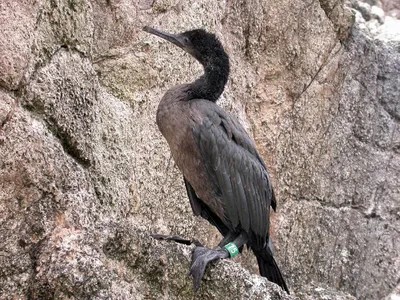
Take bird banding. You have probably seen it. A thin, numbered metal or plastic ring on a leg. It seems simple. But it provides massive amounts of data over time. When a banded bird is recaptured or spotted again, scientists get hard facts.
They get migration routes.
They get lifespan records.
They get survival rates.
Without this method, we would still be guessing about how long a sparrow lives or where a hawk spends the winter. Banding turns a fleeting sighting into a long-term data point.
Then there is radar. You might think of it as something for weather forecasts or air traffic control. But ornithologists use it to watch flocks at night.
Radar allows researchers to detect millions of birds moving in the sky, even when they are invisible to the naked eye.
It shows density. It shows altitude. It shows the sheer scale of migration in a way that visual observation simply cannot match. You are not watching one bird. You are watching a river of life flow through the atmosphere.
Tracking the Invisible
For smaller studies, radio transmitters (or telemetry) are game-changers.
A tiny receiver is attached to the bird. It emits a signal. Researchers follow that signal. This is how we know the specific territories of individual birds. We know which forests they use in winter. We know the exact distance they travel between breeding and feeding grounds.
It is invasive, yes. But it is necessary. You cannot track a single bird’s daily routine through a dense forest just by looking.
Audio equipment plays a similar role.
High-quality, portable recorders allow scientists to capture songs and calls that are too faint or too high-pitched for human ears. They can map the distribution of species that are heard before they are seen. This is critical for finding elusive birds in deep canopies or noisy urban environments.
Why It Matters
This isn’t just about collecting data for the sake of it.
Understanding bird movements helps us protect them.
If we know where a species migrates using radar data, we can identify dangerous stopover sites. If we know their territory size from telemetry, we can design better wildlife corridors. If we have long-term banding data, we can spot population declines before they become crashes.
The tools have changed. The goal hasn’t.
We still want to know the birds. We just have better lenses now.
Tracking the Unseen: How We Map Bird Movements
We’ve known about marking birds for a while now. Bird banding, technically called ringing, dates back to the early 19th century. Back then, it was a rudimentary effort. Today, it is a massive global operation. Hundreds of thousands of birds get numbered leg bands every single year. This isn’t just for fun. It’s the primary way scientists gather hard data on how long birds live and where they go.
But leg bands are only part of the puzzle.
Radar and Radio: Seeing the Invisible
For a long time, we could only guess what happened after a bird left the nest. Now we have sensitive radar systems. These tools track large-scale movements of flocks, giving us a macro view of migration patterns that individual observation simply can’t match.
Then there’s the micro view.
Researchers use minute radio transmitters, or telemeters, to pin down specific individuals. Some are worn externally. Others are implanted inside. This allows for day-to-day tracking of a single bird’s route. It’s precise. It’s invasive, sure. But the data on longevity and movement is unmatched.
“Visual markings, such as plumage dyes and plastic tags… allow visual recognition of an individual bird without the difficult task of trapping it.”
The Citizen Science Revolution
Trapping a bird is stressful. It’s risky. It’s hard work. So, scientists got smarter about identification. They started using visual markings.
Plastic tags on legs or wings. Distinctive plumage dyes. These create a visual signature. You can spot a specific bird from the ground. You don’t need nets. You don’t need traps. This opens the door to citizen science. Amateur bird-watchers become part of the research team. They spot the colored tag. They log the location. They help recover data that would otherwise be lost.
It turns the entire public into a distributed sensor network.
Listening in on the Wild
Finally, there’s the sound.
Bird calls used to be mysteries. Now, they’re data. The development of high-quality, portable audio equipment has changed everything. We can record, analyze, and compare sounds with a clarity that was impossible decades ago. We’re learning about dialects, mating rituals, and territorial disputes just by listening.
The picture is becoming clearer. We know where they go. We know how long they stay. We know what they say.
And yet, the sky is still full of gaps.


