
Earth does not do things gently. Life didn’t crawl out of the mud in a straight line toward complexity. It stumbled. It survived collapses that erased entire branches of existence just to start again from scratch.
We know about the dinosaurs. That one has a name and a crater. Chicxulub. A rock hit the planet. Mammals got a chance to rise. It’s simple cause and effect.
But history is full of other erasures. Ones without clear fingerprints. Daniele Fargion thinks we are missing the culprit because we are looking at the wrong physics. He argues it wasn’t always a collision. It might have been a near miss.
A planetary flyby. Close enough to tug the Earth, not close enough to smash into it.
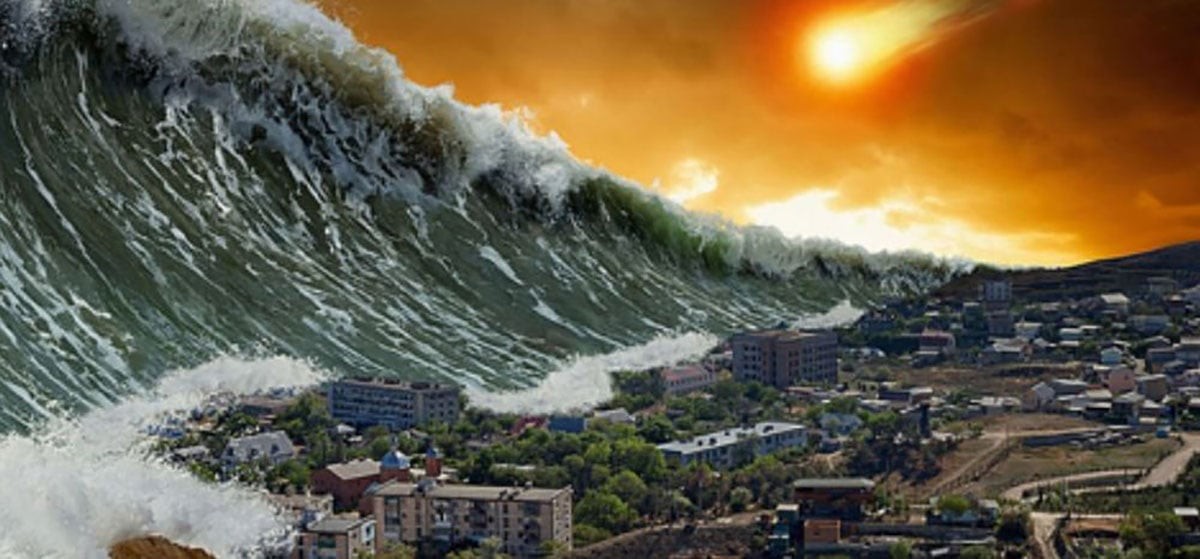
Fargion, a researcher with Rome University and an observatory in Naples, laid this out in a paper titled “Mass Extinctions by Gravitional Tides.” Presented in Palermo in June 2025, the idea suggests that gravitational tides from passing planetary masses could have shaken our world apart without leaving a crater.
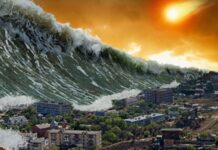
“Such passages may have left strong tidal signatures : giant waves, large volcanic episodes… and major climatic perturbations.”
It is a slippery slope of causality. We see correlations in the rock layers. Massive volcanic eruptions coincide with extinctions. Sea levels drop. The climate flips. But nobody has linked them directly to a single event. An iridium layer proves the dinosaur killer was cosmic. What proves the rest? Nothing much.
The big one—the Permian-Triassic extinction 251 million years back—is a mess. Up to 95 percent of life died. No huge crater matches the date. No iridium spike shouts “alien rock.” Just silence. And then life had to begin again.
Fargion proposes a hidden hand.
Our Solar System is cluttered. Pluto is barely a dwarf planet in a crowd of icy rocks in the outer dark. These things wander on stretched-out orbits. Occasionally gravity nudges one inward. Tow us.
Direct hits are rare. We had Theia form the Moon early on, yes. But grazing is statistically more common. And a graze carries energy.
If an object with planetary mass passes close enough, it doesn’t need to touch Earth to ruin the party. It pulls on the oceans. It stresses the crust. It disturbs the asteroid belts. It diverts smaller rocks toward us as secondary targets.
Why haven’t we considered this before?
Maybe we have been too focused on the bullet rather than the shockwave. Fargion points to Uranus. Tilted on its side? Probably hit. Triton? Neptune’s biggest moon orbits backwards, likely a captured rogue. The Late Heavy Bombardment? Maybe triggered by a visitor from deep space.
If these anomalies happened elsewhere in the family, Earth is unlikely to have stayed clean.
There might even be fossils that remember the tug. Coral rings record time. They show the day getting longer as the Moon pulls back via tides. Fargion notes a glitch in that data at the end of the Devon period. The rate of change suddenly slowed. Then sped up.
A collision creates a shock. Instant. But the coral data implies a change in the Earth-Moon distance. A sudden shift. That doesn’t happen if a rock hits us. That happens if a giant object pulls the Earth or the Moon in a different direction temporarily.
The Moon moves. The tides rage for years. Volcanoes ignite from crustal stress. Tsunamis that never truly stop.
It is speculative, sure. Hard to quantify. We cannot count the ghosts easily. But Fargion uses Jupiter as a proxy. The giant has an axis tilt and excess heat he attributes to impacts from massive objects—perhaps sixteen hits from half-Earth-sized bodies. If Jupiter took those beats, what did the inner worlds endure?
And what happens if we see another one coming?
We look for asteroids now. Small ones. We build lasers. We practice nudging them aside. That works for boulders.
What about a dwarf planet?
“The answer could be, that life is unstable and short.”
You can’t nudge a world. You can’t vaporize a gravity well.
Fargion’s solution is brutally simple. We hide. On mountain peaks. At three kilometers altitude. Above the tsunamis that wrap the globe. Secure refuges. Not for the wealthy, necessarily, but for the species. For the seed bank. For anyone lucky enough to reach the summit in time.
It makes you pause. The Fermi Paradox asks where everyone else is. Maybe they aren’t silent. Maybe they were just wiped clean. Over and over. Advanced civilizations hit a cosmic limit. A gravity check. A reset.
The stars are dark because the neighborhood is dangerous.