



For centuries, scientists have sought to pin down the exact strength of gravity. Yet, despite our technological leaps, one of the most fundamental numbers in the universe remains frustratingly elusive. A new study published in Metrologia has introduced a fresh, highly precise measurement of the gravitational constant—known as “G” or “Big G” —that is significantly lower than previous findings, reigniting a long-standing debate in the physics community.
The Outlier of Fundamental Physics
In the grand scheme of the universe, gravity is a paradox: it dictates the motion of galaxies and the orbits of planets, yet it is the weakest of the four fundamental forces of nature. This inherent weakness makes it incredibly difficult to isolate and measure without interference from other forces.
While other fundamental constants—such as those governing electromagnetism—are known with staggering precision, “G” remains a statistical outlier. To put this in perspective:
– The uncertainty in measuring the electromagnetic force is roughly 100,000 times smaller than the uncertainty in measuring gravity.
– Over the last 50 years, a dozen different precision experiments have produced a wide spread of values rather than a single, unified number.
This discrepancy is not merely a matter of academic pedantry. As physicist Michael Ross from the University of Washington notes, if these conflicting measurements are not due to experimental error but are instead a true reflection of nature, it would fundamentally break our current understanding of physics.
Re-evaluating the Torsion Balance
To tackle this problem, physicist Stephan Schlamminger and his team at the National Institute of Standards and Technology (NIST) opted for a strategy of refinement rather than reinvention. Instead of developing a brand-new method, they meticulously re-created a torsion balance experiment originally performed in France in the early 2000s.
How the experiment works:
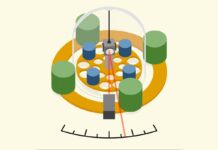
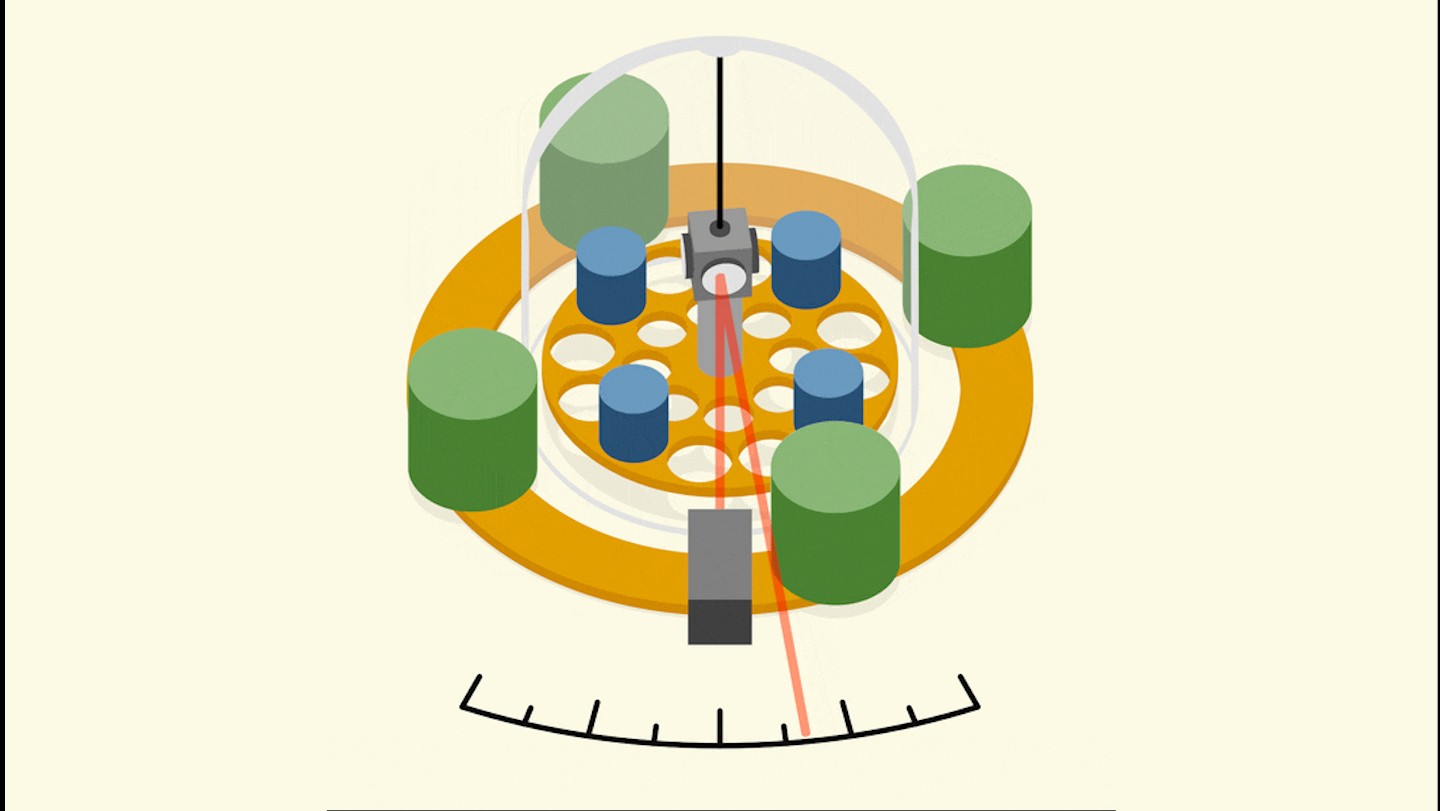
- The Setup: The experiment utilizes a rotating ring with four large masses encircling a suspended disk containing four smaller masses.
- The Measurement: Researchers measure the minute movements of the small masses as they are pulled toward the larger ones by gravity.
- The Precision: The process is incredibly sensitive; Schlamminger noted that the experiment alone took 10 years to complete.
By following the French setup as closely as possible, the researchers aimed to determine if the previous results were accurate or if hidden variables were skewing the data. During the process, the team identified previously unaccounted-for environmental factors, such as the impact of air pressure, which can interfere with such delicate measurements.
A New Value for G
The team’s new calculated value for G is 6.67387 × 10⁻¹¹ m³ kg⁻¹ s⁻².
This result is 0.0235% lower than the original French experiment. While that percentage may seem negligible, in the world of high-precision metrology, it is a significant deviation. Notably, this new value aligns more closely with the official recommendations from the Committee on Data of the International Science Council.
Why This Matters
While this new measurement won’t change how we calculate the weight of objects in our daily lives, it is vital for the integrity of theoretical physics. Every fundamental constant serves as a pillar for our mathematical models of the universe. If these pillars don’t align, our entire structural understanding of how reality works may be flawed.
“We spend so much time really trying to nail down these numbers, because they do really control the whole universe.” — Michael Ross, University of Washington
Conclusion
The new measurement provides a critical piece of the puzzle in the ongoing quest to define gravity. While it does not resolve the debate entirely, it narrows the gap and highlights the extreme difficulty of measuring the very force that holds the cosmos together.